
South American pumpkin fly
Anastrepha grandis
Description
How to identify
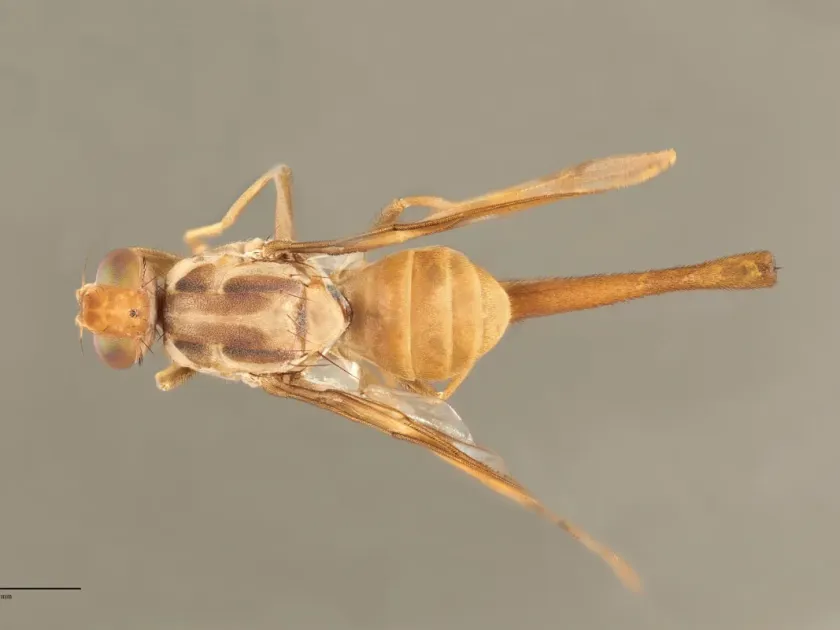
The South American pumpkin fly belongs to the Tephritidae family, also known as fruit flies. Adults are recognized by their distinct dark, wing-patterned markings.
The insect typically measures about 10-12 mm in length and displays a yellow-brown body color. Females possess a robust ovipositor, which is a specialized organ used to penetrate the skin of fruits.
Larvae are legless, cream-colored maggots that feed on the inner tissues of pumpkin-like fruits before emerging to pupate in the soil.
As a member of the genus Anastrepha, this species is highly adapted to the cucurbit family, exhibiting precise host selection for egg-laying.
Given its status as a significant quarantine pest, identification relies heavily on diagnostic morphological traits and laboratory analysis of samples taken from infested areas.
What it damages
This pest primarily attacks members of the Cucurbitaceae family, including pumpkins, squashes, marrows, and various melon species.
Damage is caused by the larvae, which burrow into the fruit to consume the pulp and seeds, turning the interior into a decaying, inedible mass.
The infestation often leads to secondary infections by bacteria and fungi, causing rapid fruit rotting and total loss of commercial value.
Wild cucurbits can also host the fly, providing a year-round breeding ground and complicating efforts to eliminate the population from a specific area.
Without integrated pest management strategies, an infestation can devastate an entire harvest, posing a major threat to agricultural sustainability.
When it appears
The life cycle of the fly is synchronized with the development of the host fruit, as the female needs viable fruits to complete her reproductive stage.
After egg-laying, the larval stage lasts for several weeks inside the fruit. Once fully developed, larvae exit the fruit and drop to the soil to pupate.
In warm, tropical climates, the fly can reproduce throughout the year, with multiple generations overlapping, which significantly increases the risk to crops.
The pupal stage is the primary overwintering phase, allowing the species to survive colder or drier periods until environmental conditions favor emergence.
Growers use monitoring traps to detect adult flies, which is critical for scheduling preventative treatments before egg-laying reaches its peak.
Signs of infestation
Early signs of infestation are difficult to spot and include tiny punctures on the surface of the fruit skin, left by the female's ovipositor.
Affected areas may show slight discoloration or skin depressions as the larvae grow and consume the tissues just beneath the surface.
Cutting open a suspected fruit often reveals internal tunneling, decaying plant material, and the presence of larvae at various developmental stages.
Infested fruits frequently lose their firmness prematurely, and they may show visible signs of softening or structural collapse as internal decay progresses.
The presence of foul-smelling fluids leaking from entry or exit holes is a clear indicator that the fruit is heavily infested and beyond recovery.
Control measures
Stringent quarantine measures are the first line of defense to prevent the introduction of this pest into non-infested geographical areas.
Field management involves the regular scouting and immediate removal or destruction of any damaged fruits to disrupt the insect's life cycle.
Chemical control focuses on applying targeted insecticides during the adult flight period to prevent females from successfully depositing eggs.
Integrated programs utilize pheromone or food-based traps to monitor population density and guide the timing of intervention measures.
Post-harvest soil cultivation is essential to expose and destroy pupae, effectively reducing the soil-borne population for the following season.
Taxonomy
- Latin name
- Anastrepha grandis
- Order
- Diptera (flies)
- Family
- Tephritidae
- EPPO code
- ANSTGR
Discussion
No discussions yet — be the first.