
Anastrepha ethalea
Anastrepha ethalea
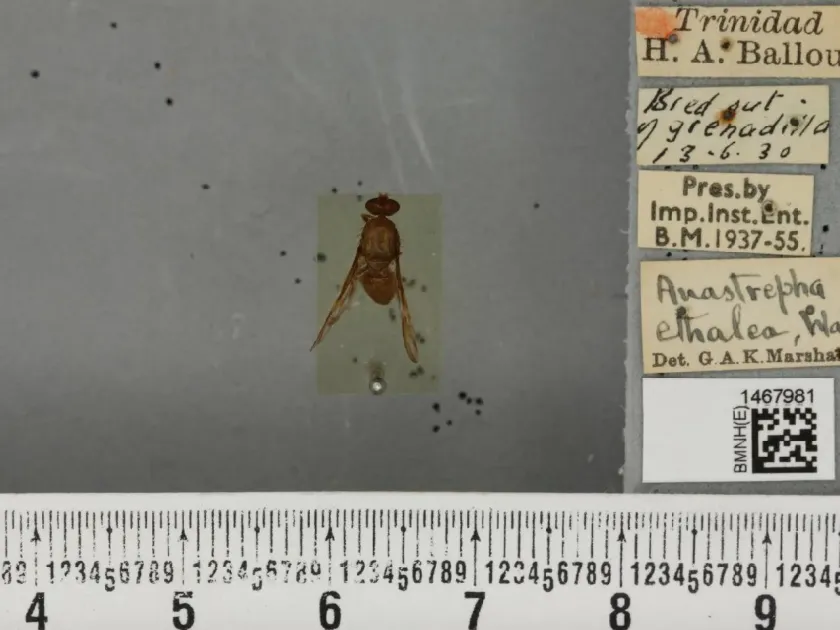
Description
How to identify
Anastrepha ethalea is a species of fruit fly belonging to the family Tephritidae, order Diptera. These insects are closely related to other harmful fruit flies and require specialized identification skills due to their similar morphology.
Adult flies possess a distinct wing pattern that is essential for accurate field identification by agricultural experts. Their body color is generally yellowish-brown, aiding in camouflage among the ripening foliage and fruit skins.
The life cycle involves complete metamorphosis, consisting of four stages: egg, larva, pupa, and adult. Identification is often confirmed through microscopic examination of the female's ovipositor and wing venation in specialized laboratories.
These flies are highly mobile and tend to congregate in the canopy of trees, where they find suitable microclimates for mating and egg-laying activities.
Because they are quarantine pests in many regions, any suspected sighting must be reported to local agricultural authorities for professional diagnostic verification.
What it damages
This pest primarily attacks the fruits of various horticultural crops. By piercing the skin to lay eggs, the female causes immediate mechanical damage to the fruit surface.
As the larvae hatch, they burrow into the pulp, feeding on the tissue and causing the fruit to rot from the inside out, rendering it completely unmarketable.
The exit holes created by larvae and the punctures from egg-laying provide entry points for secondary pathogens, such as bacteria and fungi, which accelerate the decomposition process.
High infestation rates can lead to total crop failure, resulting in severe economic consequences for commercial orchards and local fruit production businesses.
International trade restrictions are often imposed in areas where this species is present, as it poses a significant phytosanitary risk to importing countries.
When it appears
The seasonal occurrence of Anastrepha ethalea is closely linked to temperature patterns and the availability of host fruits in the environment.
Active phases often coincide with the ripening stage of fruits, which provides the necessary nutrition and environmental conditions for the development of the next generation.
Under optimal tropical or subtropical conditions, the species can complete multiple generations in a single year, leading to rapid population surges during the harvest period.
Pupation typically occurs in the soil beneath the host plant, where the insects spend the inactive phase of their life cycle protected from extreme weather.
The emergence of adults is triggered by favorable environmental cues, such as rising temperatures and humidity, signaling the start of a new reproductive cycle.
Signs of infestation
Early warning signs include the appearance of tiny dark spots or sting marks on the fruit skin, which are the oviposition sites made by the female fly.
Softening of the fruit tissue or premature ripening is a common symptom indicating larval feeding inside the pulp, which often leads to the fruit dropping before it is fully mature.
When affected fruits are opened, larvae are typically found tunneling through the flesh, accompanied by signs of decay and discoloration.
The use of monitoring traps containing specific food attractants is the most reliable way to detect adult fly presence in the orchard before visual damage becomes widespread.
Orchard managers should also look for signs of increased bird or insect activity around fallen fruits, which may be attracted by the fermenting juices of infested produce.
Control measures
Phytosanitary measures are the first line of defense; strict quarantine protocols should be followed to prevent the movement of infested fruit into non-infested zones.
Sanitation is crucial: collecting and destroying fallen fruit immediately prevents larvae from completing their life cycle by burying themselves in the soil to pupate.
Chemical control programs involving targeted insecticide applications during the peak flight season can significantly reduce the adult fly population and prevent egg-laying.
Integrated Pest Management (IPM) strategies, such as using pheromone traps and biological controls, help manage population levels while minimizing negative impacts on beneficial organisms.
- Regular monitoring using baited traps.
- Prompt disposal of infested and fallen fruit.
- Application of systemic or contact insecticides as needed.
- Maintenance of a clean orchard environment to remove breeding sites.
Taxonomy
- Latin name
- Anastrepha ethalea
- Order
- Diptera (flies)
- Family
- Tephritidae
- EPPO code
- ANSTET
Discussion
No discussions yet — be the first.