
Anastrepha
Anastrepha
Description
How to identify
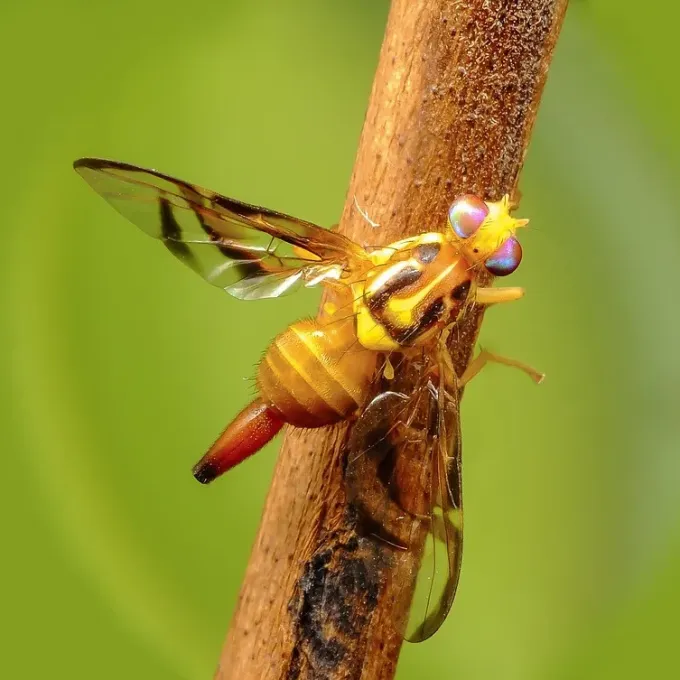
The genus Anastrepha belongs to the Tephritidae family, order Diptera. These are medium-sized fruit flies characterized by intricate patterns on their wings.
Adult flies exhibit distinct yellow-brown or amber coloration. Females possess a prominent ovipositor used to pierce the skin of ripening fruit.
Correct species identification within this genus typically requires detailed examination of the female ovipositor and male genitalia by trained entomologists.
Larvae are cream-colored maggots that undergo three developmental instars while feeding inside the host fruit.
The specific wing venation patterns are key taxonomic features used to differentiate Anastrepha from other common fruit fly pests.
What it damages
Anastrepha species are significant polyphagous pests that infest a wide variety of tropical and subtropical commercial fruit crops.
Primary hosts include citrus fruits, mangoes, guavas, papayas, and avocados. They represent a major threat to international fruit trade.
Infestation can result in severe yield losses, often rendering 100% of the produce unmarketable in the absence of stringent management.
The damage is caused primarily by larvae tunneling through the fruit pulp, leading to rapid tissue breakdown and loss of structural integrity.
Secondary colonization by bacteria and fungi commonly occurs following the initial damage, causing premature rot of the infested fruits.
When it appears
The lifecycle of Anastrepha is heavily influenced by temperature and host fruit availability. The entire cycle involves egg, larva, pupa, and adult stages.
Females deposit eggs beneath the fruit epidermis. Upon hatching, larvae feed on the fruit interior for several weeks depending on environmental conditions.
Once mature, larvae exit the fruit and drop to the soil to pupate. The pupal stage lasts until the emergence of the next generation of adults.
In warmer climates, multiple generations can occur per year, leading to overlapping populations and constant risk to developing fruits.
Adult longevity varies, but they are capable of surviving for several months, ensuring high reproductive potential throughout the growing season.
Signs of infestation
The earliest symptom of Anastrepha infestation is the presence of small oviposition punctures on the fruit surface, often accompanied by sap oozing.
Discoloration or premature softening of the fruit skin around the puncture site is a common indicator of underlying larval activity.
Internally, fruit exhibits tunnel galleries and localized decay as larvae consume the edible tissues, often rendering the fruit pulpy and rancid.
Premature fruit drop is frequently observed, as infested fruits are often shed by the plant before they reach full maturity.
On larger fruits, larvae may move deep into the core, making detection difficult without cutting the fruit open.
Control measures
Strict phytosanitary and quarantine regulations are the primary defense against the introduction and spread of Anastrepha to non-infested areas.
Field monitoring is conducted using McPhail traps or similar devices baited with food attractants or pheromones to detect adult populations early.
Cultural control methods involve the prompt collection and destruction of fallen fruit to prevent larvae from completing their life cycle in the soil.
Chemical control focuses on bait sprays applied to the foliage, which target adult flies before they have the opportunity to oviposit in fruit.
The Sterile Insect Technique (SIT), involving the release of mass-reared sterile males, is successfully used in many regions to suppress wild populations.
Taxonomy
- Latin name
- Anastrepha
- Order
- Diptera (flies)
- Family
- Tephritidae
- EPPO code
- ANSTSP
Discussion
No discussions yet — be the first.