
Anasa repetita
Anasa repetita
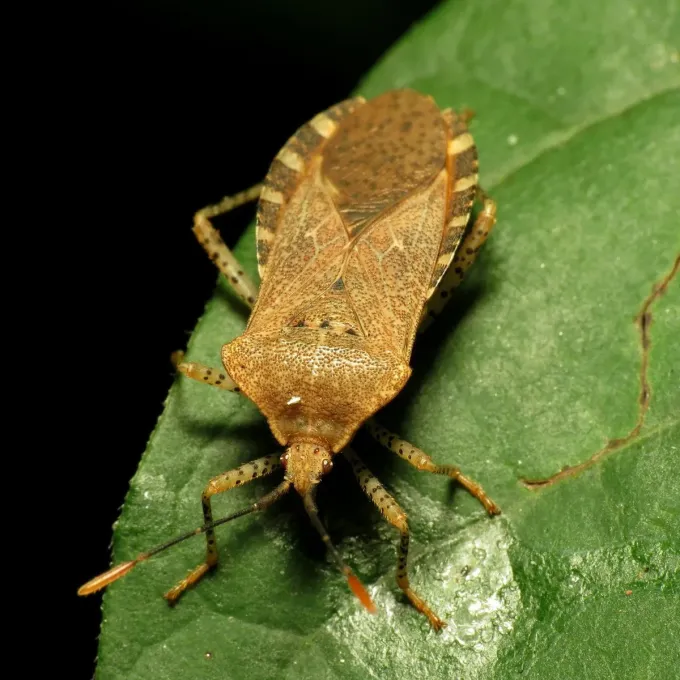
Description
How to identify
Anasa repetita is a member of the Coreidae family within the order Hemiptera. These insects are commonly identified by their distinct body shape and the presence of scent glands used for defense.
Adults possess an elongated, brownish body often covered with fine punctures, which provides effective camouflage against the stems and foliage of their host plants.
The nymphs go through several instars, gradually changing their appearance from small, soft-bodied individuals to robust, winged adults ready for reproduction.
Their head features a specialized piercing-sucking proboscis that allows them to tap into the vascular tissue of plants to feed on nutrient-rich sap.
Due to their morphological similarity to other squash bug species, accurate identification requires close examination of their thoracic structure and antennal characteristics.
What it damages
The primary hosts of Anasa repetita are plants belonging to the Cucurbitaceae family, including squash, melons, and other related vegetable crops.
By feeding on the phloem of the plant, these insects deplete vital resources, leading to chlorosis, stunted growth, and in severe cases, the death of the entire plant.
The injection of digestive enzymes during feeding causes local cell necrosis, which manifests as wilting patches on leaves and localized dieback of stems.
Damage to developing fruits can cause scarring, deformation, and poor quality, rendering the produce unmarketable in agricultural settings.
Heavy infestations can lead to significant economic losses, especially when the insect population reaches its peak during the most sensitive vegetative stages of the crop.
When it appears
The seasonal activity of Anasa repetita typically begins in late spring, as temperatures rise, signaling the end of the insects' winter dormancy period.
Overwintered adults emerge from sheltered areas, such as leaf litter or crop debris, to search for newly emerging cucurbit host plants.
During the peak of the summer, the lifecycle is accelerated, with generations overlapping and leading to continuous pressure on the crops throughout the growth cycle.
As daylight hours decrease and temperatures begin to drop in autumn, the insects start seeking suitable overwintering sites to survive the cold months.
Monitoring during the mid-season is crucial, as this is when the population density is typically highest and the potential for crop damage is at its maximum.
Signs of infestation
Initial signs of infestation include the appearance of yellow spots on foliage, which eventually dry out and turn brown due to sap extraction by the nymphs and adults.
Clusters of eggs, often laid in regular patterns on the undersides of leaves, are a clear indication of a breeding population present in the field.
Sudden wilting of vines during the heat of the day, despite adequate irrigation, suggests that the vascular integrity of the plant has been compromised by insect feeding.
The presence of adults and nymphs, often accompanied by a distinct, unpleasant odor when disturbed, is a primary indicator of their presence.
Malformed fruit development is a secondary symptom, showing surface damage that interferes with the healthy growth of the harvestable crop.
Control measures
Effective management of Anasa repetita requires a combination of physical, cultural, and chemical tactics to maintain pest populations below economic thresholds.
Field sanitation is a critical cultural control practice, involving the removal and destruction of crop residues where overwintering adults might hide.
Rotating crops to non-host species disrupts the lifecycle of the insect, significantly reducing the pressure in the subsequent growing season.
- Hand-picking of eggs and nymphs on small-scale plots.
- Application of selective insecticides when infestation levels warrant intervention.
- Encouraging natural predators such as parasitic wasps and predatory beetles.
Early detection through regular field scouting allows for targeted intervention, minimizing the need for broad-spectrum chemicals and preserving beneficial insect populations.
Taxonomy
- Latin name
- Anasa repetita
- Order
- Hemiptera (bugs, aphids, leafhoppers)
- Family
- Coreidae
- EPPO code
- ANASRE
Discussion
No discussions yet — be the first.