
Anasa guttifera
Anasa guttifera
Description
How to identify
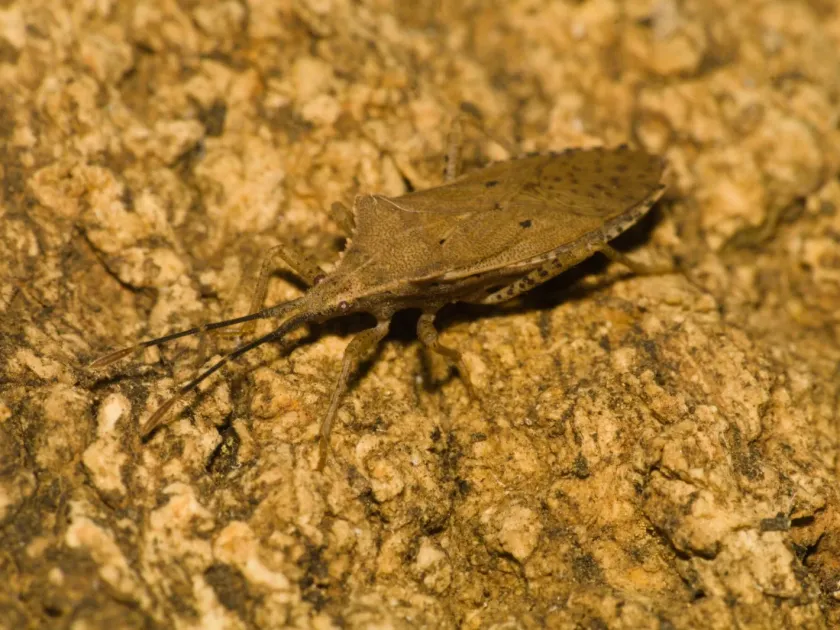
Anasa guttifera belongs to the Coreidae family (leaf-footed bugs). It is a medium-sized insect characterized by a brownish, elongated body and long antennae, typical of its family members.
Adults typically measure 10–15 mm in length. The head is significantly narrower than the pronotum, and the wings feature distinctive small light-colored spots, which serves as a primary field identification trait.
The life cycle involves incomplete metamorphosis consisting of eggs, five nymphal instars, and adults. Females deposit eggs in clusters, primarily on the underside of leaves along the veins.
Nymphs resemble smaller, wingless versions of adults and are often lighter in color. They progress through five molting stages before reaching sexual maturity as adults.
Adults overwinter in protected areas, including plant debris, leaf litter, and under loose soil, emerging in the spring when temperatures rise to resume their feeding and reproductive cycle.
What it damages
The primary hosts for Anasa guttifera are plants within the Cucurbitaceae family, including squash, cucumbers, melons, and pumpkins, which are vulnerable throughout their growth stages.
Both nymphs and adults utilize piercing-sucking mouthparts to extract sap from plant tissues. This feeding process deprives the plant of essential nutrients and causes localized wilting.
The injection of digestive enzymes into the plant tissue during feeding results in yellow spotting, necrosis, and potentially stunted growth of the affected vine or leaf.
Heavy infestations can lead to significant yield losses. Furthermore, the physical damage to stems and leaves can serve as an entry point for various secondary pathogens, including bacteria.
Fruits may also be affected, suffering from deformations and reduced quality, which renders them unsalable in commercial markets and reduces their overall shelf life.
Signs of infestation
The earliest signs of an infestation include the appearance of pale or yellow chlorotic spots on the foliage, which eventually dry out and form necrotic patches.
Scouting the undersides of leaves will reveal clusters of small eggs. This is a critical indicator of a developing infestation before major damage becomes apparent.
During early morning or late evening, nymphs and adults can be observed congregating on the stems or undersides of leaves, providing a clear visual confirmation of their presence.
An unpleasant odor, emitted by the bugs when they are disturbed or crushed, is a common indicator of their presence on the crop, even if the insects themselves are hidden.
Severe infestations often result in the premature yellowing and dropping of leaves, which stresses the plant and forces it to redirect energy away from fruit development.
Control measures
Effective management begins with strict sanitation practices, such as removing and destroying crop residues post-harvest to eliminate overwintering sites for the adult bugs.
Controlling weeds, particularly those related to the cucurbit family, helps minimize alternative feeding and breeding sites around the perimeter of the production fields.
In smaller gardens, manual removal of egg clusters and hand-picking of adult insects in the early morning hours can be an effective way to keep populations below damaging levels.
When populations exceed economic thresholds, judicious use of insecticides may be necessary, ensuring that applications are timed to minimize impact on beneficial pollinators.
- Implementing crop rotation to disrupt the insect's life cycle.
- Utilizing row covers to provide a physical barrier against initial colonization.
- Using light traps to monitor population spikes during the growing season.
Taxonomy
- Latin name
- Anasa guttifera
- Order
- Hemiptera (bugs, aphids, leafhoppers)
- Family
- Coreidae
- EPPO code
- ANASGU
Discussion
No discussions yet — be the first.