
Anasa armigera
Anasa armigera
Description
How to identify
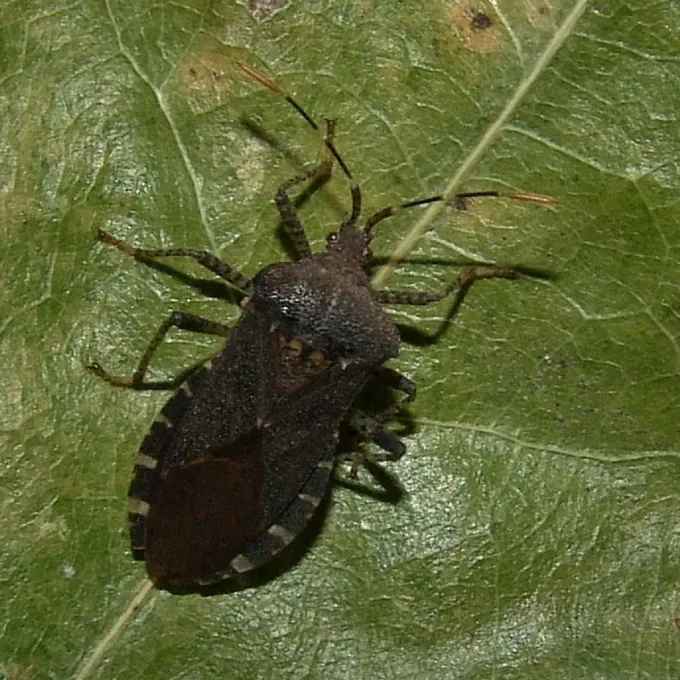
Anasa armigera is a species of true bug belonging to the family Coreidae, commonly known as leaf-footed bugs. This insect is a significant pest primarily known for attacking plants within the Cucurbitaceae family.
The adult insect is characterized by an elongated, brownish body, typically measuring between 12 to 15 mm in length. Its scientific name, armigera, refers to the distinct spine-like projections found on its pronotum.
The life cycle of this species includes incomplete metamorphosis: egg, five nymphal instars, and adult. The lifecycle duration depends heavily on the ambient temperature and available food source.
Female bugs deposit their eggs in groups, usually on the underside of host plant leaves. These eggs are distinct due to their metallic or bronze-like coloration, making them easier to spot during scouting.
Nymphs resemble smaller, wingless versions of adults and go through several molting stages, gradually increasing in size and developing wing pads before reaching maturity.
What it damages
Anasa armigera primarily feeds on crops such as squash, pumpkins, cucumbers, and melons. They utilize their piercing-sucking mouthparts to extract sap from leaves, stems, and fruits.
When feeding, the bugs inject saliva that contains enzymes, causing localized tissue death. This process leads to yellowing, necrosis, and subsequent wilting of the affected plant parts.
The most severe damage occurs on young plants and developing fruits. If the infestation is heavy, the plant may experience severe stunting and reduced physiological capability to produce fruit.
Damage to the stems often disrupts nutrient transport, which can lead to the sudden collapse of entire vine segments, significantly impacting the overall crop yield and plant health.
Young fruits that are targeted by these bugs may become deformed or stop growing altogether, rendering them unsuitable for market and resulting in economic losses.
Signs of infestation
The earliest sign of an infestation is the presence of metallic-colored egg clusters on the underside of leaves, which should be the primary focus during field inspections.
Initial feeding damage appears as small, chlorotic spots on the leaf surface. As the infestation progresses, these spots expand and coalesce into larger, brown, dried-out patches.
Sudden wilting of leaves or entire vines, despite adequate soil moisture, is a clear indicator that a colony of these bugs is actively feeding on the plant's vascular system.
The observation of the insects themselves is a definitive sign of an active pest population. They are often found clustered on the undersides of leaves or along the main stems.
In cases of high infestation, the presence of dark excrement spots on the leaves can also serve as a visual clue for identifying the areas where the bugs have been feeding.
Control measures
Management of Anasa armigera requires an integrated pest management (IPM) approach to keep populations below damaging levels throughout the growing season.
- Manual removal and destruction of egg clusters and adults, particularly in the early morning when the insects are less mobile.
- Sanitation practices such as removing crop residues and weeds immediately after harvest to eliminate overwintering sites.
- Use of physical barriers like row covers on young plants to prevent adult colonization during the early stages of growth.
- Application of appropriate insecticides as a last resort, prioritizing products with low impact on beneficial insects.
- Encouraging natural predators such as tachinid flies and parasitic wasps that help suppress the pest population biologically.
Taxonomy
- Latin name
- Anasa armigera
- Order
- Hemiptera (bugs, aphids, leafhoppers)
- Family
- Coreidae
- EPPO code
- ANASAR
Discussion
No discussions yet — be the first.