
Anasa andresii
Anasa andresii
Description
How to identify
Anasa andresii is a member of the Coreidae family, order Hemiptera. These insects are well-known for their piercing-sucking mouthparts, which they use to feed on plant vascular sap.
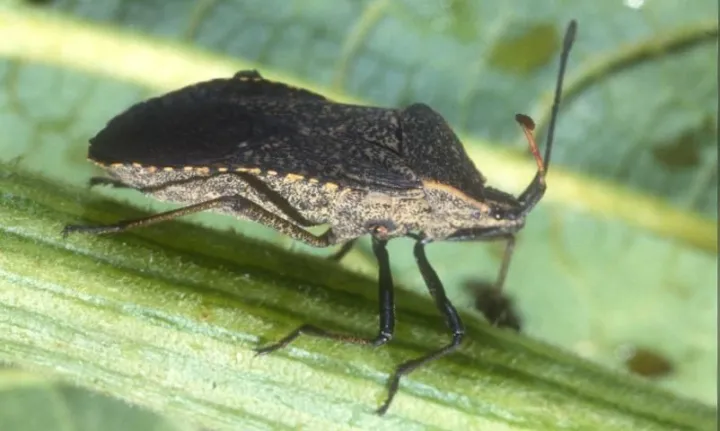
Adult insects typically exhibit an elongated, brownish body shape. Their coloration acts as camouflage, blending seamlessly with stems and soil in a farm environment.
The life cycle follows a hemimetabolous development path, consisting of egg, five nymphal instars, and the adult stage. Nymphs resemble adults but are wingless and smaller.
Eggs are usually laid in clusters on the undersides of leaves. This placement strategy provides vital protection from high temperatures and potential predators during the embryonic stage.
Accurate identification is essential for management. Scouts should look for adult insects resting in sheltered areas of the plant or in the dense canopy during the hottest times of the day.
What it damages
These pests primarily target members of the Cucurbitaceae family, including squash, zucchini, cucumbers, and pumpkins, causing significant physiological stress.
Both adults and nymphs feed by inserting their stylets into the xylem or phloem tissues. This disrupts the flow of water and nutrients throughout the host plant.
Severe infestations lead to localized chlorosis and wilting. If the plant is young, heavy pressure can quickly lead to complete stunting or even plant death.
Fruit damage occurs when the pest feeds on developing ovaries. This results in discolored, shriveled, or deformed fruits that lack market value and quality.
Feeding wounds often lead to secondary pathogen infection. Bacteria and fungi can colonize the plant tissue through these punctures, causing further rot and decline.
Signs of infestation
The earliest symptom is the appearance of small yellow spots (chlorosis) on the leaves, marking the specific points where the insect has fed.
As the feeding continues, these spots turn brown and necrotic. The leaves eventually curl, become brittle, and dry out completely, resembling drought stress.
Presence of egg batches on the undersides of leaves is a definitive sign. These are often golden or brownish in color and arranged in a neat, geometric pattern.
When disturbed, the adults emit a pungent, unpleasant odor from their scent glands, which is a very characteristic sign for those conducting field inspections.
Late-season infestations may show stunted plant growth and the collapse of entire vines, significantly reducing the total yield per hectare.
Control measures
Cultural management is the primary line of defense. This includes burying crop residues deeply after harvest to eliminate overwintering sites for the adults.
Crop rotation helps break the life cycle by ensuring that host plants are not available in the same field for consecutive growing seasons.
Frequent field scouting allows growers to identify the first wave of adults. If populations exceed economic thresholds, timely insecticide applications are required.
Encouraging natural predators such as tachinid flies and parasitic wasps can significantly reduce the nymph population, providing biological control in sustainable systems.
- Utilize mulch and trap crops to manage population density.
- Apply systemic insecticides early in the season before fruit set.
- Remove debris and weeds that harbor the pests during the off-season.
Taxonomy
- Latin name
- Anasa andresii
- Order
- Hemiptera (bugs, aphids, leafhoppers)
- Family
- Coreidae
- EPPO code
- ANASAN
Discussion
No discussions yet — be the first.