
Anacanthocoris
Anacanthocoris
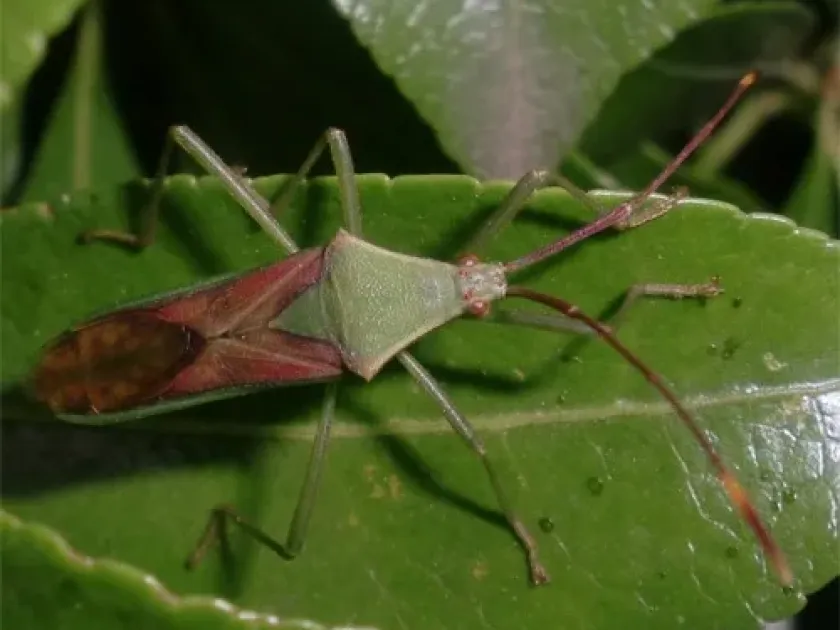
Description
How to identify
Anacanthocoris belongs to the family Coreidae, commonly known as leaf-footed bugs or coreid bugs, within the order Hemiptera. These insects exhibit a robust body structure with well-developed antennae and prominent thoracic projections.
Adult bugs are protected by a tough chitinous exoskeleton, often featuring cryptic coloration that allows them to blend seamlessly into their host plants. This camouflage makes them difficult to spot during routine field inspections.
A key diagnostic feature is the specialized piercing-sucking mouthpart. This apparatus is highly efficient at penetrating plant tissues, allowing the insect to extract sap and nutrients directly from the xylem or phloem layers.
The life cycle involves several nymphal instars, where the bugs gradually increase in size and develop adult characteristics through successive molting phases. Each stage is adapted to survival on the host plant until maturity.
Accurate identification of specific species often requires examining the morphology of the pronotum and the legs, as members of this genus often possess distinct spikes or tubercles that are used for classification.
What it damages
Anacanthocoris species target a wide range of crops, including legumes and various cereals. By feeding on the plant's vascular system, they remove essential nutrients, which weakens the plant's overall vitality.
Feeding typically occurs on young shoots, leaves, and developing fruit or seed pods. Direct damage results in localized tissue necrosis, loss of turgor, and physical deformation of the plant structures.
The most critical impact occurs during the active growth and flowering stages. When a large population of bugs feeds on these sensitive areas, it significantly hinders fruit set and leads to lower harvest yields.
The damage caused by these bugs is not limited to physical destruction; the extraction of sap causes metabolic stress. Stunted growth and reduced grain filling are common outcomes in severely infested fields.
Furthermore, the puncture wounds created by their mouthparts serve as entry points for secondary infections. Pathogenic fungi and bacteria often invade these sites, causing further rot and decreasing the shelf life of produce.
When it appears
The seasonal activity of Anacanthocoris is heavily influenced by regional temperatures and host plant phenology. Adults emerge from winter diapause as soon as consistent spring warmth allows for metabolic activity.
Reproduction reaches its peak during the summer months when host plants are in their most vigorous growth stage. This period sees the coexistence of nymphs and adults, both actively feeding on available vegetation.
As daylight duration decreases and temperatures drop in the autumn, bugs seek overwintering sites. They often aggregate in plant debris, under tree bark, or in the upper soil layers to survive the winter period.
Climatic factors, such as unusually warm and humid summers, can accelerate the development of multiple generations within a single season, leading to sudden population explosions in agricultural areas.
Field monitoring should be synchronized with these seasonal patterns. Agronomists focus their observations on the transition periods between overwintering and the active summer growth phase to manage populations early.
Signs of infestation
Visual symptoms of infestation begin as small discolored spots on leaves, which gradually coalesce into large yellow or necrotic patches. This is a direct sign of excessive sap extraction by the bugs.
Twisted leaves and deformed stems are classic signs that indicate the bug has disrupted the normal physiological development of the plant tissue. Severe infestations often lead to terminal bud death.
Fruit or seed pods damaged by Anacanthocoris often appear shriveled or exhibit distinct malformations. Such produce is unmarketable and susceptible to premature abscission from the main plant.
The presence of the bugs themselves, particularly on the undersides of leaves or along succulent stems, provides definitive proof of an active infestation. They often release a pungent odor when disturbed.
In mature grains or pods, evidence of feeding can appear as shriveled seeds with darkened spots. This damage degrades the quality of the harvest and can impact the viability of seeds for future planting.
Control measures
Controlling Anacanthocoris requires an integrated pest management (IPM) approach that combines mechanical, cultural, and chemical tactics to maintain populations below the economic threshold.
- Sanitation by removing weeds that serve as alternative hosts.
- Deep soil cultivation after harvest to disturb overwintering sites.
- Crop rotation to disrupt the insect's food supply cycle.
- Applying targeted insecticides when monitoring confirms high population levels.
- Promoting the presence of natural predators and parasitoids.
Chemical control should be strategically timed to target the nymphal stages, as they are generally more susceptible to insecticide application than hardened adults, reducing the overall amount of chemical needed.
Monitoring using visual inspection or specialized traps is essential for making informed decisions. This allows for localized treatment rather than broad-spectrum spraying, preserving beneficial insect populations in the field.
Biological control agents, including entomopathogenic fungi, are increasingly used in modern farming to provide a sustainable way to suppress Anacanthocoris populations without negative environmental impacts.
Taxonomy
- Latin name
- Anacanthocoris
- Order
- Hemiptera (bugs, aphids, leafhoppers)
- Family
- Coreidae
- EPPO code
- ANAASP
Discussion
No discussions yet — be the first.