
Amsacta marginalis
Amsacta marginalis
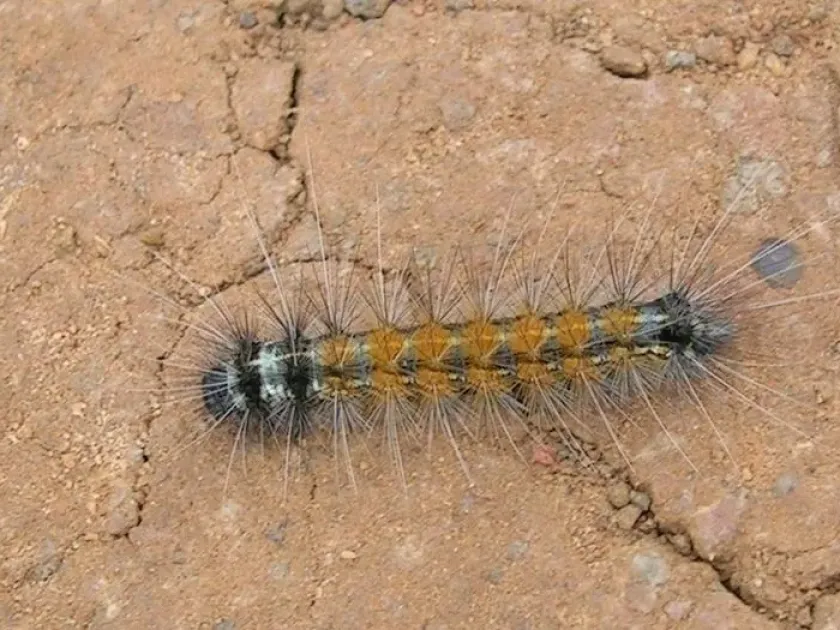
Description
How to identify
Amsacta marginalis is a moth species belonging to the Erebidae family. These insects are recognized for their distinctive appearance and their impact on vegetation in specific climatic zones of Asia.
The life cycle consists of four distinct stages: egg, larva (caterpillar), pupa, and adult. Each stage has specific requirements for temperature and humidity, which determine the population density.
The larvae are typically hairy, which serves as a defensive mechanism against predators. They are usually found in groups during the early stages of development, making them easier to spot on host plants.
Adult moths are nocturnal and are highly attracted to light sources, which is a common behavior used by researchers to monitor their presence in agricultural areas.
Female moths lay eggs in clusters on the undersides of leaves. The eggs are protected by specialized scales, ensuring higher survival rates even in fluctuating weather conditions.
What it damages
Amsacta marginalis is a significant polyphagous pest that feeds on a wide range of important agricultural crops, including legumes, oilseeds, and cereals.
The larvae consume leaves, tender stems, and sometimes buds, causing severe defoliation. This damage directly affects the plant's ability to photosynthesize and store nutrients.
Initial feeding by young caterpillars results in a window-like effect on leaves. As they grow older, they start eating the entire leaf lamina, leaving only the main veins.
Heavy infestations can lead to substantial yield losses. If the attack occurs during the seedling stage, it can result in the complete destruction of the crop stand.
The damage caused by these caterpillars also makes plants more susceptible to secondary infections from various pathogens, further complicating the recovery process for the crop.
Signs of infestation
The first signs of infestation include the presence of small caterpillar clusters on the underside of leaves and the appearance of tiny holes or skeletonized leaf patches.
Frass (droppings) accumulation on the soil surface or caught in leaf axils is a clear indicator that the larvae are actively feeding nearby, even if they are not immediately visible.
The presence of fine webbing between leaves or stems is another common sign, as larvae often use silk to move across the plant or secure themselves during molting.
Plant wilting and premature drying of foliage, despite adequate irrigation, may suggest that the pests are causing internal damage or disrupting nutrient transport within the plant.
A sudden decrease in plant vigor across a localized area is a strong signal for an agronomist to perform a detailed inspection of the lower canopy and surrounding soil debris.
Control measures
Integrated Pest Management (IPM) is the most effective strategy for controlling Amsacta marginalis, emphasizing a mix of mechanical, biological, and chemical methods.
Mechanical control involves the deep plowing of fields during the off-season to expose pupae to birds and harsh weather conditions, significantly reducing the population in the soil.
Light traps are highly recommended for monitoring and mass trapping of adult moths, helping to disrupt the mating cycle and reducing the number of eggs laid in the field.
Biological control agents, such as specific nucleopolyhedroviruses (NPV) or bacterial pesticides like Bacillus thuringiensis, provide environmentally friendly options for larva suppression.
Chemical control should be applied strictly based on economic threshold levels. Rotating different classes of insecticides is crucial to prevent the development of resistance in the pest population.
Taxonomy
- Latin name
- Amsacta marginalis
- Order
- Lepidoptera (butterflies)
- Family
- Erebidae
- EPPO code
- AMSAMA
Discussion
No discussions yet — be the first.