
Amsacta
Amsacta
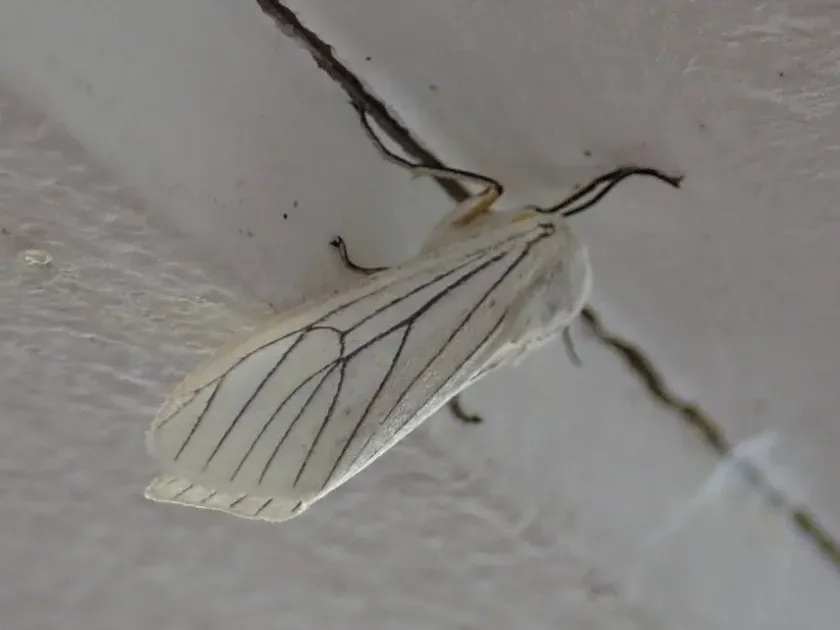
Description
How to identify
The genus Amsacta belongs to the family Erebidae. These moths are recognized for their distinct, often warning-colored wings, which serve as a mechanism to deter potential predators.
The larvae, commonly known as hairy caterpillars, are densely covered with long setae (hairs). These hairs can be a source of contact dermatitis in humans and act as a physical defense against natural enemies.
Adult moths are typically nocturnal, highly active at night, and possess sensitive antennae used to navigate and locate host plants for oviposition.
Identification at the species level often requires careful morphological examination of wing patterns or internal reproductive structures due to the high similarity between related species.
Females lay eggs in clusters on the undersides of leaves, carefully covering them with abdominal hair to protect the batch from environmental stress and parasitic wasps.
What it damages
Amsacta species are known as significant polyphagous pests. Their larvae feed on a wide range of agricultural crops, causing severe economic damage in many parts of the world.
Key crops at risk include cotton, peanuts, various legumes, and fiber crops like flax, which are highly susceptible during their early growth stages.
Young larvae initially graze on the epidermis of leaves, but as they grow, they become capable of consuming entire leaves, leaving only the midribs and thicker veins.
In cases of high infestation, these caterpillars exhibit migratory behavior, moving in large groups from field to field and decimating crops within days.
Extensive defoliation significantly reduces the plant's photosynthetic capacity, leading to stunted growth, yield loss, and in severe cases, the death of the crop.
When it appears
The life cycle of Amsacta is deeply influenced by regional weather patterns, with outbreaks frequently following the onset of the monsoon or rainy seasons.
They typically undergo several generations per year. The insect spends the unfavorable season (often the dry season) in the pupal stage buried within the soil.
Adult emergence is often synchronized, leading to sudden and high populations of larvae that can overwhelm standard crop defenses if not monitored early.
Development is most rapid under warm, humid conditions, where the entire lifecycle from egg to adult can be completed in just a few weeks.
Pupa survival depends heavily on soil moisture levels, with excessive drought or flooding affecting the emergence success of the next generation.
Signs of infestation
One of the earliest indicators of an Amsacta infestation is the presence of young larval colonies on the undersides of leaves, accompanied by skeletonized tissue.
The presence of abundant dark frass (droppings) on the soil beneath the plants is a clear signal that larvae are actively feeding in the canopy above.
Leaves that look like lace due to the consumption of soft tissue between the veins are a hallmark sign of the moth's feeding activity.
Wilting or abnormal growth in young seedlings can also be a sign, especially if the larvae have damaged the main stem or growing tips.
Increased night-time moth activity near light sources or traps serves as an early warning for farmers to start scouting for egg masses.
Control measures
Integrated Pest Management (IPM) is essential for controlling Amsacta and minimizing reliance on broad-spectrum chemical insecticides.
- Deep plowing and soil cultivation to expose and destroy pupae residing in the soil.
- Installation of light traps to monitor and reduce the adult population before egg laying occurs.
- Application of biological control agents, such as Bacillus thuringiensis or specific entomopathogenic fungi.
- Manual removal and destruction of egg clusters when found on lower leaves.
- Strategic use of targeted insecticides during the early larval stages (first and second instars) for maximum efficacy.
Taxonomy
- Latin name
- Amsacta
- Order
- Lepidoptera (butterflies)
- Family
- Erebidae
- EPPO code
- AMSASP
Discussion
No discussions yet — be the first.