
Amblyteles armatorius
Amblyteles armatorius
Description
How to identify
Amblyteles armatorius is a species of parasitic wasp belonging to the family Ichneumonidae, known for their role as biological control agents.
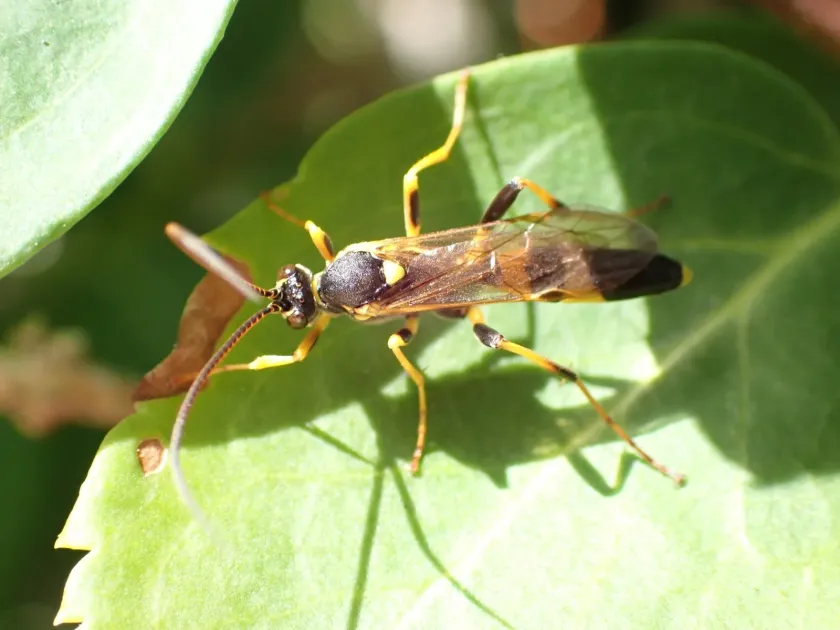
The adult wasp has a slender, elongated body, typically reaching a length between 12 and 18 millimeters, with distinct structural segments.
Coloration is often a warning combination of black and yellow or reddish patches, serving as a protective mechanism against predators.
The females are equipped with a sharp, functional ovipositor, which they use to deposit their eggs inside host caterpillars.
The antennae are long and multi-segmented, providing the insect with keen sensory capabilities to detect host pheromones and plant-derived signals.
What it damages
As a parasitoid, Amblyteles armatorius does not cause damage to plants; rather, it acts as a protector by targeting harmful lepidopteran larvae.
Its primary hosts are various species of cutworms and armyworms, which are known to be significant agricultural pests on crops like corn and cereals.
The larval stage of the wasp develops inside the caterpillar, effectively terminating the pest's life cycle before it can cause further damage to the crops.
By keeping the population of these caterpillars in check, the wasp serves as an essential component of the natural ecological balance in agricultural fields.
In modern agronomy, the presence of such parasitoids is viewed as a highly beneficial indicator of a healthy and balanced agro-ecosystem.
When it appears
The activity cycle of this wasp follows the seasons, with adults appearing from late spring through the summer months.
The peak activity of the wasps is synchronized with the hatching and growth periods of their target host caterpillars.
Developmental stages occur throughout the growing season, potentially allowing for multiple generations depending on environmental conditions.
During winter, mated females undergo diapause, finding shelter in the soil, leaf litter, or crevices of tree bark to survive the colder temperatures.
Warm spring weather triggers their emergence, marking the start of a new cycle of host searching and parasitism.
Signs of infestation
One sign of their presence is the observation of sluggish or dying larvae on crop leaves, which indicates successful parasitism.
Visual surveys during the daytime may reveal adult wasps patrolling plant stems and leaf surfaces in search of suitable hosts for egg-laying.
The presence of empty larval skins or pupal remains near the base of the crop can sometimes be linked to the successful emergence of parasitoids.
A noticeable decrease in the pest population on fields with high wasp activity serves as a primary indicator of their efficiency.
There are no negative symptoms on the plants themselves associated with these wasps, as they do not feed on plant tissues.
Control measures
Management of Amblyteles armatorius primarily focuses on its conservation rather than its eradication, as it is a beneficial insect.
Agro-ecosystem management should prioritize the reduction of broad-spectrum insecticides that could inadvertently kill this parasitoid population.
Integrating diverse flora, such as flowering hedgerows, provides necessary nectar sources for the adult wasps, enhancing their longevity and reproductive success.
- Avoid indiscriminate spraying during the peak flight season.
- Maintain natural habitats surrounding the agricultural plots.
- Use selective pest control methods that target only the specific pest while sparing beneficial species.
By fostering a friendly environment for these parasitoids, farmers can naturally reduce the pest pressure on their crops without relying solely on chemicals.
Taxonomy
- Latin name
- Amblyteles armatorius
- Order
- Hymenoptera
- Family
- Ichneumonidae
- EPPO code
- AMBTAR
Discussion
No discussions yet — be the first.