
Amblyteles
Amblyteles
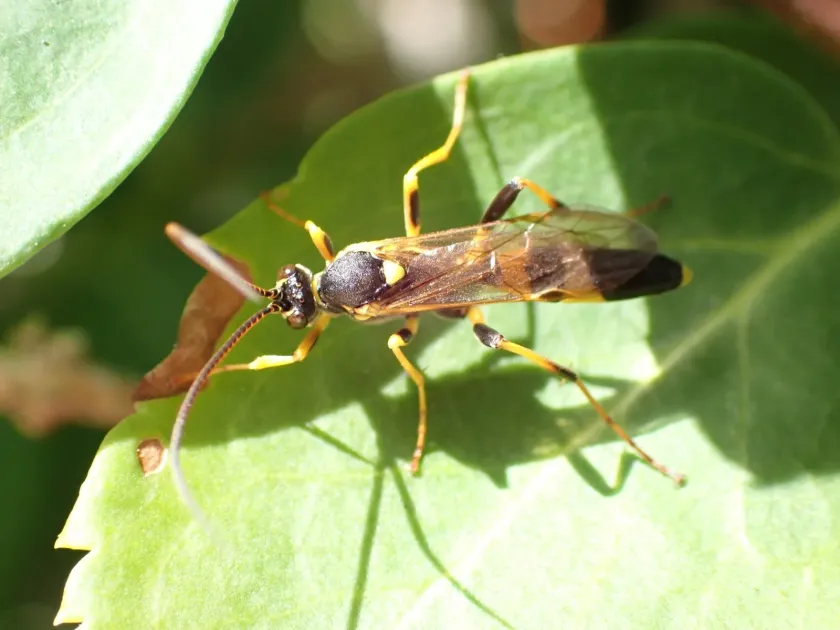
Description
How to identify
Amblyteles is a genus of wasps belonging to the family Ichneumonidae. These insects are recognized as specialized parasitoids that play a significant role in biological control systems.
The adult wasps possess a slender body structure typical for the subfamily Ichneumoninae, with long antennae and distinct wing venation patterns.
The life cycle follows complete metamorphosis, including egg, larval, pupal, and adult stages, with larvae developing internally within their host.
Identification at the species level usually requires expert entomological examination of morphological features, as members of this genus look quite similar.
Their presence in an agroecosystem is often an indicator of the diversity of other insects that serve as their hosts.
What it damages
Amblyteles does not directly damage crops because it does not feed on plant tissues like leaves, stems, or roots as a phytophagous insect would.
The ecological impact is primarily focused on regulating populations of other insects, often lepidopteran larvae, which may themselves be agricultural pests.
There is no evidence of Amblyteles causing economic damage to harvests, as they are not pests of crops in the traditional agricultural sense.
The role of these insects is usually beneficial or neutral, as they help maintain the balance of the insect community in the field.
Classifying them as pests is often a misconception, as their biological activity is primarily directed toward other insects rather than plants.
When it appears
Adult Amblyteles activity is most commonly observed during the summer months when they are searching for hosts to parasitize.
They overwinter as adults or pupae in protected environments, such as the soil layer or under dense crop residues, waiting for favorable conditions.
The emergence of adults in spring is synchronized with the availability of suitable hosts, which ensures the survival of the next generation.
Their seasonal dynamics are heavily influenced by temperature, humidity, and the overall density of the insect populations they parasitize.
Throughout the season, they navigate through fields and forest edges, adapting their activity to the daily changes in weather and host availability.
Signs of infestation
Detection is usually carried out through sweep netting or the use of yellow sticky traps designed for general entomological monitoring in fields.
Direct signs of their activity are typically found only upon dissecting host larvae, where developing wasp larvae may be identified.
The absence of plant damage despite their presence confirms that they do not harm the crop directly.
Field observers may note the presence of these wasps, but this does not require intervention unless the population reaches atypical levels.
Understanding their behavior helps agronomists distinguish between beneficial insect activity and potential pest threats.
Control measures
As Amblyteles are not crop pests, there are no specific chemical control measures recommended for their management.
Sustainable pest management should focus on preserving beneficial insect populations by reducing the use of broad-spectrum insecticides.
Maintaining field margins and biodiversity strips helps provide refuge for these parasitoids, enhancing natural pest suppression in the area.
Integrated Pest Management (IPM) practices encourage the protection of these wasps as they contribute to the natural reduction of major crop pests.
Agrochemical programs should always consider the impact on non-target species to avoid disrupting the natural balance of the field ecosystem.
Taxonomy
- Latin name
- Amblyteles
- Order
- Hymenoptera
- Family
- Ichneumonidae
- EPPO code
- AMBTSP
Discussion
No discussions yet — be the first.