
Maple leaf miner moth
Altenia scriptella
Description
How to identify
The Maple leaf miner moth (scientific name: Altenia scriptella) belongs to the family Gelechiidae. It is a small moth, with an adult wingspan typically measuring between 10 and 12 millimeters.
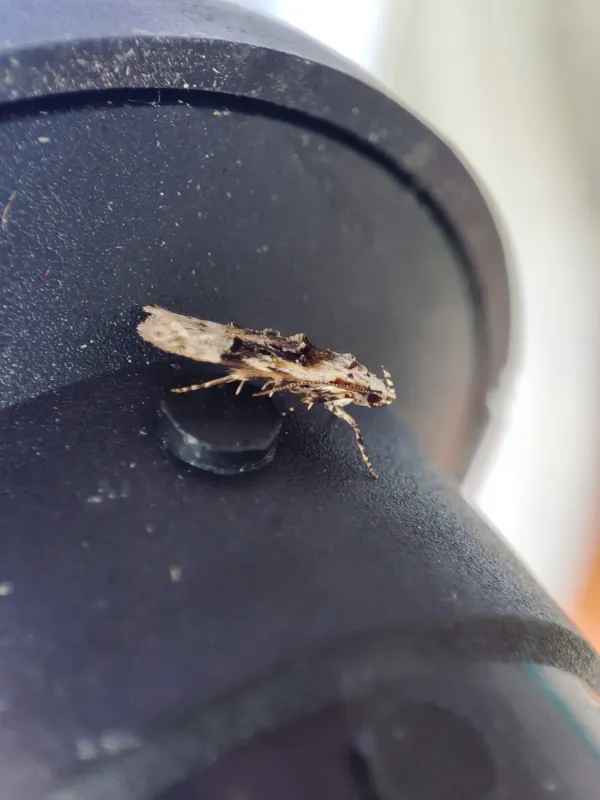
Adult moths are characterized by mottled forewings featuring dark patterns and zig-zagging lines. This intricate camouflage makes them nearly invisible when resting on the bark of host trees.
The larvae progress through several instars. As they grow, their color shifts from a pale, translucent yellow to a vibrant green, which helps them blend in with the leaf tissue they consume.
The life cycle consists of the egg, larval, pupal, and adult stages. The insect typically overwinters as a pupa, hiding in crevices of the tree bark or within leaf litter on the ground.
Identification is most accurately performed by examining the unique patterns of the leaf mines rather than attempting to spot the adult moths, which are primarily nocturnal.
What it damages
The moth is a specialist pest that primarily infests trees of the genus Acer, with the Norway maple being a particularly favored host in urban and forest settings.
The larvae are internal feeders, creating distinct mines within the leaf blade. This feeding behavior destroys the photosynthetic cells, causing the leaf to lose its vitality.
Severe infestations lead to premature defoliation, which causes significant stress to the tree. This reduces the plant's ability to accumulate energy reserves for the following season.
Young trees are especially vulnerable to damage. Heavy feeding can stunt shoot growth, deform leaf development, and significantly diminish the tree's overall ornamental value.
In addition to cosmetic damage, the compromised integrity of the leaves makes the tree more susceptible to secondary fungal infections and environmental stressors like drought.
When it appears
Adult moth activity typically commences in late spring, coinciding with the timing of maple leaf bud burst, which provides immediate oviposition sites for the first generation.
The first generation of larvae feeds throughout early summer. Depending on the local climate and temperature, this species can produce one or two generations per growing season.
Peak larval activity generally occurs in June and July. During these months, the rapid development of the larvae results in the most visible damage to the canopy.
By late August, most larvae conclude their feeding phase and enter the pupal stage. The insect remains dormant until the arrival of the next spring season.
Environmental conditions significantly influence population cycles; warm, stable weather encourages rapid development, leading to potential outbreaks in certain years.
Signs of infestation
The primary symptom is the presence of irregular, winding mines within the leaf tissue. Unlike blotch miners, this species creates tunnels that are clearly visible against the light.
Affected leaves often show signs of necrosis, turning brown and brittle. Close inspection of the leaf underside often reveals small holes where larvae have exited the mines.
- Winding, light-colored tunnels visible on the leaf surface.
- Premature yellowing or browning of the foliage in mid-summer.
- Leaf rolling or folding near the feeding sites due to silk webbing.
- Reduced crown density and an overall «scorched» appearance of the tree.
During heavy infestations, the ground beneath the tree may become littered with prematurely dropped leaves, which may contain larvae or pupae.
Control measures
Sanitation is a vital component of control. Removing and destroying fallen leaves in the autumn is essential to eliminate the overwintering pupae and break the life cycle.
Chemical control involving systemic insecticides is most effective when applied during the egg-hatching period, ensuring the larvae are exposed to the treatment upon initial feeding.
In residential areas, the use of biological insecticides containing Bacillus thuringiensis is recommended, as it targets the larvae while sparing beneficial predatory insects.
Maintaining tree vigor through proper irrigation and balanced fertilization helps trees tolerate mild infestations and recover more quickly from foliage loss.
Encouraging biodiversity by providing habitats for birds and parasitic wasps can help keep moth populations in check through natural predation and biological control.
Taxonomy
- Latin name
- Altenia scriptella
- Order
- Lepidoptera (butterflies)
- Family
- Gelechiidae
- EPPO code
- ALTNSC
Discussion
No discussions yet — be the first.