
Clematis borer
Alcathoe caudata
Description
How to identify
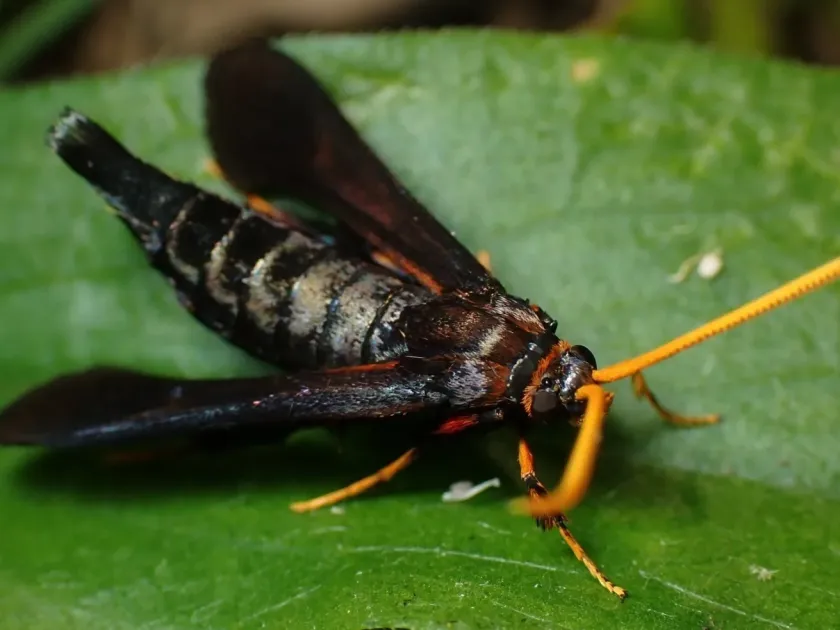
The Clematis borer (Alcathoe caudata) is a clearwing moth belonging to the Sesiidae family. These insects are masters of mimicry, as their physical appearance closely resembles that of wasps or hornets, providing them with natural protection from predators.
Adult moths have dark bodies marked with bright yellow or orange bands on the abdomen. Their wings are predominantly transparent, narrow, and defined by dark borders and veins, with a wingspan typically reaching about 20 to 25 millimeters.
Female moths deposit eggs near the base of the stems or within crevices in the bark of host plants. The hatching larvae have cream-colored bodies with brown heads and are specialized to live internally within the stems.
The life cycle of this pest is typically completed in one year. During most of this period, the insect exists in the larval stage, feeding on the internal tissues of the clematis vine while it matures for pupation.
Adult flight usually occurs during the summer months. During this active period, the moths feed on flower nectar and seek out mates, which initiates the reproductive phase for the next generation of larvae.
What it damages
The primary host plants for this pest are members of the genus Clematis. Upon hatching, the larvae burrow into the base of the stem, creating extensive tunnels within the core of the vine.
By feeding on the internal pith and vascular tissues, the larvae disrupt the plant's ability to transport water and nutrients efficiently. This results in the gradual weakening of the entire vine.
Structural integrity is significantly compromised by the larval tunneling. The stems become brittle and are highly susceptible to breaking under environmental stress, such as wind or the weight of the foliage.
The tunnel openings serve as entry points for secondary pathogens, including various fungi and bacteria, which can exacerbate the damage and lead to crown rot or wilting diseases.
In cases of severe infestation, the cumulative damage leads to the death of individual vines or, in some instances, the entire clematis plant, significantly impacting the aesthetics of the garden.
Signs of infestation
One of the earliest warning signs is the sudden wilting or drooping of a single vine or branch, which often occurs despite adequate moisture levels in the soil, confusing gardeners with wilt diseases.
A careful inspection of the stem base may reveal small, circular entry holes. These holes are often accompanied by piles of frass, which looks like fine brown sawdust or gritty powder accumulating near the ground.
If an affected stem is cut open longitudinally, internal galleries can be clearly observed. These tunnels are usually filled with larval excrement, and the larvae or their pupal cases may be present.
Prior to adult emergence, the empty pupal casing may be found protruding from the exit hole in the stem, confirming that the insect has completed its development within that specific vine.
Declining plant vigor is another indicator; leaves may lose their luster, show signs of yellowing, or the overall growth rate of the clematis might be noticeably stunted compared to healthy neighboring plants.
Control measures
Effective management begins with strict sanitation. Gardeners should regularly monitor their clematis plants and prune out any stems showing signs of infestation, ensuring that all debris is destroyed to eliminate the larvae.
Maintaining high plant vigor through proper fertilization and consistent irrigation is crucial. Healthy plants possess better natural defenses and can sometimes recover or tolerate minor pest pressures better than stressed ones.
Chemical intervention involving systemic insecticides can be beneficial. These products are absorbed by the plant and can target larvae feeding internally, provided applications are timed to coincide with adult flight activity.
Pheromone traps are highly effective for monitoring adult moth populations. Using these traps helps gardeners accurately predict when to begin control measures, minimizing the reliance on broader pesticide sprays.
Keeping the area around the base of the clematis clear of dense weeds and debris removes secondary hiding spots and makes the main stem less attractive to egg-laying female moths.
Taxonomy
- Latin name
- Alcathoe caudata
- Order
- Lepidoptera (butterflies)
- Family
- Sesiidae
- EPPO code
- ALCHCA
Discussion
No discussions yet — be the first.