
Cotton leafworm
Alabama argillacea
Description
How to identify
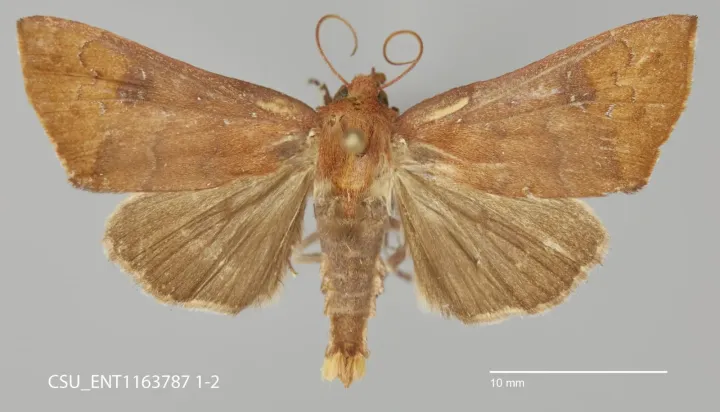
The cotton leafworm Alabama argillacea is a significant pest within the Noctuidae family of the order Lepidoptera. Adult moths typically feature a wingspan of 30–40 mm with brownish-grey coloring, often showing distinct zigzag markings on the wings.
Larvae pass through several instars, exhibiting a range of colors from pale yellowish-green to darker tones with longitudinal stripes, which aids in camouflaging them against cotton foliage.
Pupation usually occurs within a sheltered leaf fold, where the larva spins a delicate web to protect itself during the transformation process into a moth.
This species is known for its rapid lifecycle, which can be completed in just a few weeks under optimal tropical conditions, allowing for multiple overlapping generations.
Adult moths are highly migratory, capable of traveling hundreds of kilometers on wind currents, which often leads to sudden infestations in areas where the pest cannot overwinter.
What it damages
While the primary host is the cotton plant (Gossypium), this insect can occasionally infest other Malvaceae family members if cotton resources are exhausted.
Larvae are notorious for their aggressive feeding behavior, often completely skeletonizing leaves and leaving behind nothing but the vascular vein structure.
Heavy defoliation causes the cotton plant to shed squares and young bolls, resulting in substantial losses in lint yield and seed quality at harvest.
Severe outbreaks can cause total crop failure, as the rapid feeding rate of a large larval population can strip an entire field of its foliage in a matter of days.
The damage to the canopy also exposes bolls to direct sunlight and increases susceptibility to opportunistic pathogens and secondary fungal infections.
When it appears
The activity of Alabama argillacea is strictly temperature-dependent; the pest thrives in warm, humid weather and remains inactive or dies in cold environments.
In seasonal climates, the pest usually appears mid-to-late summer, coinciding with the peak vegetative growth and boll development stages of the cotton crop.
Population monitoring should begin with the arrival of the first migratory moths, often detected through light traps or pheromone bait stations placed near field borders.
Warm nights with temperatures between 25°C and 30°C significantly accelerate the development rate, leading to explosive increases in larval numbers if not managed early.
The lifecycle is truncated as autumn approaches, eventually halting reproduction when temperatures drop below the minimum threshold required for larval metabolism.
Signs of infestation
Early detection is crucial and involves scouting for small, pale eggs laid individually on the underside of leaves, usually in the middle to upper canopy.
A primary indicator is the presence of small, translucent patches on leaves caused by young larvae feeding on the leaf surface without breaking the upper epidermis.
Rolled or tied leaves are a definitive sign of later-instar larval activity, as these creatures use webbing to create a protective hideout from predators.
The accumulation of frass (larval droppings) on the ground or on lower leaves is a clear visual cue that a large, active population of leafworms is feeding overhead.
- Irregular holes in the leaves.
- Stripped leaf veins and ragged leaf edges.
- Increased presence of nocturnal moths near light sources.
Control measures
Biological control, specifically the use of Bacillus thuringiensis (Bt) sprays, is highly effective against younger larvae while remaining safe for beneficial predatory insects.
Chemical intervention should be reserved for periods when economic injury levels are exceeded, utilizing selective insecticides to minimize impact on the broader field ecosystem.
Good agricultural practices, such as the complete destruction of crop residue after harvest, help disrupt the lifecycle by destroying pupae before they emerge as the next generation.
Promoting a healthy environment for natural enemies, such as parasitic wasps and predatory bugs, can provide significant suppression of leafworm populations throughout the season.
Integrated Pest Management (IPM) programs emphasize early scouting and threshold-based decisions to maintain crop health while reducing the need for broad-spectrum pesticide applications.
Taxonomy
- Latin name
- Alabama argillacea
- Order
- Lepidoptera (butterflies)
- Family
- Erebidae
- EPPO code
- ALABAR
Discussion
No discussions yet — be the first.