
Cotton leafworm
Alabama
Description
How to identify
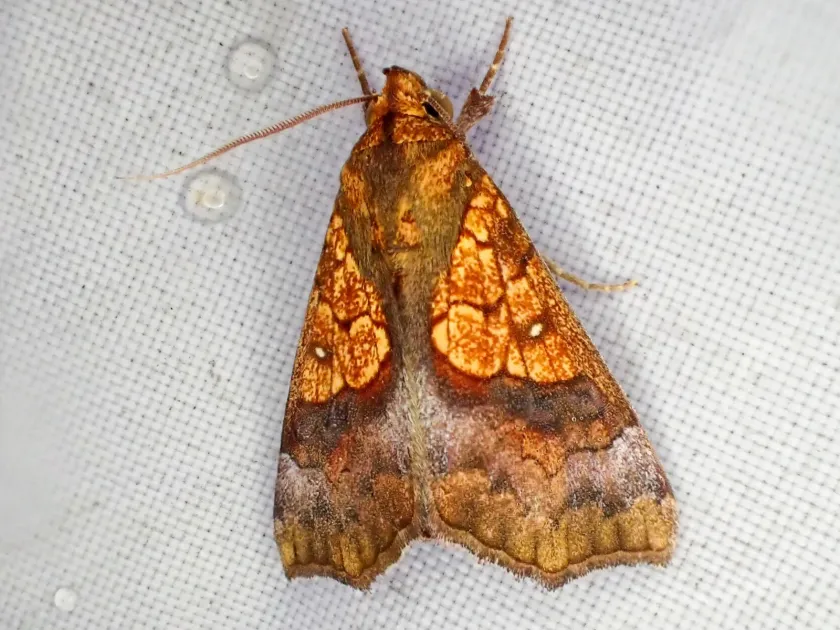
The cotton leafworm, scientifically known as Alabama argillacea, is a moth species belonging to the family Erebidae. The adult moth is characterized by its brownish wings with distinct wavy lines, spanning approximately 30 to 40 mm, allowing it to blend seamlessly into cotton foliage.
The larvae are the primary damaging stage. They exhibit a diverse range of colors from yellow-green to dark brown or black, often featuring conspicuous spots. Identification is crucial in the early stages to prevent the rapid population expansion that typically characterizes this species.
What it damages
The primary host for this pest is the cotton plant (Gossypium). Larvae feed voraciously on leaves, often stripping them down to the veins, which significantly disrupts photosynthesis and retards boll development.
When populations reach outbreak levels, the insect can cause complete defoliation of extensive fields. In addition to cotton, they may feed on other Malvaceae family members, using these plants as alternative hosts during off-seasons or migration periods.
When it appears
The life cycle of the cotton leafworm is highly dependent on climate, favoring warm and humid conditions. It is a migratory pest, often moving from tropical regions to more temperate cotton-growing areas as the season progresses.
In optimal conditions, the generation time is short, allowing for multiple overlapping cycles per season. Monitoring for these moths usually begins in mid-summer, as the population density tends to increase significantly during the peak vegetative stage of the crop.
Signs of infestation
The initial signs of infestation include small, irregular holes in the lower canopy leaves. These early feeding marks are often overlooked, making regular field inspections of the lower leaves essential for early detection.
Visible signs of high-density infestation include the presence of larvae on leaf surfaces, significant skeletonization of the plant canopy, and the accumulation of larval frass on the soil surface beneath the infested plants.
Control measures
Integrated Pest Management (IPM) is the most effective approach for controlling the cotton leafworm. This includes the use of pheromone traps to monitor adult moth arrival and subsequent egg-laying activities.
Chemical control is implemented when thresholds are exceeded, utilizing selective insecticides that preserve beneficial insect populations. Biological controls, such as applications of Bacillus thuringiensis and the protection of natural predators like lacewings and ladybirds, are vital for long-term field stability.
Taxonomy
- Latin name
- Alabama
- Order
- Lepidoptera (butterflies)
- Family
- Erebidae
- EPPO code
- ALABSP
Discussion
No discussions yet — be the first.