
Agrypon seyrigi
Agrypon seyrigi
Description
How to identify
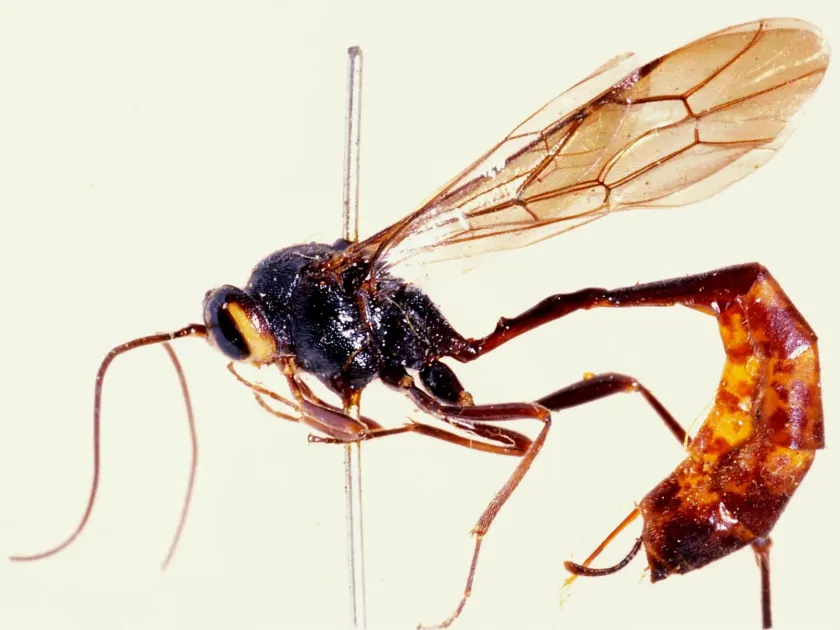
Agrypon seyrigi is a species of parasitic wasp belonging to the Ichneumonidae family. These insects are essential components of natural ecosystems and act as biological control agents.
The morphology of these wasps is adapted for seeking out hosts hidden within plant tissues. They typically possess a slender body, long antennae, and, in females, a functional ovipositor.
Identification often requires taxonomic expertise, as the species is part of a large and complex genus. They are generally elusive and rarely spotted by casual observers.
Their life strategy involves locating specific insect larvae, which are often pests, and laying eggs on or inside them, thereby regulating their populations naturally.
In an agricultural context, recognizing Agrypon seyrigi as a beneficial organism rather than a threat is crucial for sustainable farming practices.
What it damages
It is important to clarify that Agrypon seyrigi does not cause any damage to crops. It is not a phytophagous insect; it feeds neither on plant leaves, stems, nor roots.
The interaction between the wasp and the plant is purely functional: the plant serves as a hunting ground where the wasp searches for its host, which is usually a harmful caterpillar.
Any perceived damage to crops in areas where these wasps are found should be attributed to other factors, as Agrypon seyrigi acts as a natural protector of the plants.
No symptoms of infestation, such as necrosis, leaf skeletonization, or vascular damage, are associated with the activity of this species.
Farmers should treat this species as a natural asset that helps reduce the need for chemical pest control, improving the overall sustainability of the agroecosystem.
When it appears
The activity cycle of Agrypon seyrigi is synchronized with the phenology of its host insects. They are most active during the growing season, typically from spring through autumn.
Adult wasps emerge when host caterpillar populations are sufficient to support the next generation. Temperature and humidity are key factors driving their emergence and dispersal.
Their flight period is often observed during warmer months, when they actively patrol crops looking for larvae that are feeding on foliage or hiding in stems.
During the cooler months, the population survives in a dormant stage, often overwintering inside the host's pupa or in other sheltered environments until conditions improve.
Understanding these temporal patterns helps agronomists time their field operations to avoid disrupting the presence of these beneficial biological agents.
Signs of infestation
There are no diagnostic signs of crop damage caused by Agrypon seyrigi, as they do not attack plants. The primary "sign" of their presence is a healthy environment with lower pest pressure.
A trained eye might spot these wasps scanning leaves for vibrations or scents emitted by potential hosts. They move with purpose and are rarely seen resting on plants for long periods.
Occasionally, one might find the remains of host larvae that have been successfully parasitized. Such remnants are evidence of the wasp’s positive work in the field.
The presence of parasitized caterpillars or empty pupal cases of pests can be considered an indirect indicator of the successful establishment of this species.
Ultimately, a high diversity of parasitic wasps in the field is a sign of ecological health and indicates that the ecosystem is resilient to potential pest outbreaks.
Control measures
No control measures should be taken against Agrypon seyrigi. As a beneficial parasitoid, it is a valuable ally that provides free pest management services.
Conservation of this species is best achieved through Integrated Pest Management (IPM) practices, which prioritize the protection of natural enemies over broad-spectrum pesticides.
Increasing plant diversity, including planting nectar-rich wild flowers around fields, can provide essential resources for adult wasps and enhance their survival rates.
When chemical intervention against actual pests is necessary, choosing selective, low-toxicity products is critical to ensuring the survival of parasitic wasps.
By fostering an environment that supports natural parasitoids, farmers can significantly reduce the economic cost associated with repeated insecticide applications.
Taxonomy
- Latin name
- Agrypon seyrigi
- Order
- Hymenoptera
- Family
- Ichneumonidae
- EPPO code
- AGRPSE
Discussion
No discussions yet — be the first.