
Agrypon omum
Agrypon omum
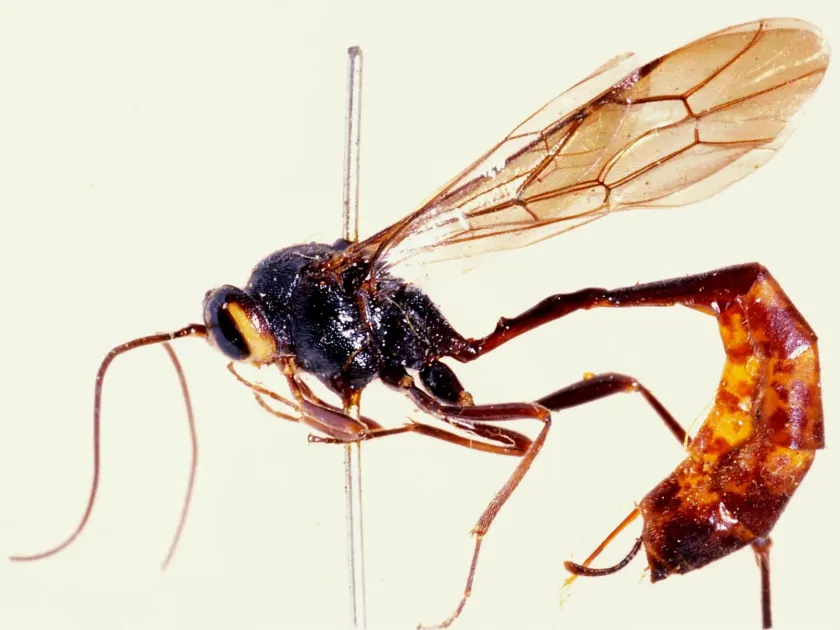
Description
How to identify
Agrypon omum belongs to the order Hymenoptera and the family Ichneumonidae. It is a small parasitoid wasp characterized by an elongated body and well-developed wings adapted for flight.
This species is a specialized entomophagous parasitoid. Morphologically, adults resemble typical representatives of the Anomaloninae subfamily, known for their high degree of host specificity.
The life cycle is closely linked to the larvae of various Lepidopteran pests. Adults are most active during the warmer months, focusing on locating hosts for oviposition.
The larval stage develops inside the host body, consuming the internal tissues of the host insect. This biological mechanism establishes the species as a natural controller of pest populations.
Species identification in field conditions is challenging due to their small size and structural similarities with related wasps. Laboratory examination or genetic analysis is often required for identification.
What it damages
This species is not a direct pest of agricultural crops but serves as a vital natural predator of lepidopteran larvae. It plays a significant role in maintaining the balance of the agroecosystem.
Agrypon omum parasitizes caterpillars, including leafrollers and cutworms, which are known to cause economic damage to fruit and vegetable crops. The parasitic activity eventually kills the host.
The population of the parasitoid can significantly reduce the densities of harmful insects. It is considered a beneficial organism that supports natural pest regulation in the field.
Negative impacts on agricultural operations can occur if broad-spectrum pesticides are used indiscriminately, destroying beneficial wasp populations and leading to secondary pest outbreaks.
Assessing the role of Agrypon omum requires an integrated management approach, as these wasps provide essential ecosystem services by controlling phytophagous insect numbers.
Control measures
Management strategies for this species involve minimizing the use of high-toxicity insecticides during the peak activity periods of the parasitoids, preferring selective biological agents instead.
Establishing nectar-rich plant corridors on agricultural sites provides essential resources for adult wasps, extending their lifespan and enhancing their reproductive potential.
Agronomic practices should favor the conservation of natural habitats. Reducing intensive soil tillage helps ensure the survival of parasitoid pupae overwintering in the soil.
Implementing ecological buffer strips or boundary habitats with wild flora promotes the movement of beneficial insects into the main cultivation areas.
Pest monitoring protocols should account for the presence of natural enemies. If population levels of Agrypon omum are sufficient, the reliance on synthetic chemical interventions can be reduced.
Taxonomy
- Latin name
- Agrypon omum
- Order
- Hymenoptera
- Family
- Ichneumonidae
- EPPO code
- AGRPOM
Discussion
No discussions yet — be the first.