
Agrypon flexorium
Agrypon flexorium
Description
How to identify
Agrypon flexorium belongs to the order Hymenoptera and the family Ichneumonidae. These insects are specialized parasitoids that function within agroecosystems, often acting as natural regulators of lepidopteran larvae populations.
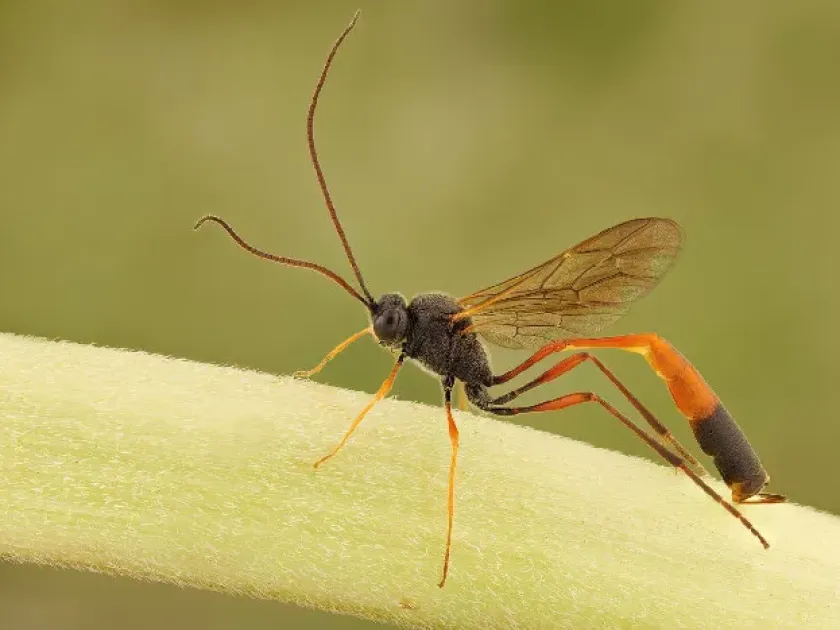
Adult insects exhibit a slender body structure, typical of ichneumon wasps, with elongated abdomens and distinctive antennae. Their coloration usually allows for effective camouflage against bark or foliage, facilitating their search for hosts.
A primary anatomical feature is the female ovipositor, which is highly specialized for injecting eggs into the bodies of host larvae. The wing venation is transparent and structured in a manner characteristic of this taxonomic group.
The size of adult individuals can fluctuate depending on the availability of food resources during the larval developmental stages. Identification typically requires a specialist's approach, using microscopy to distinguish them from related species.
They are highly mobile, often seen in environments with high concentrations of caterpillar hosts. This activity is crucial for maintaining the ecological balance, provided that their population density remains within natural limits.
What it damages
The damage caused by Agrypon flexorium is essentially related to its parasitic lifestyle. While they target caterpillar pests, they can become problematic if they disrupt beneficial insect populations or reach unnaturally high densities.
Agricultural crops can suffer indirectly when the natural balance of pest control is disturbed. By preying upon certain caterpillar species, they influence the overall pest pressure, which sometimes leads to unforeseen shifts in the ecosystem.
These wasps target various horticultural and field crops infested by lepidopteran larvae. The host larvae are consumed from within, which inevitably leads to their mortality and affects the crop growth dynamics.
While often viewed as biological control agents, their presence in ornamental or delicate crops may be undesirable due to the physical damage caused by the oviposition process. This can lead to secondary infections in the plant tissue.
Assessing the total economic impact requires a thorough understanding of the specific host-parasitoid relationships in the field. Growers should carefully evaluate whether the presence of these wasps warrants intervention.
When it appears
The appearance of Agrypon flexorium is strictly tied to the phenology of their insect hosts. Adults typically emerge in sync with the primary generations of moth larvae, ensuring a steady food supply for their offspring.
Activity peaks during the warmer spring and summer months, as temperature regimes dictate the speed of their metamorphosis. They are most efficient in environments with stable humidity and moderate temperatures.
Their life cycle includes egg, larval, pupal, and adult stages. The time taken to complete these cycles is highly dependent on environmental conditions and the availability of suitable hosts in the immediate vicinity.
Second generations are common in mid-summer, allowing the species to capitalize on the peak population growth of lepidopteran pests. This makes them highly effective in suppressing potential outbreaks.
Overwintering usually occurs at the larval or pupal stage, often sheltered within the host’s remains or under organic debris. This dormancy ensures the survival of the population through harsh winter periods.
Signs of infestation
The most visible sign of Agrypon flexorium presence is the abnormal behavior of caterpillar populations. Affected larvae become lethargic, lose their appetite, and eventually cease movement entirely.
Dissection of dying larvae will often reveal the presence of wasp larvae or pupal cocoons inside the host body. This provides clear confirmation of the parasitoid’s activity in the given crop field.
Microscopic marks on plant leaves near the site of host activity may indicate oviposition attempts. These small punctures can occasionally lead to necrotic spots on leaves, which may be misidentified as minor plant diseases.
A general decline in the number of active lepidopteran pests is a positive sign of the wasp's contribution to natural control. However, this should not lead to complacency in monitoring pest thresholds.
Adults can often be seen resting on nectar-producing flowers or succulent plant parts. Observing these wasps is a key indicator for agronomists to begin a formal assessment of the pest-parasitoid pressure.
Control measures
Effective control should focus on integrated pest management (IPM) to maintain ecological health. Excessive or non-selective pesticide use is strongly discouraged as it harms natural wasp populations, leading to further pest outbreaks.
Creating favorable conditions for natural predators is a sustainable approach. Planting wildflowers around field perimeters helps sustain wasp populations and provides them with essential energy sources between host cycles.
- Use selective insecticides that minimize toxicity to beneficial hymenopterans.
- Implement field sanitation by removing crop residues that might harbor pests.
- Monitor populations using pheromone traps to make informed treatment decisions.
- Employ biological control methods that support rather than inhibit natural species.
Mechanical control, such as removing infested plant foliage in smaller setups like greenhouses, is an effective and safe way to manage populations. Organic farming practices particularly rely on these low-impact strategies.
Maintaining high standards of agronomy, including optimal soil health and plant vigor, reduces the vulnerability of crops to pest attacks. Vigilant monitoring ensures that the balance between pests and their natural enemies remains intact.
Taxonomy
- Latin name
- Agrypon flexorium
- Order
- Hymenoptera
- Family
- Ichneumonidae
- EPPO code
- AGRPFX
Discussion
No discussions yet — be the first.