
Agrypon
Agrypon augrhantum
Description
How to identify
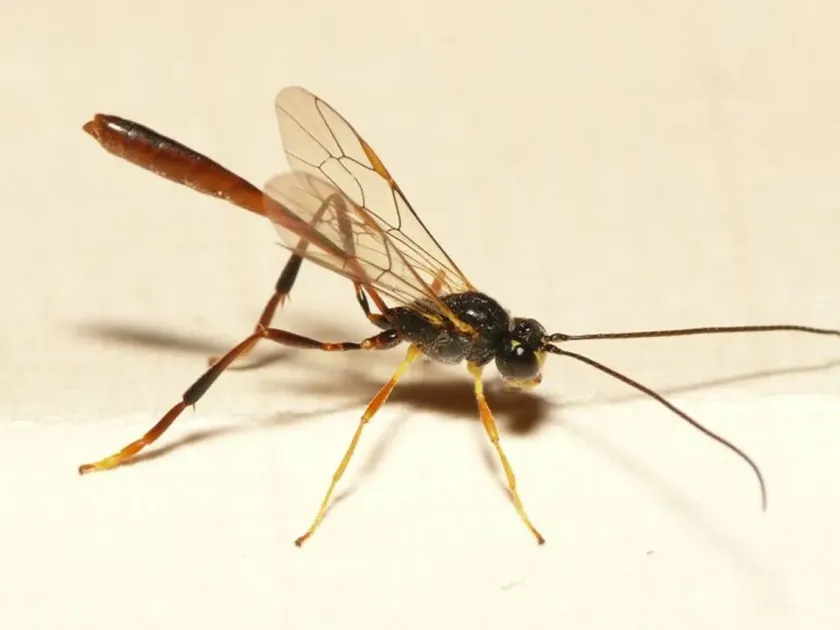
Agrypon (Agrypon augrhantum) belongs to the order Hymenoptera and the Ichneumonidae family, which are known as important parasitoid wasps.
These insects are characterized by a slender body, often ranging in color from yellowish-brown to black, with long antennae and distinct wing venation.
The morphology of this species is highly specialized, allowing it to locate its host—typically moth caterpillars—within dense foliage or plant stems.
Systematically, they represent a complex group where exact identification often requires detailed examination of the abdominal segments and wing vein patterns.
As parasitoids, their presence is a clear indicator of the ecological complexity within an agricultural field or orchard environment.
What it damages
Agrypon is technically not a primary plant pest, but rather a parasitoid that regulates populations of herbivorous insects that damage various crops.
The direct damage caused to crops is attributed to the host larvae (caterpillars) that consume leaves, fruits, and stems of horticultural and field plants.
The role of this insect is essentially functional, as it helps in suppressing the numbers of harmful lepidopterans that would otherwise devastate the yield.
In some agricultural scenarios, Agrypon may be viewed through the lens of beneficial species management, as they are crucial components of integrated pest management programs.
Thus, their impact on the crop is indirect, serving as a natural mechanism of biological control that maintains the health of the agroecosystem.
When it appears
The seasonal activity of Agrypon is highly synchronized with the developmental stages of its primary hosts, ensuring that larvae are available for parasitization.
Adult wasps typically emerge during the late spring and summer months, which coincides with the peak feeding activity of target moth populations.
The weather patterns, particularly temperature and humidity levels, play a critical role in determining the intensity of their activity and overall reproductive success.
During the winter, these insects undergo diapause, often remaining within the protective silk cocoons formed after they emerge from the host larvae.
Observing the emergence of these adults in the field is a useful indicator for agronomists to assess the status of the local biological control population.
Signs of infestation
Evidence of parasitization by Agrypon is usually subtle and often requires expert observation to distinguish it from other mortality factors in moth populations.
One common sign is the reduction in feeding damage on host plants, as parasitized caterpillars exhibit significantly lower metabolic and consumption rates.
In cases of high infestation, empty cocoons may be found attached to the plant surface, indicating that the parasitoid larva has successfully completed its development.
Dissecting suspected host caterpillars can reveal the presence of Agrypon larvae, which are specialized to survive inside the host's body cavity.
Monitoring the adult population using traps can provide data on their prevalence, helping to predict the level of natural regulation occurring in the crop.
Control measures
Active control measures against Agrypon are generally not recommended, as they are considered valuable natural enemies that reduce the need for chemical intervention.
To preserve these insects, agricultural managers should employ selective insecticide programs that minimize the impact on beneficial Hymenoptera populations.
Enhancing the field surroundings with floral borders provides essential nectar resources, which significantly extends the lifespan of adult Agrypon wasps.
Integrated Pest Management (IPM) strategies emphasize the conservation of such parasitoids to achieve sustainable levels of pest control in agricultural settings.
- Prioritize the use of selective, non-toxic insecticides.
- Establish flowering buffer strips around fields.
- Avoid broad-spectrum spraying during peak wasp activity.
Taxonomy
- Latin name
- Agrypon augrhantum
- Order
- Hymenoptera
- Family
- Ichneumonidae
- EPPO code
- AGRPAU
Discussion
No discussions yet — be the first.