
Aetalion reticulatum
Aetalion reticulatum
Description
How to identify
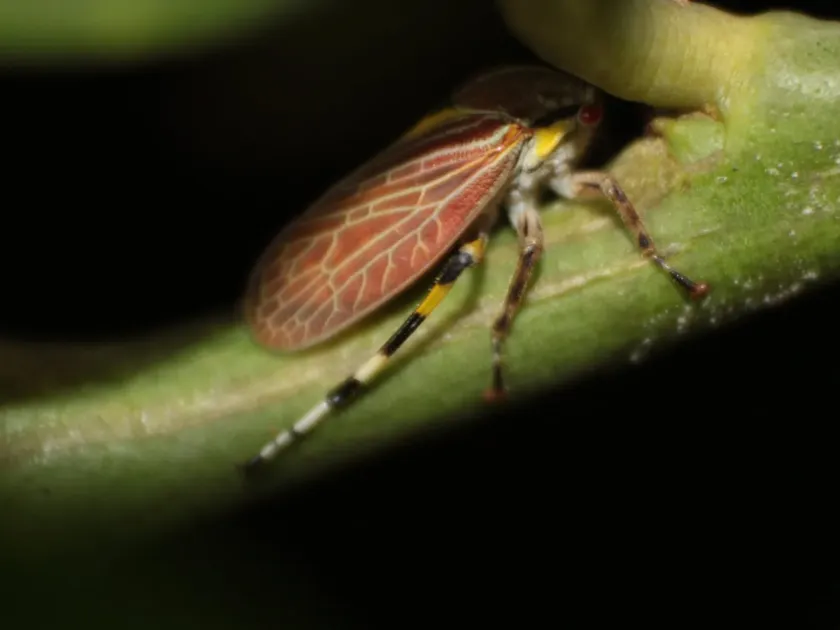
Aetalion reticulatum is a species of insect belonging to the family Aetalionidae within the order Hemiptera. Adults are characterized by a distinct reticulated pattern on their forewings, from which the species name is derived.
The insect body measures approximately 10–12 mm in length, with coloration ranging from brown to dark grey, often featuring a camouflaging pattern. The pronotum is highly developed, a common trait for members of the cicada group.
The nymphs of this pest usually have softer integuments and typically aggregate in colonies. They are known for their unique social behavior, which is a rare characteristic within this family.
Adults possess well-developed wings and are capable of active flight to colonize new host plants. They can be identified by the specific shape of their head and their characteristic posture while feeding on plant sap.
The life cycle involves incomplete metamorphosis. Adults are frequently observed on stems and branches of perennial woody plants during warm periods of the year.
What it damages
This pest attacks a wide range of woody and shrubby plants, including fruit trees, citrus, and various wild species. Young shoots and branches are particularly vulnerable to infestations.
During the feeding process, Aetalion reticulatum extracts sap from the plant phloem. This causes general weakening of the tree, stunted growth of new shoots, and leaf deformation.
Damages are often accompanied by the secretion of honeydew, which subsequently promotes the growth of sooty mold. This significantly reduces the photosynthetic efficiency of the leaves.
Secondary infections, including fungal and viral pathogens, can enter through the puncture sites, significantly complicating the overall phytosanitary status of the crop.
In cases of heavy infestation, premature dropping of leaves and fruits occurs, leading to substantial economic losses in both orchard and forestry management.
When it appears
The activity of this insect depends directly on regional climatic conditions. In tropical and subtropical latitudes, the life cycle may be almost continuous throughout the year.
In temperate zones, the primary activity of adults and nymphs occurs during the spring and summer. During this time, the rapid growth of shoots provides the main food source for the pest.
Females lay eggs into the plant bark tissues, allowing the offspring to successfully overwinter under favorable conditions. Oviposition is often concentrated in protected areas on young branches.
The migration of these pests to new plants typically coincides with peak temperature periods, when increased moisture from plant sap is required to maintain metabolic functions.
The number of generations per season depends on the average annual temperature and the availability of host plants, usually ranging from two to several cycles per year.
Signs of infestation
A primary sign of infestation is the presence of characteristic nymph colonies that tightly cluster around young stems or leaf petioles of the host plant.
The appearance of sticky honeydew on the leaves and branches of the lower canopy is a clear signal of Aetalion activity. This residue also attracts ants, which often protect the colonies.
The presence of a black sooty mold covering the leaf blades indicates an advanced stage of infestation and intense feeding activity by the sap-sucking insects.
Visually apparent curling or wilting of young shoots, even with adequate irrigation, indicates a disruption of sap flow within the tissues due to insect feeding.
When inspecting the bark, one can detect traces of female oviposition, which appear as small tears or specific bumps on the epidermis of the twigs.
Control measures
The primary method of control involves preventative spraying with systemic insecticides during the peak hatching period of nymphs from eggs.
Regular sanitary pruning and the destruction of heavily infested branches are considered effective agronomic practices to significantly reduce the pest population.
Biological control methods include the attraction and preservation of natural enemies, such as predatory bugs and hymenopteran parasitoids that feed on nymphs.
To prevent the spread of the pest, it is essential to maintain optimal plant water balance and timely application of balanced fertilizers to enhance plant immunity.
- Regular canopy health monitoring.
- Application of soap-oil emulsions against early nymph stages.
- Limiting ant populations that facilitate pest survival.
Taxonomy
- Latin name
- Aetalion reticulatum
- Order
- Hemiptera (bugs, aphids, leafhoppers)
- Family
- Membracidae
- EPPO code
- AETHRE
Discussion
No discussions yet — be the first.