
Tea stem fly
Adrama determinata
Description
How to identify
The tea stem fly (Adrama determinata) is a member of the Tephritidae family, also known as fruit flies. It is a specific pest that targets tea plants in tropical tea-growing regions across Southeast Asia.
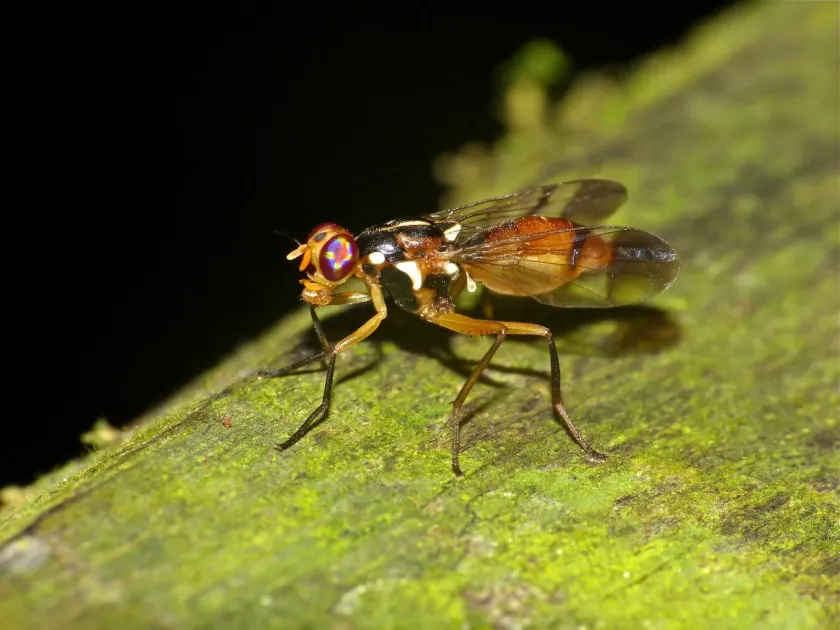
Adult flies are relatively small, typically measuring 5 to 7 mm in length. They are characterized by a distinctive wing pattern common to the fruit fly family, which helps in identifying the species.
The larvae are apodous (legless) and develop entirely within the stem tissues of the host plant. They rely on the internal nutrients of the tea shoots for their survival and development.
Females deposit their eggs directly into young, tender tea shoots. This strategic placement ensures that the hatching larvae immediately have access to high-quality nutrition.
The life cycle of Adrama determinata is closely synchronized with the growth phases of the tea plant. Depending on local environmental conditions, several generations can occur throughout the year.
What it damages
Camellia sinensis, the tea plant, is the primary host for this pest. The larvae specifically target tender, rapidly growing shoots, which are the most valuable parts for commercial production.
By boring into the stems, the larvae create internal tunnels that disrupt the plant's vascular system. This blockage hinders the transport of water and nutrients to the growing tip.
Such infestation significantly reduces both the yield and the quality of the harvested tea leaves. This directly impacts the profitability of tea estates that produce high-grade tea.
Stunted growth, twisting of stems, and overall loss of vigor are common in infested plants. If the infestation is heavy, the affected shoots often fail to produce new leaves.
Damaged stems are also more susceptible to opportunistic fungal and bacterial pathogens. These secondary infections can lead to tissue necrosis and the eventual death of the shoot.
Signs of infestation
The first indicator of an infestation is the cessation of growth in young shoots. Affected twigs remain noticeably smaller and less developed than surrounding healthy vegetation.
Visible swelling or distorted shapes on the stems often indicate the presence of larval tunnels. Sometimes, the bark at the site of infestation may darken or show cracks.
Upon dissecting a suspected shoot, one can find internal cavities containing larval frass and tissue debris. This is the most definitive way to confirm the presence of the tea stem fly.
Wilting of the shoot tips during peak daylight hours is another common symptom, caused by the impairment of the plant's xylem and phloem transport.
Monitoring adult fly activity with yellow sticky traps is an essential diagnostic tool for estate managers. Observing increased captures on traps allows for early detection before significant damage occurs.
Control measures
Cultural control is the first line of defense, involving the regular pruning and immediate removal of infested shoots. Collected material should be burned to kill the larvae inside.
Biological control methods focus on encouraging natural parasitoids, such as specific wasps that target Tephritid larvae. Reducing broad-spectrum insecticide use helps preserve these natural enemies.
Chemical control requires the use of systemic insecticides that can penetrate plant tissues to reach the larvae. Applications must be timed based on the presence of adults to maximize efficacy.
Adherence to pre-harvest intervals is mandatory to ensure that chemical residues do not exceed safety standards in the final tea product. Safety for consumers remains a top priority.
Integrated Pest Management (IPM) strategies, which combine field monitoring with selective treatments, provide the most sustainable and effective control for the tea stem fly.
Taxonomy
- Latin name
- Adrama determinata
- Order
- Diptera (flies)
- Family
- Tephritidae
- EPPO code
- ADRADE
Discussion
No discussions yet — be the first.