
Adrama
Adrama
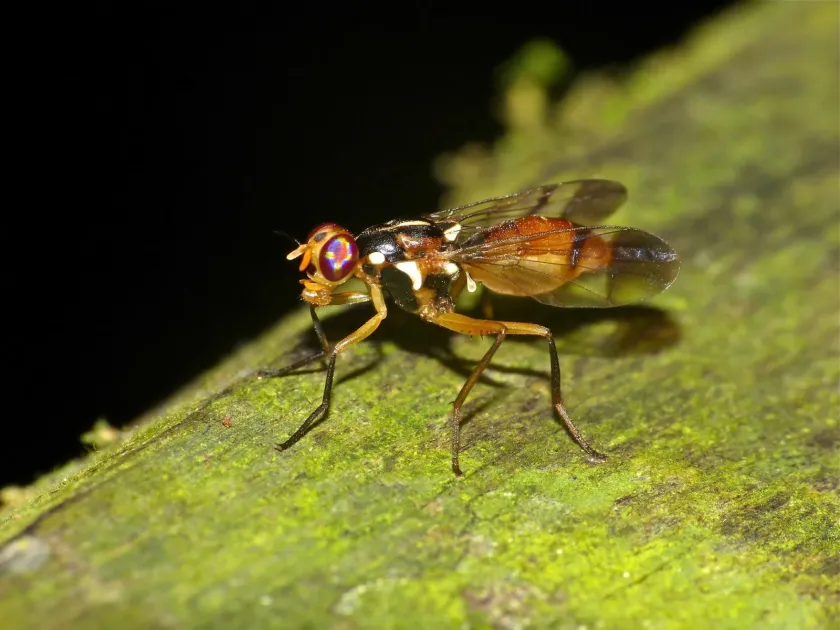
Description
How to identify
Adrama is a genus of insects belonging to the Tephritidae family, also known as the fruit flies, within the order Diptera. These insects are characterized by their distinct morphological features typical of this family.
Adult flies possess a colorful appearance with patterned wings, featuring intricate spots or bands that serve as camouflage in their natural habitat.
They are medium-sized flies equipped with highly developed sensory organs and mouthparts specialized for feeding on floral nectar and plant juices.
The genus includes several species, with Adrama determinata being the most recognized, primarily found in tropical regions across Asia.
The larvae are typically legless and maggot-shaped, adapted for an internal life cycle within various plant tissues, which is a hallmark of the Tephritidae family.
What it damages
These pests primarily target various tropical crops, including the tea plant (Camellia sinensis) and different palm species, causing significant agricultural damage.
The larvae are the primary damaging stage, as they bore into fruits, stems, or young shoots to feed on the inner tissues of the host plant.
Such infestation leads to reduced crop yields, poor quality of produce, and, in severe cases, the death of young plants or individual branches.
Feeding activities disrupt the internal nutrient flow, severely weakening the plant's physiological condition and overall development.
Openings created by larvae frequently facilitate secondary bacterial or fungal infections, which further accelerate the decay of plant tissues.
When it appears
The development of Adrama is closely tied to the stable climatic conditions of tropical zones, allowing for multiple generations throughout the year.
Adult activity peaks during periods of active plant growth, ensuring that larvae have an abundance of food resources available for survival.
Pupation typically occurs inside the damaged plant tissue or in the superficial layers of the soil, providing protection during this vulnerable stage.
Environmental factors like temperature and rainfall directly influence the life cycle speed and the number of generations that can occur within a season.
While they lack the deep diapause seen in temperate-zone species, their metabolic rate may fluctuate according to seasonal changes in humidity and temperature.
Signs of infestation
The first visible signs of infestation are small puncture marks on fruits or stems, where adults have laid their eggs or larvae have penetrated.
Discoloration, swelling, or deformation of the infested plant parts are common symptoms, often accompanied by the wilting of terminal shoots.
The presence of larval excrement inside the feeding tunnels and an unusual smell of decaying vegetation are clear indicators of an advanced infestation.
Careful inspection reveals internal "mines" or hollow galleries that increase in size as the larvae grow and consume more plant material.
Internal examination of infested fruits or shoots usually exposes the larvae themselves, along with remnants of puparia after the adults have emerged.
Control measures
Strict phytosanitary regulations are essential to prevent the spread of this pest through the movement of contaminated agricultural goods.
Agrotechnical management involves the regular removal and destruction of infested plant parts to reduce the pest population density before new generations emerge.
Pheromone traps are highly effective for monitoring adult fly populations and can also be used for mass trapping to lower overall reproductive success.
Biological control methods utilizing natural parasitoids or predators can significantly suppress the population growth of Adrama in field environments.
Chemical control should rely on the application of systemic insecticides that penetrate plant tissues, targeting larvae feeding within the shoots or fruits.
Taxonomy
- Latin name
- Adrama
- Order
- Diptera (flies)
- Family
- Tephritidae
- EPPO code
- ADRASP
Discussion
No discussions yet — be the first.