
Acyphas
Acyphas
Description
How to identify
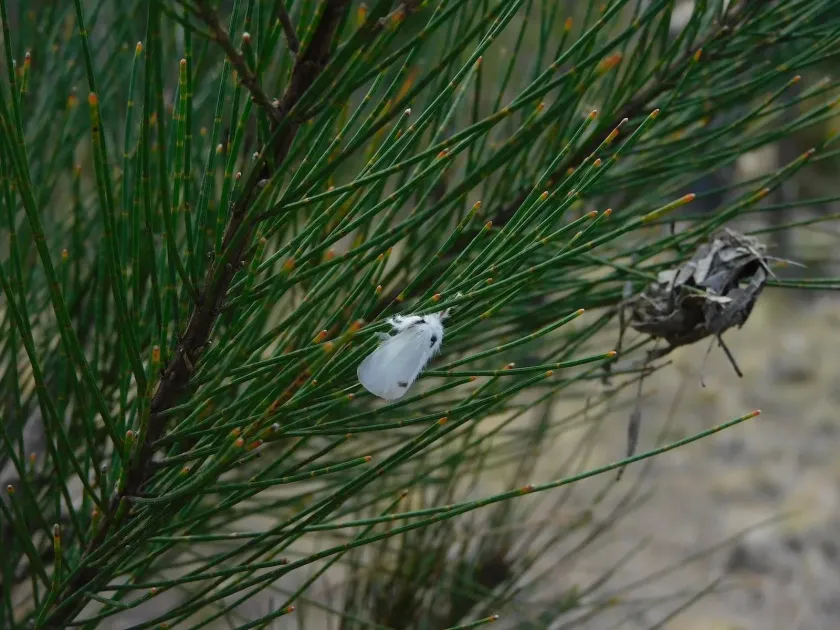
The genus Acyphas belongs to the order Lepidoptera and the family Erebidae (subfamily Lymantriinae). Adult insects are medium-sized nocturnal moths, often characterized by white or yellowish wings.
Acyphas caterpillars are covered with dense hairs, a common feature for many members of the Tussock moth family. These hairs can cause skin irritation in humans upon contact, so caution should be exercised when handling them.
The insect undergoes a complete metamorphosis cycle: egg, larva (caterpillar), pupa, and imago (adult). Species identification is often difficult due to the visual similarity to other family members.
The adults possess a mouthpart structure typical of tussock moths, which is often reduced in adults, limiting their feeding during this phase of the life cycle.
Species of the genus Acyphas are found primarily in temperate regions, preferring forest and forest-steppe zones that provide suitable host plants for their larvae.
What it damages
The primary damage is caused by the larval stage (caterpillars), which have chewing mouthparts and can intensively feed on the foliage of broad-leaved tree species.
The list of preferred host crops includes various types of fruit trees, as well as forest plantations, including oak, birch, and other deciduous trees.
During massive outbreaks, caterpillars can lead to total defoliation of specific parts of gardens or forest areas, significantly weakening the plants' viability.
Weakened plants become more susceptible to secondary pests (borers) and various fungal diseases, which can eventually lead to the death of the tree.
Economic damage manifests in reduced yields of fruit crops and the disruption of the aesthetic and biological balance in ornamental and forest plantings.
When it appears
The activity of adults (moths) usually occurs during the summer period, when mass flight and egg-laying on the leaf surface or tree bark take place.
Caterpillars are most active in late spring and summer, when the intensive growth of plant vegetation ensures their full development.
The species' development cycle is closely linked to the phenological phases of host plants, allowing larvae to maximize the use of available food resources.
Hibernation in most species of this genus occurs at the pupal stage in dense cocoons or at the larval stage in protected places under the bark or in leaf litter.
With the arrival of spring warmth, overwintered individuals become active, continuing feeding or pupation depending on the stage in which diapause occurred.
Signs of infestation
The main sign of infestation is the presence of chewed leaves, where caterpillars consume the leaf blade, leaving only the major veins (skeletonization).
The presence of silken webs, where young caterpillars often congregate, is a diagnostic sign of the pest colony's presence on tree branches.
Excrement from caterpillars, which looks like small dark granules, can be found on the ground surface or beneath the tree canopy.
When inspecting trunks and branches, one can observe cocoons inside which the metamorphosis process occurs, often hidden in bark crevices or attached to leaves.
Damaged trees often show delayed development and leaf yellowing, related to the disruption of photosynthetic processes due to significant loss of leaf surface.
Control measures
For caterpillar control in gardens, timely application of stomach and contact insecticides during the period of mass larval emergence is recommended.
An important measure is the mechanical removal and destruction of nests containing caterpillars at an early stage, before they spread throughout the tree crown.
The use of biological preparations based on entomopathogenic bacteria (e.g., Lepidocide-type products) allows for effective control of pest numbers without harming beneficial entomofauna.
Agrotechnical methods include encouraging natural enemies: birds (tits, woodpeckers) and entomophages (parasitoid wasps, tachinid flies), which are natural regulators of Acyphas populations.
Regular monitoring of plant health allows for the early detection of infestation hotspots and the implementation of measures before significant damage occurs.
Taxonomy
- Latin name
- Acyphas
- Order
- Lepidoptera (butterflies)
- Family
- Erebidae
- EPPO code
- ACYPSP
Discussion
No discussions yet — be the first.