
Acutalis tartarea
Acutalis tartarea
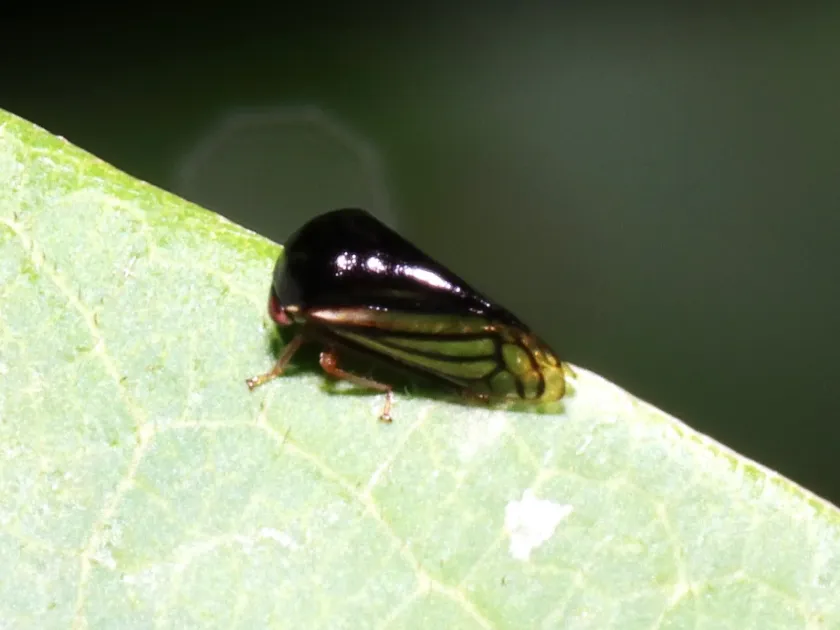
Description
How to identify
Acutalis tartarea is a species of treehopper belonging to the family Membracidae, order Hemiptera. It is characterized by a unique pronotum that extends over the abdomen, often forming a distinct hump that gives the insect its common group name.
Adults are small, typically measuring between 5 and 7 millimeters in length. Their coloration is predominantly dark, ranging from deep brown to charcoal black, which provides excellent camouflage against stems and leaf stalks.
Nymphs of the species are structurally different from adults; they lack fully developed wings and often have softer, sometimes waxy-coated bodies that help them blend into the plant tissue or protect them from desiccation.
These insects are highly agile and possess strong jumping capabilities. When disturbed, they quickly relocate to the other side of the plant stem, making them elusive during routine field scouting.
They thrive in dense vegetation where moisture levels are high and plant sap is readily available, allowing them to establish stable colonies throughout the growing season.
What it damages
This species is a polyphagous pest, meaning it feeds on a wide range of host plants. It is particularly notorious for damaging members of the Solanaceae family, including economically vital crops like tomatoes and potatoes.
Beyond cultivated fields, the pest utilizes various surrounding weeds as alternative hosts. These wild plants serve as reservoirs, allowing the population to survive and multiply even when the primary crop is not present.
Feeding is performed via a piercing-sucking mouthpart that penetrates the plant’s epidermis to tap into the phloem. This process removes essential sugars and nutrients, severely weakening the host plant's vigor.
Heavy infestations lead to stunted growth and reduced leaf surface area due to chlorosis and necrosis. The reduction in photosynthetic capacity directly impacts the plant's ability to produce flowers and fruit, leading to significant yield losses.
Perhaps most destructively, Acutalis tartarea acts as a vector for various plant viruses. As the insect moves from an infected plant to a healthy one, it efficiently transmits pathogens that cause systemic diseases.
When it appears
The activity of Acutalis tartarea is highly dependent on ambient temperature. Emergence typically occurs during the warming trends of spring, marking the beginning of the seasonal cycle.
Population density peaks during the middle of the summer when optimal heat and humidity support rapid generation turnover. During this window, multiple developmental stages can be found simultaneously on the same plants.
The insect's life cycle allows for several generations per season. This rapid reproduction is a key factor in why outbreaks can occur so suddenly and why consistent monitoring is required.
As autumn approaches and temperatures drop, the insects enter a state of diapause. Eggs are often laid deep within plant tissues, providing them with protection against the harsh winter environment.
Understanding this seasonal rhythm is essential for timing insecticide applications, as targeting the early nymphal stages is significantly more effective than attempting to control the highly mobile adult populations.
Signs of infestation
Early symptoms include the appearance of localized yellow spots on leaves, which occur at the specific sites where the insect’s stylet has pierced the plant tissue.
Closer inspection of the lower leaf surfaces and the base of the stems often reveals clusters of nymphs. Their presence is frequently associated with ants that farm the insects for the sugary honeydew they excrete.
Wilted, curled, or deformed young shoots are common indicators of severe phloem sap depletion. Such symptoms often persist even when irrigation is sufficient, suggesting vascular interference.
The accumulation of sticky honeydew on foliage is a telltale sign of an infestation. This residue can also promote the growth of sooty mold, which further blocks light and hinders the plant's photosynthesis.
Regularly disturbing the plant canopy while scouting will reveal the presence of the pest, as adult treehoppers will perform sudden, jerky jumps in response to the vibration.
Control measures
Integrated Pest Management (IPM) for this species begins with rigorous weed control. By removing alternative hosts in surrounding ditches and borders, the overall population pressure on the main crop is minimized.
Systemic insecticides are the most effective chemical control method. Because these compounds are absorbed into the plant’s vascular system, they provide protection against the pest whenever it attempts to feed.
- Monitor populations using yellow sticky traps to determine action thresholds.
- Implement border sprays to intercept migrating adults before they colonize the entire field.
- Encourage natural predators such as lady beetles and lacewings that feed on nymphs.
- Practice crop rotation to disrupt the local overwintering cycle of the pest.
- Use selective biological agents when population levels are below critical thresholds.
Early season protection of seedlings is crucial, as young plants are less capable of compensating for the stress caused by sucking insects compared to fully established ones.
After harvest, destroying crop residues and deep plowing the soil helps eliminate overwintering egg sites, ensuring that the field starts the next season with a lower pest potential.
Taxonomy
- Latin name
- Acutalis tartarea
- Order
- Hemiptera (bugs, aphids, leafhoppers)
- Family
- Membracidae
- EPPO code
- ACTLTA
Discussion
No discussions yet — be the first.