
Acutalis
Acutalis
Description
How to identify
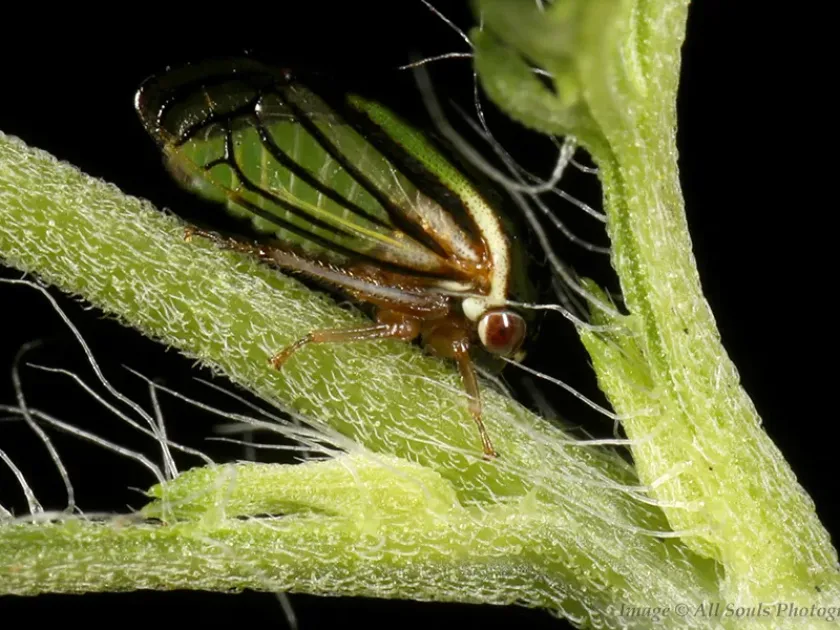
Acutalis is a genus of insects belonging to the family Membracidae, commonly known as treehoppers. These insects are distinguished by their pronotum, which is often elongated and covers the scutellum, giving them a distinct, humped appearance.
Adult Acutalis are relatively small, usually measuring between 5 to 8 mm. Their body coloration is typically adapted for camouflage, ranging from various shades of green to brown, allowing them to blend seamlessly with stems and foliage.
Treehoppers are renowned for their agility. When threatened, they use their strong hind legs to perform rapid, explosive jumps, making them difficult to catch or observe closely in their natural habitat.
The nymphs of Acutalis are wingless and often exhibit a different appearance compared to the adults, sometimes featuring soft bodies or protective spines. They are generally less mobile and congregate in specific feeding areas.
They reproduce by laying eggs directly into the plant tissue. This internal deposition serves as an effective defense mechanism, shielding the eggs from predators and environmental stressors throughout the incubation period.
What it damages
Both adults and nymphs cause damage by using their piercing-sucking mouthparts to feed on plant sap. Continuous feeding depletes the plant's nutrient reserves, leading to overall decline and reduced vigor.
Acutalis species infest a wide range of plants, including shrubs, trees, and various herbaceous crops. Damage is particularly critical in nurseries and orchards, where healthy sapling development is essential for production.
The feeding process causes local deformation of leaves and shoots. Injected saliva containing digestive enzymes can lead to chlorosis, stunted growth, and the development of necrotic spots on the affected tissue.
These insects produce honeydew, a sugary byproduct that accumulates on leaf surfaces. This substance promotes the growth of sooty mold, which blocks sunlight and interferes with the plant's photosynthetic efficiency.
Acutalis acts as a potential vector for various plant pathogens, including viruses and phytoplasmas. The transmission of these diseases often results in more severe economic loss than the physical damage caused by sap extraction.
When it appears
The life cycle of Acutalis is strictly seasonal, beginning in the spring when nymphs emerge from eggs that have overwintered within the host plant's tissues.
Depending on the climatic zone, these insects may produce multiple generations per year. Peak population density usually occurs in mid-to-late summer, coinciding with the most active growth phases of host plants.
As temperatures decline in the autumn, the insects enter a overwintering stage. Depending on the species, they may survive as adults hidden in bark crevices or as eggs embedded within plant stems.
Environmental conditions such as humidity and warmth significantly influence the rate of development. A warmer season can lead to a shorter life cycle, resulting in exponential population growth in late summer.
Early monitoring is essential for effective management. Agronomists recommend inspecting sensitive crops at the first signs of spring growth to detect early colonization and prevent large-scale infestation.
Signs of infestation
The most visible sign of an infestation is the presence of sticky honeydew on the foliage. This often attracts ants, and their presence on a plant is a reliable secondary indicator of treehopper activity.
Leaf curling, yellowing, or abnormal twisting of the shoot tips are common symptoms. In severe cases, the affected foliage may dry out and fall prematurely, impacting the plant's overall health.
Observing the undersides of leaves and leaf axils usually reveals the presence of the insects. A slight disturbance to the plant often triggers the characteristic jumping behavior of the adults.
The development of a black, soot-like fungal growth on the leaves suggests an underlying pest problem. If this layer is observed, it confirms the presence of sap-sucking insects like Acutalis.
Careful inspection of the woody stems may reveal oviposition scars or small swellings where eggs have been deposited, indicating that the plant will likely face pressure from the next generation.
Control measures
Sanitation is a primary control measure. Pruning and destroying branches that show signs of heavy egg deposition or significant pest colonies can prevent local outbreaks.
Managing ant populations is crucial, as ants provide protection for treehoppers against natural predators. Implementing physical barriers such as sticky bands on tree trunks can reduce ant traffic.
Encouraging biological control agents is highly effective. Lady beetles, lacewings, and various predatory bugs are natural enemies of treehoppers and should be protected by minimizing the use of broad-spectrum insecticides.
When populations exceed economic thresholds, systemic insecticides may be necessary. Products containing neonicotinoids are often effective as they are absorbed by the plant and target the feeding insects directly.
Always rotate insecticide classes to prevent the development of resistance. Ensure that all applications are timed to avoid harming beneficial pollinator populations and comply with safe harvest intervals.
Taxonomy
- Latin name
- Acutalis
- Order
- Hemiptera (bugs, aphids, leafhoppers)
- Family
- Membracidae
- EPPO code
- ACTLSP
Discussion
No discussions yet — be the first.