
Crassula mite
Aculus crassulae
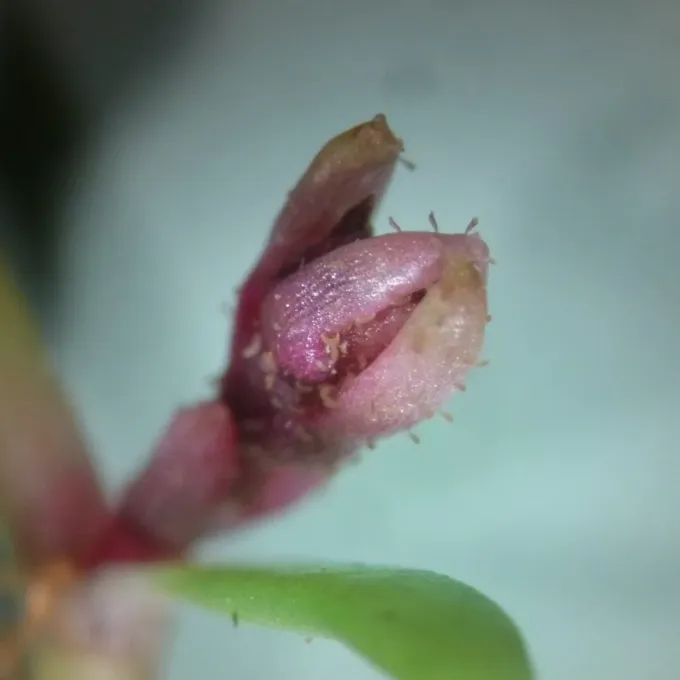
Description
How to identify
The Crassula mite (Aculus crassulae) is a microscopic pest belonging to the family Eriophyidae. These mites are invisible to the naked eye and require magnification to be identified.
They possess a spindle-like or worm-shaped body, usually pale in color, with only two pairs of legs located at the front of the body, which is characteristic of the Eriophyid family.
These mites are specialized pests that target plants within the Crassulaceae family. Unlike common spider mites, they do not produce silk webs, making their presence hard to detect early.
Their biological cycle is temperature-dependent. In greenhouses or indoor environments, they can complete multiple generations throughout the year, causing continuous damage.
Females lay eggs in the folds of succulent leaves or deep within the growth points, ensuring that their offspring have immediate access to food sources upon hatching.
What it damages
Host plants primarily include genera like Crassula, Echeveria, and various other succulents. The mites preferentially feed on young, succulent, and actively growing tissues.
By piercing the epidermal cells, the mites extract cell sap, which leads to local toxic reactions and the destruction of plant tissues.
Damage impacts both the foliage and the stems, and in some cases, the flower stalks. The most severe damage occurs when the apical meristem (growth point) is compromised.
As the plant tissues are injured, they develop unsightly scarring, often referred to as "russeting," which permanently ruins the aesthetic appeal of the succulent.
Persistent infestations weaken the plant, reducing its ability to photosynthesize effectively and making it susceptible to secondary bacterial or fungal infections.
Signs of infestation
The first signs of infestation are the appearance of discolored, corky, or russet-colored spots on the leaf surfaces. These areas often appear dried or hardened.
Deformation of the growing tips is a major indicator of an active population. New leaves may emerge twisted, stunted, or significantly smaller than normal.
Loss of the natural waxy cuticle is common, leading to a dull or matte appearance of the plant. In advanced cases, leaves may become brittle and eventually drop.
The plant growth slows down significantly or ceases entirely. The succulents may show general signs of stress, including a loss of turgor pressure despite regular watering.
- Rust-colored spots on leaves.
- Distorted and stunted new growth.
- Loss of natural leaf luster.
- General plant vigor reduction.
Control measures
Control of Aculus crassulae requires the use of systemic or contact-systemic acaricides specifically labeled for use against Eriophyid mites.
A strict treatment schedule is necessary to break the pest's life cycle. Multiple applications spaced 7–10 days apart are crucial to kill successive generations as they emerge.
Effective chemical agents often include abamectin or spirodiclofen. Always ensure thorough coverage of the plant, focusing on the crevices and growing tips where mites hide.
Preventive measures include strict quarantine of all new plants introduced to the collection for at least one month to prevent accidental infestation.
Maintaining proper plant health and monitoring with a hand lens can help catch early infestations, allowing for easier management and preservation of the collection.
Taxonomy
- Latin name
- Aculus crassulae
- Order
- Mites
- Family
- Eriophyidae
- EPPO code
- ACULCR
Discussion
No discussions yet — be the first.