
Citrus rust mite
Aculops pelekassi
Description
How to identify
The citrus rust mite (Aculops pelekassi) belongs to the Eriophyidae family. These are microscopic, vermiform pests that are rarely visible without professional magnification tools.
Adult mites are yellowish-brown in color, measuring approximately 0.15–0.2 mm, making them nearly invisible to the naked eye on the plant surface.
The mites have a very simple morphology, possessing only two pairs of legs, which is characteristic of the eriophyid group to which they belong.
They are relatively sessile, often remaining on a single leaf or fruit surface for long periods while feeding on the cell contents of the plant epidermis.
Their rapid reproductive cycle allows them to increase population density drastically within a few weeks under optimal climatic conditions.
What it damages
The species primarily attacks citrus crops, including oranges, lemons, mandarins, and pomelos, causing direct feeding injury to the tissues.
They feed on the epidermal cells of leaves and fruits, which leads to the collapse of the tissue and the subsequent discoloration of the affected surface.
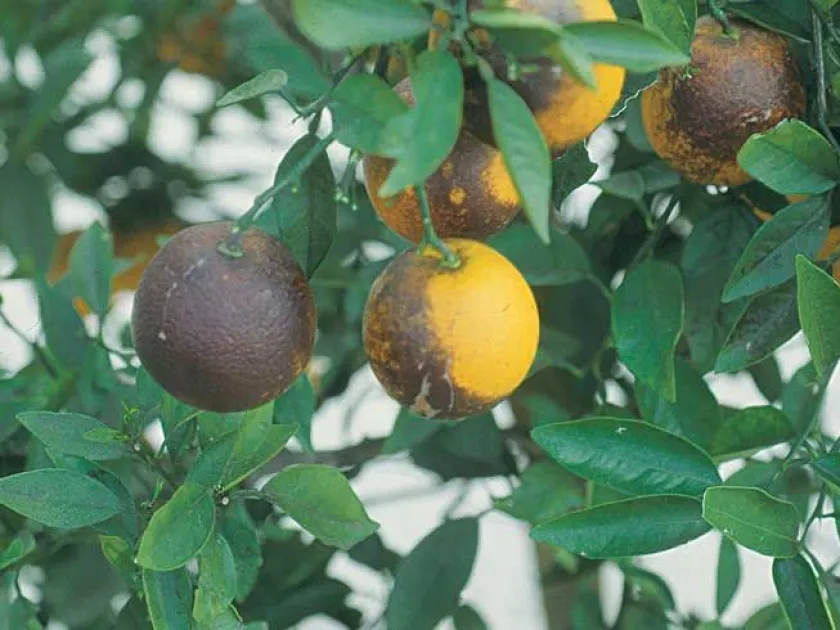
Damage to the fruit skin reduces marketability, as the surface becomes dull, bronzed, and rough, leading to severe economic losses for growers.
Leaf damage manifests as a reduction in photosynthesis, which indirectly affects the tree's overall vigor and fruit production quality.
If left unmanaged, heavy infestations can lead to premature leaf drop and the overall decline of tree health, making it vulnerable to other stressors.
When it appears
The activity of Aculops pelekassi is highly dependent on temperature and humidity, with peak populations usually occurring in warm, humid climates.
In subtropical regions, they can remain active throughout most of the year, though populations often surge during spring and early summer growth flushes.
Dry weather conditions sometimes favor the rapid multiplication of these mites, while high humidity can occasionally inhibit certain aspects of their development.
The mites survive the winter in protected niches on the tree, such as buds or hidden crevices in the bark, waiting for favorable spring conditions.
Regular field scouting should be conducted as soon as temperatures rise, as initial colonization often occurs on new spring growth.
Signs of infestation
Symptoms of infestation often begin with a characteristic bronzing or dull grayish discoloration on the surface of citrus fruits.
The epidermis of the fruit may become cracked or scaly in appearance, which is a classic indicator of citrus rust mite activity in the orchard.
Leaves may show similar discoloration, appearing dull and losing their natural green luster, which often leads to curling and premature yellowing.
Significant infestations can lead to smaller fruit sizes and a reduction in the overall juice content of the harvested crop.
- Bronze or silvery discoloration on fruit skin.
- Rough and textured fruit surface appearance.
- Leaf chlorosis and stunted shoot development.
Control measures
The application of specific acaricides is the primary method for controlling Aculops pelekassi populations in commercial orchards.
Resistance management is crucial; growers should rotate chemical products with different modes of action to prevent the development of resistant mite strains.
Biological control using predatory mites can be highly effective in reducing population densities when integrated correctly into a pest management program.
Proper pruning practices help increase airflow and canopy penetration, ensuring that protective sprays reach all parts of the tree effectively.
Monitoring population thresholds is essential, as early detection allows for targeted treatments that can save the fruit crop from severe cosmetic damage.
Taxonomy
- Latin name
- Aculops pelekassi
- Order
- Mites
- Family
- Eriophyidae
- EPPO code
- ACULPE
Discussion
No discussions yet — be the first.