
Eugenia gall mite
Aculops eugeniae
Description
How to identify
The Eugenia gall mite, scientifically known as Aculops eugeniae, belongs to the family Eriophyidae. These are microscopic, worm-like pests that measure only a fraction of a millimeter in length, making them invisible to the naked eye.
Distinguished by having only two pairs of legs located at the front of the body, these mites are specialized sap-suckers. They inhabit the tissues of their host plants, specifically targeting the tender developing parts of the Eugenia foliage.
The biological cycle of this mite is notably rapid, allowing populations to explode within a short period under favorable, warm environmental conditions. This swift reproduction is a key factor in their ability to colonize host plants effectively.
Dispersal primarily occurs through wind currents, which carry these tiny mites between plants. Additionally, human activities such as moving infested nursery stock or using contaminated pruning tools significantly contribute to their spread across landscapes.
Taxonomically, they are highly host-specific. They have evolved to thrive exclusively on plants of the Eugenia genus, utilizing the chemical environment of their host to trigger gall formation for their own shelter and nutritional security.
What it damages
Aculops eugeniae feeds on the epidermal cells of young leaves and shoots. During this process, the mites inject salivary secretions into the plant tissue, which act as growth regulators and induce the formation of abnormal growths known as galls.
These galls serve as a protective micro-environment for the mites while disrupting the normal development of the plant's foliage. The process diverts essential nutrients away from healthy tissue, thereby weakening the vigor of the affected Eugenia plant.
The aesthetic damage is significant, as the leaves become severely deformed, crinkled, and stunted. In a nursery or landscape setting, this renders the plants unmarketable and unattractive, significantly reducing their ornamental value.
Extended periods of infestation can lead to chronic decline in the plant's health. The reduction in effective leaf surface area due to galling impairs photosynthesis, leading to reduced growth rates and poor overall structural development.
Weakened Eugenia plants are more susceptible to opportunistic pathogens. Once the plant's metabolic resources are exhausted by the mite infestation, secondary fungal infections often exacerbate the damage, leading to necrosis of the leaves.
Signs of infestation
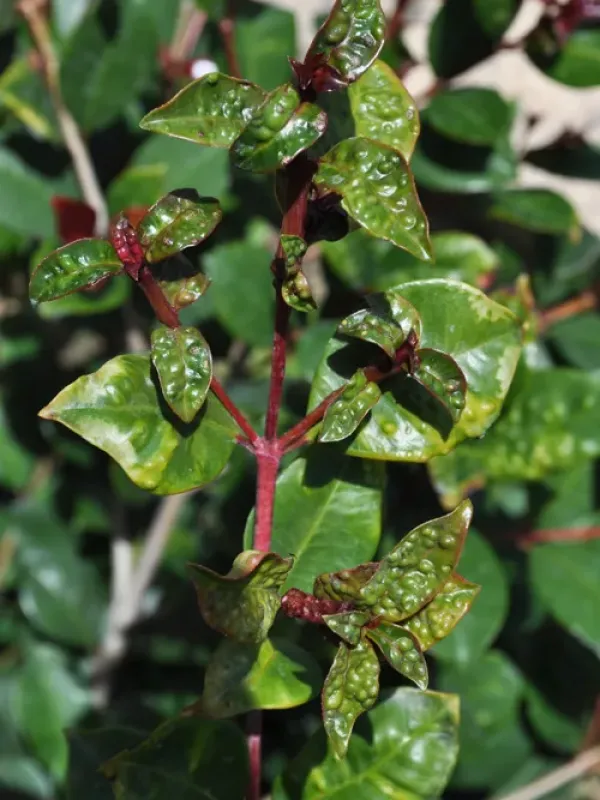
The primary symptom of an Aculops eugeniae infestation is the development of numerous small, wart-like galls on the foliage. These growths may appear as bumps or raised spots, frequently changing color from pale green to tan or brown.
Affected leaves often exhibit severe curling, twisting, or puckering. This symptomatic "leaf curl" is a diagnostic indicator that usually appears on the most recent, succulent growth of the host plant.
- Presence of numerous small galls on leaf surfaces
- Severe distortion and puckering of young leaves
- Stunted and curled shoot tips
- Yellowing or chlorotic patches on infected tissues
- Premature leaf drop and decreased growth vigor
Close inspection using a 10x or 20x hand lens is necessary to confirm the presence of these pests within the galls. The mites are often clustered together, making them easier to spot when a gall is carefully opened.
The overall architecture of the plant may be stunted, with internodes becoming shortened. This gives the plant a compact but unhealthy appearance, as if it is struggling to produce new, healthy green tissue.
Control measures
Managing the Eugenia gall mite is inherently difficult because the pests are sheltered inside the galls. Systemic acaricides are the most effective chemical intervention as they can reach the mites within the plant tissues.
A consistent rotation of different classes of acaricides is recommended to prevent the mites from developing chemical resistance. Applications should be timed with the emergence of new growth to protect the most vulnerable tissues.
Cultural control is essential and highly recommended. Regularly inspecting plants and pruning away infested shoots can significantly reduce the mite population. It is crucial to destroy these prunings by burning or bagging them.
Maintaining high plant vigor through proper nutrition and hydration helps the Eugenia plant better tolerate or recover from the damage caused by these mites. A healthy plant can often produce enough new growth to outpace minor infestations.
In greenhouses or controlled environments, biological control using predatory mites may be considered. However, the most reliable strategy remains a combination of aggressive sanitation, timely chemical applications, and vigilance during the growing season.
Taxonomy
- Latin name
- Aculops eugeniae
- Order
- Mites
- Family
- Eriophyidae
- EPPO code
- ACUPEU
Discussion
No discussions yet — be the first.