
Acinia picturata
Acinia picturata
Description
How to identify
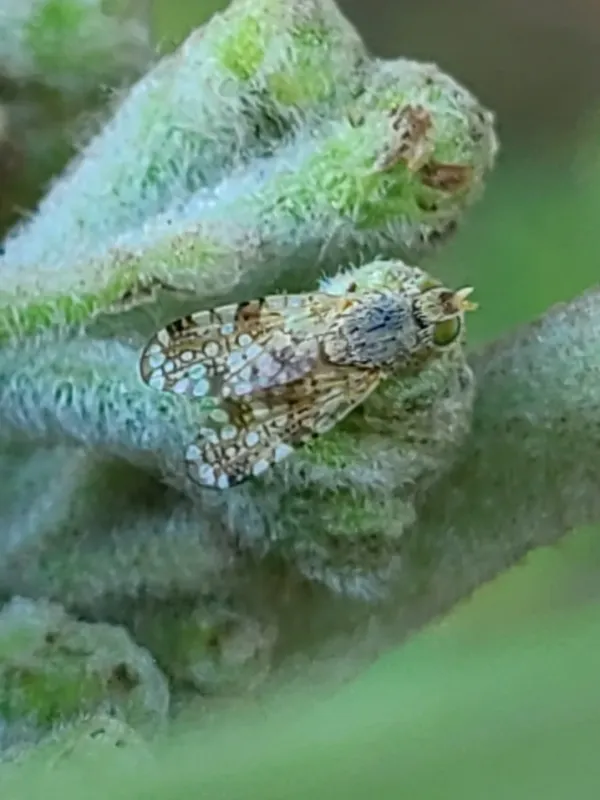
Acinia picturata is a species belonging to the fruit fly family (Tephritidae), order Diptera. It is characterized by distinctively patterned wings, which is a common diagnostic feature for this family of flies.
Adult flies typically measure between 3 to 6 millimeters in length. Their body color ranges from yellowish to brownish tones, providing effective camouflage within their natural habitat.
The eyes of these flies often exhibit a metallic reflection, which serves as a notable visual identifier during field inspections.
The larvae are legless and head-less, following the standard morphological structure of dipteran maggots, and develop strictly within host plant tissues.
Accurate species determination often requires microscopic analysis of the wing venation patterns and specific anatomical structures of the female genitalia.
What it damages
The primary damage is caused by the larvae, which act as specialized phytophages, feeding internally on the flower heads and developing seeds of host plants.
These flies specifically target members of the Asteraceae family, which includes numerous wild species and important ornamental or commercial crops.
Larvae invade the floral disks, destroying ovaries and seeds, which severely compromises the seed yield and economic value of the harvest.
Affected flower heads often show deformation, premature withering, and a total loss of reproductive capacity due to the feeding activity of the larvae.
Under heavy infestation pressure, farmers may experience significant yield losses, often ranging from 30% to 50% in vulnerable crop varieties.
When it appears
The activity of adult Acinia picturata typically coincides with the flowering phase of their host plants, generally occurring from late spring through mid-summer.
Females lay eggs directly into the buds or young flower heads, ensuring the emerging larvae have immediate access to nutrient-rich floral tissues.
The duration of the larval developmental stage is usually several weeks, highly dependent on the local temperature and environmental moisture levels.
Depending on regional climatic conditions, the pest can complete one or more generations throughout the growing season.
Overwintering usually occurs in the pupal stage, with pupae remaining dormant in the soil or within the remnants of infested host plants.
Signs of infestation
The initial sign of infestation is the presence of small puncture marks on the involucre of the flower head, left by females during the oviposition process.
Visually, infested flowers appear darker than healthy ones, often displaying partial drying of the outer petals and a clear lack of symmetry.
Dissecting the flower head reveals the presence of larval frass and feeding chambers where the larvae have consumed the developing seeds.
Secondary infections, such as mold or rot, often occur in damaged flower heads due to the breakdown of tissues caused by the larvae's feeding.
Adult flies are most easily observed resting on leaves or flower surfaces during the early morning hours, before they become fully active.
Control measures
Effective management strategies rely on integrated pest management (IPM) practices, including the disruption of the fly's lifecycle through agricultural techniques.
Rotating crops and avoiding the cultivation of susceptible host species in consecutive years can significantly lower local population levels.
Mechanical destruction of infested crop residues immediately after harvest is a critical step in preventing the next generation of pupae from surviving the winter.
Chemical control using systemic insecticides is most effective when applied during the peak flight period of adults, prior to larvae entering the flower heads.
- Remove and destroy wild Asteraceae weeds near crop fields.
- Use yellow sticky traps for monitoring flight activity and timing spray applications.
- Implement deep autumn plowing to bury pupae and prevent adult emergence.
Taxonomy
- Latin name
- Acinia picturata
- Order
- Diptera (flies)
- Family
- Tephritidae
- EPPO code
- ACIIPI
Discussion
No discussions yet — be the first.