
Acinia
Acinia
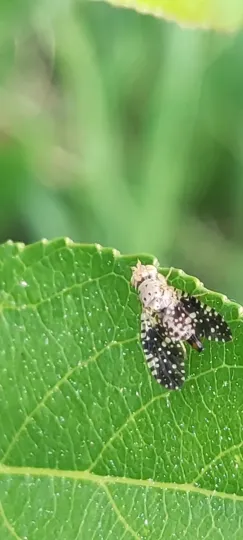
Description
How to identify
The genus Acinia belongs to the fruit fly family (Tephritidae), order Diptera. These are small insects morphologically similar to other fruit fly species.
Adult individuals possess a characteristic reticulated or banded wing pattern, which is a typical identifying feature for most members of this family.
The insect's body has a protective coloration that allows it to camouflage effectively on the surface of host plants in their natural habitat.
Larvae appear whitish or cream-colored, typically legless, and equipped with specialized mouthparts for feeding on plant tissues.
Identifying species within this genus often requires microscopic examination of the female ovipositor and wing markings.
What it damages
The pest primarily affects plants of the Asteraceae family, specializing in their reproductive structures.
Damage occurs mainly during the flower head formation and seed maturation stages, significantly reducing the crop's biological yield.
Larvae burrow into the flower heads, where they consume seeds and the receptacle, preventing normal seed development.
Infestations are often complicated by secondary infections, as damaged tissues provide entry points for fungal and bacterial pathogens.
Under high population pressure, Acinia can destroy up to 60-80% of the seed crop in infested fields.
When it appears
Pest activity begins with the arrival of sustained warmth, coinciding with the budding phase of host plants.
The flight period of adults typically occurs in the first half of summer, corresponding with the blooming phase of most Asteraceae.
Eggs are laid into young flower heads, where larvae develop for several weeks before pupation.
The developmental cycle is season-dependent and may consist of one or two generations depending on the climatic zone.
Overwintering usually occurs at the puparium stage in the soil or within plant debris remaining in fields after harvest.
Signs of infestation
The first sign of infestation is the appearance of small spots on flower heads, indicating punctures made by females during oviposition.
As larvae feed, flower heads show visible deformation and premature wilting or drying.
Inspection of the inner structures of the flower head often reveals dark granular excrement left by the larvae.
Destruction of the central part of the flower results in shriveled or absent seeds within the head.
In cases of mass infestation, fields may look sparse due to the widespread loss of reproductive organs.
Control measures
Agronomic control methods include deep fall plowing, which helps eliminate puparia overwintering in the topsoil.
Effective management requires strict crop rotation, excluding Asteraceae plants from neighboring fields.
Timely weed control along field margins is essential, as these areas often serve as reservoirs for the pest.
Chemical control involves the application of systemic or contact insecticides during the budding stage, before the onset of flowering.
- Monitoring using yellow sticky traps.
- Use of biological control agents and entomophages.
- Prompt harvesting and destruction of crop residues.
Taxonomy
- Latin name
- Acinia
- Order
- Diptera (flies)
- Family
- Tephritidae
- EPPO code
- ACIISP
Discussion
No discussions yet — be the first.