
Acidoxantha
Acidoxantha
Description
How to identify
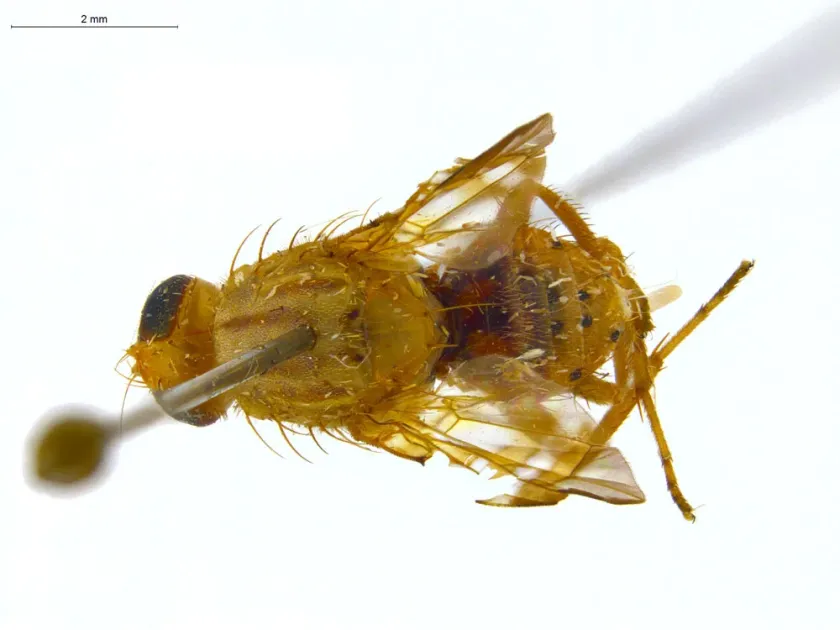
Acidoxantha is a genus of fruit flies belonging to the family Tephritidae. These insects are recognized by their intricate wing patterns and specialized ovipositors, which females use to deposit eggs into host plant tissues.
Adult flies are typically small to medium-sized with yellow or brown coloration, helping them blend into their natural environment. They are highly active during warm periods and possess sensory organs adapted for locating specific host plants.
What it damages
This pest primarily affects the fruits of various tropical and subtropical plant species. They are known for causing significant damage to the development of fruits in trees belonging to the family Apocynaceae.
The damage is mainly caused by the larvae, which hatch inside the fruit and tunnel through the flesh, consuming the interior and rendering the fruit inedible or causing premature decay.
Signs of infestation
The primary sign of an Acidoxantha infestation is the presence of small puncture marks on the skin of young, developing fruits. These marks indicate where the female fly has laid her eggs.
Infested fruits typically show signs of discoloration and premature softening. In advanced stages, one can observe localized rotting or structural collapse of the fruit, followed by premature fruit drop from the tree branches.
Control measures
Effective management strategies for Acidoxantha rely heavily on integrated pest management (IPM) practices, emphasizing prevention and early detection.
Cultural control methods such as the immediate removal and destruction of fallen fruit are essential to prevent the larvae from completing their life cycle and pupating in the soil. Furthermore, using yellow sticky traps or pheromone baits helps in monitoring population levels and timing chemical interventions only when necessary to minimize environmental impact.
Taxonomy
- Latin name
- Acidoxantha
- Order
- Diptera (flies)
- Family
- Tephritidae
- EPPO code
- ACIXSP
Discussion
No discussions yet — be the first.