
Acidiella kagoshimensis
Acidiella kagoshimensis
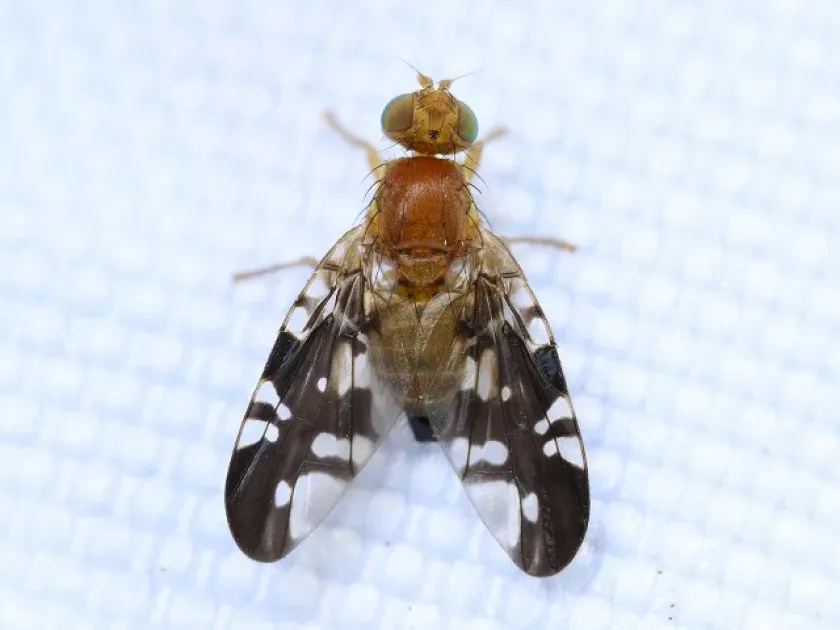
Description
How to identify
Acidiella kagoshimensis is a small insect belonging to the Diaspididae family (scale insects) within the order Hemiptera. This species displays significant sexual dimorphism.
Adult females possess a hard protective shield, which serves as a shelter throughout their life. The shield typically has a brownish or grayish hue and adheres tightly to the tree bark.
Males are significantly smaller than females and have wings, allowing them to move actively to find mates. They do not feed and have a very short lifespan.
Identification of this pest is challenging due to its small size and its ability to blend with the color of the bark. Infestations are often discovered only when the population density is high.
For accurate diagnostic, agricultural professionals use entomological lenses and microscopic analysis of infested twig or leaf samples.
What it damages
The primary hosts of this species are citrus crops, including lemons, mandarins, oranges, and grapefruits. The pest is most often located on branches, trunks, and the underside of leaves.
The insect feeds by sucking cell sap from plant tissues using its piercing-sucking mouthparts. This leads to a significant loss of nutrients for the plant.
Mass reproduction of the scale insect causes the tree to weaken, resulting in reduced growth rates and lower yield volume.
Severe infestations can lead to premature leaf drop and the dieback of individual shoots. Without proper intervention, the tree becomes highly vulnerable to secondary infections.
Economic losses include not only the loss of fruit yield but also the degradation of the visual quality of the fruits if the scales settle on their surface during ripening.
When it appears
The activity of the pest directly depends on the climatic conditions of the growing region. In subtropical climates, the life cycle is closely linked to the citrus growing season.
Crawler larvae, which are the main dispersal stage, emerge when stable warm weather arrives. The developmental threshold is usually above 15–18 degrees Celsius.
Within one season, the pest can produce several generations. The speed of development depends on the accumulation of active temperatures.
The population peak usually occurs in mid to late summer, when the most favorable conditions for reproduction and feeding are present.
Insects predominantly overwinter as fertilized females under the shield on the tree bark, waiting for favorable spring conditions to lay eggs.
Signs of infestation
The first sign of infestation is the appearance of specific growths on the bark that easily detach when scraped. These are the protective shields of the pest.
Leaves in the affected areas may turn yellow and curl. Necrotic spots often develop at the insect's feeding sites, disrupting photosynthesis.
A sticky residue secreted by the insects may appear on the leaf and fruit surfaces, which often leads to the growth of sooty mold, giving the tree a blackened appearance.
When inspecting the trunk, one can notice colonies of scale insects that look like small scales or plaques densely covering the bark near branch junctions.
The plant begins to look stressed, shoot tips may dry out, and internodes become shorter, all of which are signals for an urgent phytosanitary inspection.
Control measures
The primary method of control includes regular monitoring of plantings and timely removal of heavily infested branches to reduce the pest pressure in the garden.
Chemical control strategies rely on the use of systemic insecticides, which penetrate the plant sap and affect the pest during feeding.
An important technique is the application of oil emulsions, which create a thin film on the shield, preventing the insect's respiration and causing mortality.
It is essential to maintain proper agricultural practices, including regular fertilization, irrigation, and avoiding overcrowded crowns to improve ventilation.
- Usage of biological control agents, such as predatory insects.
- Application of mineral oils in the early spring period.
- Quarantining and inspection of new nursery stock before planting.
Taxonomy
- Latin name
- Acidiella kagoshimensis
- Order
- Diptera (flies)
- Family
- Tephritidae
- EPPO code
- ACIEKA
Discussion
No discussions yet — be the first.