
Achaea lienardi
Achaea lienardi
Description
How to identify
Achaea lienardi belongs to the family Erebidae and the order Lepidoptera. It is a nocturnal moth species known for its remarkable migratory capabilities across various regions.
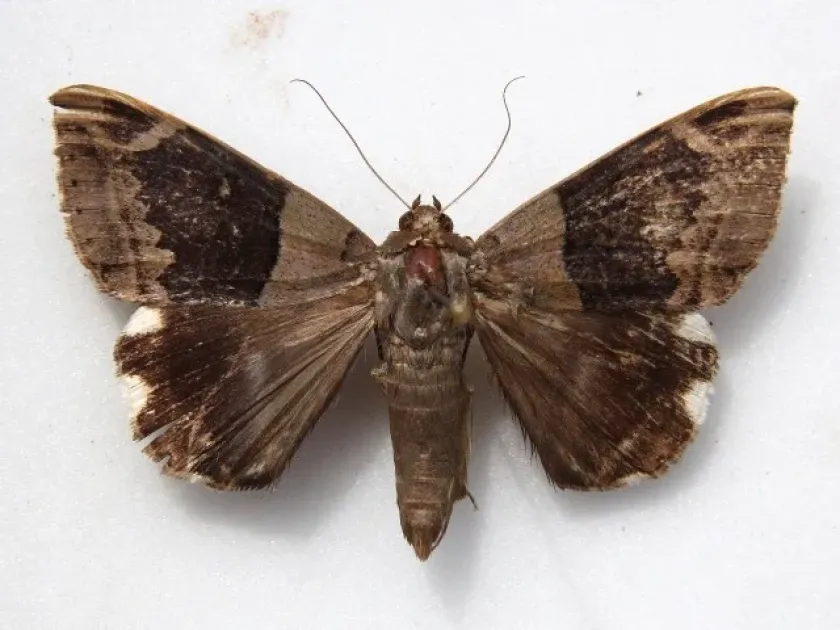
The adult moth has a wingspan of approximately 50–60 mm. The forewings are characterized by cryptic, brownish-grey patterns that provide excellent camouflage against tree bark during the day.
The hindwings are contrasting, featuring dark coloration with distinct white spots or bands. This display is a defensive mechanism triggered to startle potential predators.
Larvae typically exhibit the morphology common to noctuid moths, often displaying stripes or patterns that help them blend into the foliage and stems of their host plants.
The life cycle involves complete metamorphosis: egg, larva (caterpillar), pupa, and adult. The population growth rate is highly sensitive to regional climatic variations.
What it damages
This pest poses a significant threat to a wide range of fruit and ornamental crops, particularly in African and subtropical ecosystems.
Key crops at risk include citrus, grapes, apples, and various stone fruits. Larvae are known for actively feeding on the vegetative parts of these plants.
Adult moths cause direct economic damage by piercing the skin of ripening fruit with their proboscis to feed on the sugary juices.
The punctures caused by the adults often serve as entry points for secondary infections, including various fungal and bacterial pathogens that cause fruit rot.
During outbreaks, Achaea lienardi can lead to substantial yield losses in orchards, necessitating rapid and effective pest management interventions.
When it appears
Adult emergence generally coincides with the fruit ripening phase, as the high sugar content makes the crop highly attractive to the moths.
Moth activity often intensifies following periods of heavy rainfall, which promotes the growth of wild host plants necessary for larval development.
The peak period of damage usually occurs during the late summer and early autumn, corresponding with the harvest season for many commercial fruits.
In subtropical climates, the pest can complete multiple generations per year, making the prediction of specific emergence windows more complex.
Regular monitoring of population dynamics should commence well in advance, based on the phenological development of the target agricultural crops.
Signs of infestation
The most immediate sign of infestation is the presence of characteristic puncture marks on the skin of fruit, left behind by the moth's feeding activity.
Moth presence can be easily monitored during the night using light traps, which serve as a primary diagnostic tool for assessing local population density.
Foliage may show clear signs of herbivory, such as leaf skeletonizing or irregularly shaped edges caused by larval feeding.
Affected fruits often develop localized areas of decay surrounding the puncture sites, frequently emitting strong odors that may attract secondary insect pests.
Careful inspection of tree canopies may reveal pupae secured within folded leaves or sheltered crevices along the woody stems.
Control measures
The primary control strategy involves the targeted application of insecticides during the mass flight of adult moths to prevent fruit piercing.
Utilizing light traps and specific attractants helps to significantly reduce adult numbers within the orchard without relying on total field spraying.
Cultural management practices include routine sanitary pruning and the prompt removal of fallen fruit to minimize the spread of decay and pathogens.
Biological control methods, such as the use of natural predators or entomopathogenic microbial agents, have shown potential in managing larval stages.
It is crucial to implement an insecticide resistance management program by rotating active ingredients from different chemical classes to maintain treatment efficacy.
Taxonomy
- Latin name
- Achaea lienardi
- Order
- Lepidoptera (butterflies)
- Family
- Erebidae
- EPPO code
- ACAELI
Discussion
No discussions yet — be the first.