
Grape erineum mite
Aceria wagnoni
Description
How to identify
The grape erineum mite (Aceria vitis), also known as the grape leaf blister mite, belongs to the family Eriophyidae. These are microscopic pests measuring approximately 0.15 to 0.2 mm, invisible to the naked eye.
Their bodies are elongated and worm-like, usually yellowish-white in color. They reside exclusively on grapevines, completing their entire life cycle on the host plant throughout the growing season.
Adult females overwinter in protected areas of the vine, such as under bud scales, within bark crevices, or in leaf axils. As temperatures rise in early spring, they migrate to the newly unfolding leaves to begin feeding.
The mite reproduces rapidly, capable of completing several generations in a single season. The speed of population growth depends heavily on climatic conditions, with higher activity occurring in warm, stable weather.
Due to their size and cryptic habitat, these mites often go unnoticed until the characteristic symptoms of their feeding appear on the foliage of the vine.
What it damages
The primary damage occurs when mites feed on the underside of leaves. Their salivary secretions trigger an abnormal growth of plant hairs, forming dense, felt-like patches that serve as protective chambers for the colony.
Extensive infestation can severely limit the photosynthetic surface area of the leaves. This reduction in physiological activity can stress the vine and ultimately lead to a decrease in grape quality and yield.
While the mites primarily target leaves, severe cases can affect inflorescences and young shoots. This leads to deformed growth and the potential loss of flowers, impacting the overall productivity of the vineyard.
Heavily infested vines may show reduced vigor, making them more susceptible to environmental stress, including winter damage or secondary pathogen attacks that exploit the weakened plant tissue.
The damage is rarely lethal to the vine itself, but economic thresholds are often met in sensitive cultivars, necessitating intervention to prevent long-term decline in vine health.
Signs of infestation
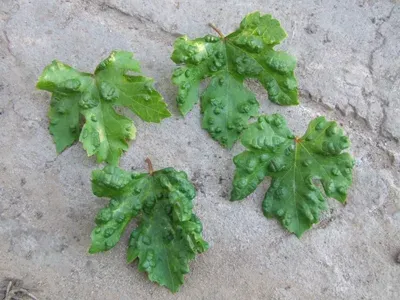
The most prominent sign of an infestation is the appearance of concave, felt-covered depressions on the underside of leaves. These patches are often white initially but turn tan, brown, or rusty as they age.
On the upper side of the leaf, corresponding to these depressions, characteristic raised bumps or blisters appear. These distortions are the classic symptoms used to diagnose the presence of the mite in the vineyard.
When inflorescences are affected, they exhibit similar felt-like growth, which can lead to flower clusters drying out or failing to set fruit properly. This is a clear indicator of a severe infestation level.
In the field, vineyard managers should look for these distinct spots during routine spring and summer inspections. Comparing these symptoms to other leaf disorders is essential for accurate identification.
Unlike fungal diseases, the galls caused by the erineum mite remain localized. The "felt" is actually a proliferation of the leaf's own trichomes (hairs) stimulated by the mite's feeding activity.
Control measures
Cultural management is the first line of defense. This includes pruning practices that improve airflow within the canopy and the removal and disposal of heavily infested plant material to reduce local populations.
Chemical control focuses on the use of selective acaricides or sulfur-based products. These should be applied when mites are migrating from their overwintering sites or during early stages of population buildup.
Sulfur applications are particularly effective in warm weather due to their fumigant effect, which can reach mites hidden within the dense hair mats of the galls.
- Apply preventative treatments during the dormant season to target overwintering populations.
- Ensure thorough coverage of the underside of leaves during foliage sprays.
- Rotate different chemical modes of action to prevent the development of mite resistance.
- Monitor vine vigor and leaf symptoms to time applications appropriately and minimize pesticide use.
Integrated Pest Management (IPM) strategies, including the conservation of predatory mites, can also help naturally suppress Aceria vitis populations, making chemical intervention less frequent.
Taxonomy
- Latin name
- Aceria wagnoni
- Order
- Mites
- Family
- Eriophyidae
- EPPO code
- ACEIWA
Discussion
No discussions yet — be the first.