
Grass mite
Aceria tenuis
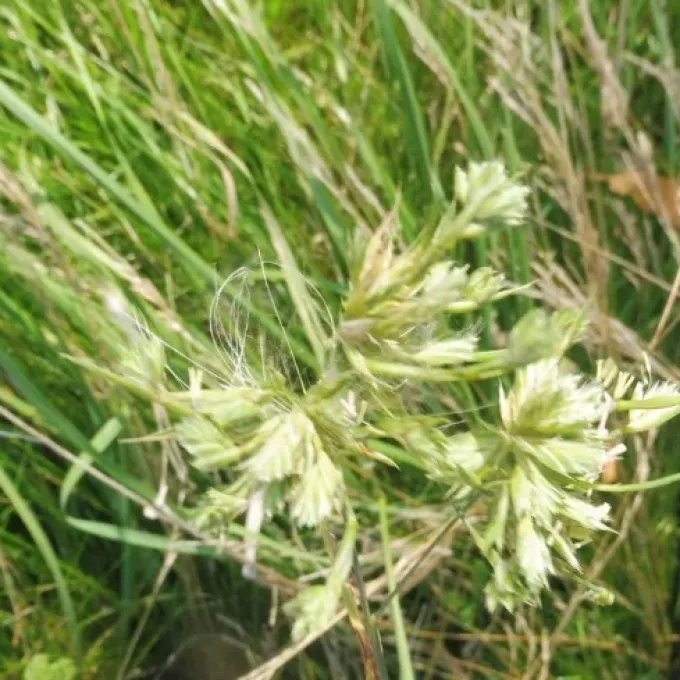
Description
How to identify
The grass mite, taxonomically known as Aceria tenuis, belongs to the Eriophyidae family, often referred to as gall mites or rust mites.
These pests are microscopic, reaching only about 0.2 mm in length, which makes them extremely difficult to detect without specialized optical equipment.
They possess an elongated, worm-like body shape and are characterized by having only two pairs of legs situated at the very front of the body.
Aceria tenuis is a highly specialized feeder, adapted to live within the tissues and protective structures of various grass species throughout its lifecycle.
Their ability to spread via air currents allows them to colonize new fields rapidly, especially during warm and dry periods of the growing season.
What it damages
This mite primarily infests various members of the Poaceae family, including essential crops like wheat, barley, and rye.
Wild grasses, particularly wheatgrass species, serve as alternative hosts and reservoirs, facilitating the survival of the pest between cropping seasons.
By piercing and sucking plant sap, the mites cause direct damage, leading to stunting, chlorosis, and reduced vigor of the host plant.
A critical aspect of their harm is the transmission of various plant viruses, including the Wheat Streak Mosaic Virus, which causes devastating yield losses.
Heavy infestations result in deformed leaves, poor ear development, and significantly reduced grain fill, ultimately threatening the entire harvest.
When it appears
The life cycle of Aceria tenuis is tightly linked to the seasonal growth of cereals, beginning their activity as soon as crops emerge in the spring.
Multiple generations occur throughout the growing period, with population density increasing rapidly under favorable warm weather conditions.
Summer is the peak season for population expansion, during which the mites distribute themselves onto new plant growth and wild host populations.
With the onset of autumn, the mites transition to overwintering phases, seeking shelter in the base of emerging winter cereal plants.
The winter is spent in the adult stage, tucked away in the crevices of leaves or beneath the protective sheaths of stems until the following spring.
Signs of infestation
Infestation symptoms often begin with fine mottling or chlorotic spots on the leaf surfaces, which may expand into yellow streaks over time.
Plants frequently exhibit leaf curling, twisting, or the formation of distinct galls where the mite colonies feed and reproduce securely.
Infected wheat plants often display signs of severe stunting, and the emerging heads may remain trapped or twisted within the flag leaf sheath.
Patches of stunted or yellowing plants in the field are a major warning sign that an infestation is present and may be spreading across the crop.
- Yellow or pale streaks on leaf blades
- Leaf curling and deformation
- Stunted plant height
- Trapped or distorted wheat heads
- Reduced tillering capacity
Control measures
Integrated pest management strategies are essential, focusing first on the elimination of reservoir hosts such as wild grasses and volunteer cereals.
Maintaining a clear temporal gap between harvesting winter crops and planting spring varieties helps to disrupt the continuity of the mite's food supply.
Strategic field management, including the removal of debris and effective weed control, significantly lowers the potential for overwintering populations.
While chemical control can be challenging due to the hidden habitat of the mites, systemic acaricides may be applied when economic thresholds are reached.
Selection of resistant or early-maturing cultivars is a recommended practice to avoid peak mite activity during the most vulnerable plant growth stages.
Taxonomy
- Latin name
- Aceria tenuis
- Order
- Mites
- Family
- Eriophyidae
- EPPO code
- ACEITE
Discussion
No discussions yet — be the first.