
Citrus bud mite
Aceria sheldoni
Description
How to identify
The citrus bud mite, known scientifically as Aceria sheldoni, belongs to the family Eriophyidae. These mites are microscopic, measuring roughly 0.15–0.17 mm in length, with a cylindrical, worm-like body shape.
Due to their extremely small size, they are almost invisible to the naked eye. In field conditions, agronomists identify them through the characteristic symptoms they cause on the host plant rather than by direct observation.
The life cycle of Aceria sheldoni takes place primarily inside the citrus buds, which act as a sanctuary. This protection makes them resistant to many environmental fluctuations and some standard insecticide applications.
Developmental stages include eggs, larvae, and adults, with the entire cycle completing in about two weeks under favorable conditions. High humidity and moderate warmth are the main drivers for rapid population growth.
Mites disperse passively through wind currents, rain splashing, or human activity. Tools like pruning shears can become vectors if not properly disinfected between handling infected and healthy plants.
##damage##The citrus bud mite primarily infests various citrus species, including lemons, oranges, and grapefruits. Lemons are particularly susceptible, often showing the most severe commercial damage to both foliage and fruit.
The mites feed by piercing the surface cells of young buds and developing shoots. This feeding activity disrupts the plant's hormonal balance and leads to physical distortion of the emerging plant structures.
Infested buds fail to develop normally, often leading to stunted growth or a "witches' broom" appearance. This significantly reduces the photosynthetic capacity of the canopy and weakens the overall tree structure.
When mites infest flower buds, they cause abortion or deformation of the blooms. This results in a decreased number of fruit set, which directly impacts the total yield of the orchard.
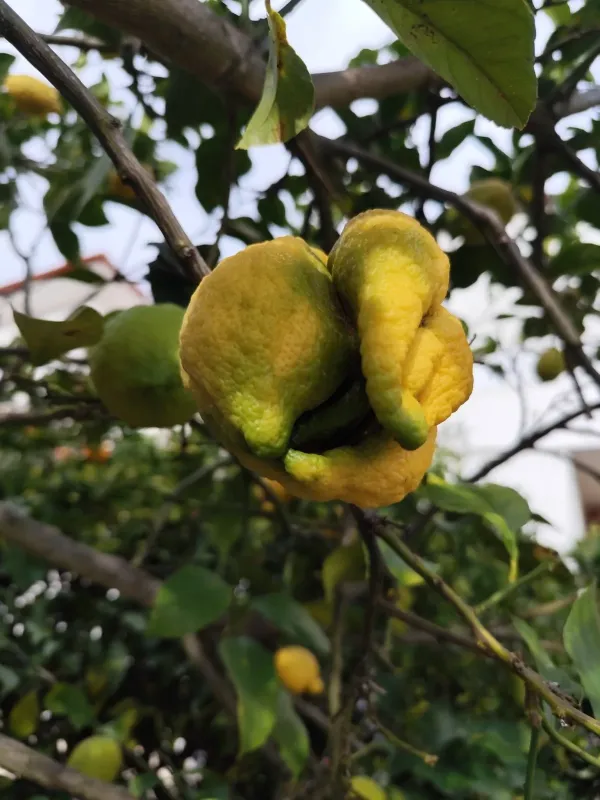
Fruit damage is a major economic issue, as mites settle under the sepals of young fruit. As the fruit expands, it becomes severely malformed, developing into odd, twisted shapes that are unfit for the fresh market.
Signs of infestation
The most diagnostic sign of an infestation is the irregular shape of fruit. These fruits are often categorized as deformed, sometimes referred to as "peculiarly shaped" or "twisted," lacking the uniform appearance required for commercial quality.
Buds affected by the mite may show unusual proliferation, leading to excessive branching from a single node. This creates a dense, bushy appearance that looks highly unnatural compared to healthy growth.
Leaves emerging from infested buds are frequently distorted, puckered, or discolored. These leaf deformations occur because the mite damage happens at the meristematic stage inside the bud.
In cases of heavy infestation, buds may turn brown and wither without opening. A microscopic inspection of the interior scales of these buds usually reveals the presence of numerous mites.
- Distorted, twisted, or misshapen fruit.
- Cluster-like growth (witches' broom effect).
- Stunted shoot development.
- Premature flower bud drop.
- Necrotic spots on bud scales.
Control measures
Managing the citrus bud mite requires a combination of cultural and chemical strategies. The primary cultural control involves pruning and removing infested branches to reduce the overall mite reservoir in the tree.
Chemical control focuses on applying specific acaricides during periods of peak mite activity. It is crucial to ensure full coverage of the canopy, especially the outer buds and potential feeding sites.
Rotation of chemical products is essential to manage resistance, as these mites can rapidly adapt to frequently used compounds. Monitoring the population density is necessary to time the applications for maximum efficacy.
Biological control using predatory mites, such as those from the Phytoseiidae family, can be a sustainable option. This is particularly effective in protected cropping environments like greenhouses.
Maintaining high tree vigor through proper fertilization and irrigation helps the plant withstand the stress of an infestation. Healthy plants are better able to recover from damage and maintain productivity.
Taxonomy
- Latin name
- Aceria sheldoni
- Order
- Mites
- Family
- Eriophyidae
- EPPO code
- ACEISH
Discussion
No discussions yet — be the first.