
Maple bladder-gall mite
Aceria sacchari
Description
How to identify
The maple bladder-gall mite (Aceria sacchari) is a microscopic pest belonging to the Eriophyidae family. These mites are elongated and worm-like in shape, measuring only about 0.1–0.2 mm in length, making them invisible without a microscope.
Their life cycle is highly specialized. Adult females hibernate during the winter under bud scales, within bark crevices, or in other sheltered parts of the maple tree twigs.
As spring arrives and the buds begin to swell, the overwintering mites become active. They migrate to the newly developing leaves to feed and establish their colonies.
While feeding, they inject salivary enzymes into the leaf tissue, which triggers the plant to develop abnormal cell growth, resulting in the formation of galls that provide the mites with food and protection.
These mites can produce multiple generations per season, allowing their population to expand rapidly throughout the maple tree canopy during the warmer months.
What it damages
The primary hosts for Aceria sacchari are species of maple trees. The mites specifically target young, tender leaves that are easier to puncture with their delicate mouthparts.
The damage is primarily aesthetic; however, severe infestations can interfere with the tree's ability to conduct photosynthesis efficiently due to the widespread leaf deformity.
While the infestation rarely kills a healthy, mature tree, it can significantly weaken smaller or stressed specimens, making them more susceptible to secondary issues.
In landscaping, the presence of these galls reduces the ornamental value of maple trees, which is a major concern for park management and residential gardening.
In extreme cases, persistent heavy infestations year after year might lead to premature leaf drop, causing the tree to lose energy stores needed for the following season.
Signs of infestation
The most recognizable sign of infestation is the development of galls on the leaves. These structures appear as small, bumpy outgrowths on the upper surface of the leaf.
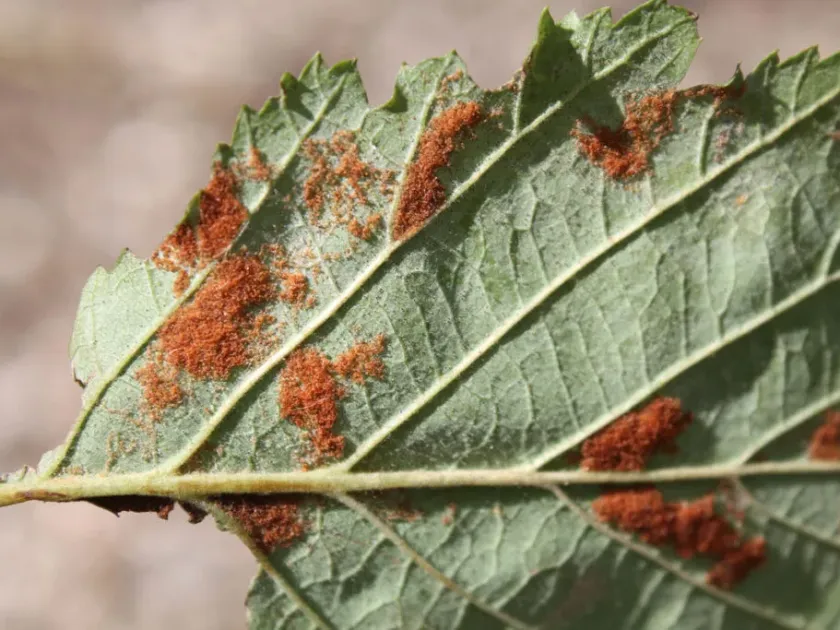
On the underside of the leaf, directly beneath the gall, a patch of felt-like hair (trichomes) develops. This "felt" serves as a protective habitat for the mites.
The color of these galls can change over time. They often start as pale green or yellow and turn vibrant shades of pink, red, or dark brown as they mature.
Leaves affected by high mite density may show significant curling, distortion, or twisted growth, appearing stunted compared to healthy foliage on the same tree.
Careful examination of the underside of the leaf will show the characteristic texture difference, which is distinct from fungal or bacterial leaf spots.
Control measures
Controlling the maple bladder-gall mite is difficult because once the mites are inside the galls, they are protected from most chemical sprays, making contact treatments ineffective.
Sanitation is a key component of management. Pruning and destroying heavily infested branches can help reduce the local population of the pest, especially in small trees.
Chemical control must be timed precisely. The most effective window is during the early spring bud-break, just as the overwintering females emerge and begin their migration.
Applications of horticultural oil or sulfur-based miticides can provide adequate protection if applied before the galls fully form and seal the mites inside.
Maintaining tree vigor through proper irrigation and fertilization is recommended, as healthier trees are better equipped to withstand and recover from mite-related foliage stress.
Taxonomy
- Latin name
- Aceria sacchari
- Order
- Mites
- Family
- Eriophyidae
- EPPO code
- ACEISR
Discussion
No discussions yet — be the first.