
Poplar bud gall mite
Aceria populi
Description
How to identify
The poplar bud gall mite (Aceria populi) is a microscopic pest belonging to the Eriophyidae family, specifically known as the four-legged mite.
These mites are extremely small, measuring approximately 0.2 mm in length, and have a pale, elongated, worm-like body that is invisible to the naked eye.
They are highly specialized and primarily infest trees of the genus Populus, where they reside inside abnormal tissue growths known as galls.
The mites overwinter as fertilized females, finding shelter beneath the bud scales of the poplar trees, which protects them from extreme winter weather.
When temperatures rise in early spring, the mites emerge from their dormancy and begin feeding on developing bud tissues, initiating the formation of galls.
What it damages
This mite species is a major pest for various poplar varieties, often causing aesthetic and physiological damage to urban and forest plantations.
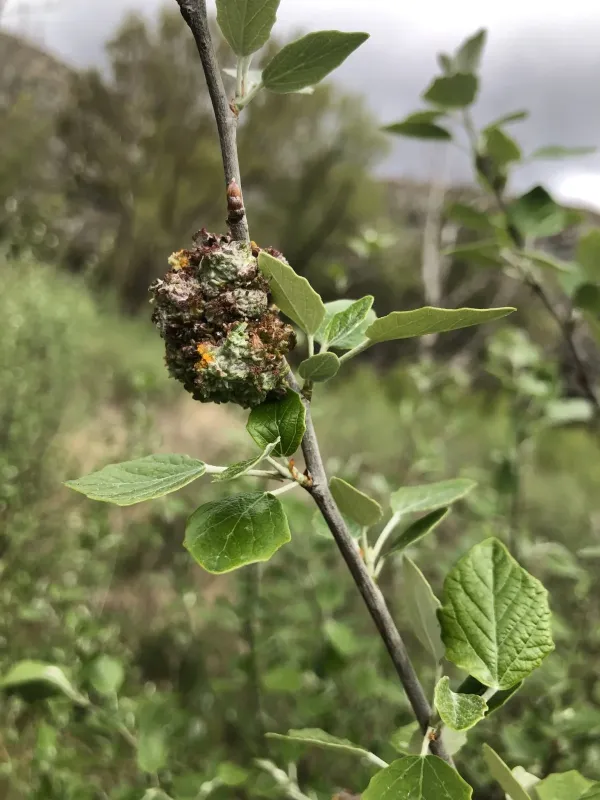
Damage is characterized by the development of spherical or irregular galls on the buds, which result from the mite's feeding secretions inducing plant tissue proliferation.
These galls drain the tree's energy reserves and cause significant structural deformation to the branches and buds affected by the mite colonies.
Heavily infested trees may exhibit stunted growth, reduced leaf area, and a generally sparse canopy, which drastically diminishes their ornamental value.
Over time, the chronic presence of these mites weakens the tree, potentially making it more susceptible to secondary pathogens and other wood-boring insects.
When it appears
The life cycle of Aceria populi is closely synchronized with the phenological stages of the host tree during the growing season.
As spring begins, the mites migrate to new buds, which is the most critical period for their reproduction and population expansion.
During the summer months, the mites produce multiple generations within the protection of the galls, continuously growing the size of these structures.
By late summer and early autumn, the mature mites move from the older, drying galls to the newly formed overwintering buds on the tree.
This synchronized movement ensures the survival of the species through the winter, completing their annual biological cycle.
Signs of infestation
The most distinctive symptom of infestation is the appearance of cauliflower-like or woody galls on the terminal and lateral buds of the branches.
These galls often appear swollen, distorted, and can vary in color from pale green to reddish or even dark brown as they mature and harden.
Affected shoots often show abnormal twisting and may fail to produce healthy leaves, resulting in a clumped or deformed appearance of the terminal growth.
In mature trees, a heavy infestation can be identified by looking for large, persistent galls that remain on the branches even after the leaves have fallen.
Reduced vigor and crown thinning in specific poplar varieties are reliable secondary indicators of a widespread mite population in the area.
Control measures
The most effective strategy for managing this pest involves the physical removal and destruction of the galls before the mites migrate to new buds.
Pruning must be done during the dormant season or early spring, ensuring that the infested plant material is burned or properly disposed of.
Chemical control with acaricides can be challenging because the mites are protected within the galls for the majority of the growing season.
Treatment is only effective during the short windows when mites are moving across the surface of the tree to infest fresh buds.
- Sanitary pruning of infested branches.
- Planting resistant poplar cultivars where possible.
- Regular inspection of new nursery stock.
Taxonomy
- Latin name
- Aceria populi
- Order
- Mites
- Family
- Eriophyidae
- EPPO code
- ACEIPO
Discussion
No discussions yet — be the first.