
Poplar bud gall mite
Aceria parapopuli
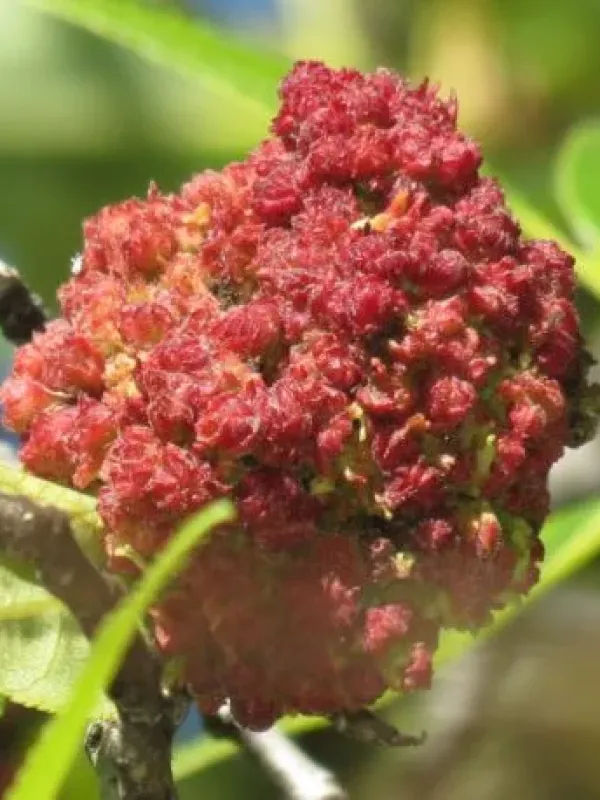
Description
How to identify
The poplar bud gall mite (Aceria parapopuli) is an microscopic arachnid belonging to the family Eriophyidae. Due to its size, which is approximately 0.2 mm in length, it is impossible to identify it in the field without the use of a magnifying glass or microscope.
These mites have an elongated, worm-like body with a yellowish-white coloration. Their morphology is adapted for living in the narrow crevices of tree bark and beneath the protective scales of poplar buds.
The biological cycle is synchronized with the development of the host tree. Adult females overwinter in protected areas on the tree, emerging in early spring as temperatures rise to find fresh succulent tissues.
Development involves several stages, and multiple generations can occur during a single growing season. Mite population growth is highly dependent on local weather conditions and the tree's health.
Dispersal is primarily mediated by wind currents. Additionally, the mite can be spread to new areas through the transport of infested nursery stock or by hitchhiking on insects that visit the trees.
What it damages
The primary hosts for Aceria parapopuli are various species of the genus Populus, including poplar cultivars commonly used in urban landscapes. The mite attacks budding sites and developing shoots.
As the mite feeds, it injects saliva containing enzymes that interfere with the plant's hormonal balance. This triggers abnormal cell division, resulting in the characteristic structures known as galls.
These galls serve as protected feeding sites for the mites. However, the presence of galls disrupts the normal flow of nutrients and moisture to the shoot, severely hindering growth.
Repeated yearly infestations lead to a stunted appearance of the tree, characterized by shortened internodes, twig distortion, and a significantly reduced annual growth rate.
While rarely fatal to mature trees on its own, severe infestation creates stress that makes the poplar more vulnerable to secondary attacks by wood-boring insects or fungal pathogens.
Signs of infestation
The most distinctive sign of infestation is the development of warty, cauliflower-like growths or galls on the twigs and near the buds of the affected poplar tree.
In their early development, these galls are light green and relatively soft. As the season progresses, they harden, turn brown or black, and become woody in texture.
Heavily infested branches display a cluster of these galls, which often causes the affected part of the twig to twist and take on a distorted, knotted appearance.
During the spring, the failure of buds to develop or the appearance of malformed leaves in the vicinity of the galls provides a strong indicator of mite activity.
In mature stands, the accumulation of old, blackened galls from previous years is the most obvious indication that the tree has been chronically infested for several seasons.
Control measures
The most effective management strategy for small-scale infestations is the physical removal and destruction of galled twigs during the dormant season to eliminate overwintering populations.
Chemical control is possible through the use of specific acaricides. These must be applied during the period when mites are active on the surface of the bark, typically early spring or mid-summer.
When applying pesticides, thorough coverage of all branches is essential, as the mites are microscopic and hide in hard-to-reach areas of the bark and buds.
Cultural practices that promote tree vigor, such as appropriate watering and avoiding excessive nitrogen fertilization, can help the tree remain resilient against pest pressures.
- Pruning and burning of infested wood during the winter months.
- Application of sulfur-based or systemic acaricides during the growth season.
- Regular monitoring of young nursery stock to prevent the introduction of the mite.
- Maintaining healthy soil conditions to improve the tree's defensive capabilities.
Taxonomy
- Latin name
- Aceria parapopuli
- Order
- Mites
- Family
- Eriophyidae
- EPPO code
- ACEIPA
Discussion
No discussions yet — be the first.