
Beech gall mite
Aceria nervisequa
Description
How to identify
The beech gall mite (Aceria nervisequa) belongs to the family Eriophyidae within the order Trombidiformes. These microscopic pests are extremely small, typically reaching only 0.2 mm in length, making them invisible to the naked eye.
Their bodies are elongated and worm-like, often pale or yellowish in color. Unlike other mites, they possess only two pairs of legs located at the front, which is a diagnostic feature of the Eriophyid family.
These mites live protected within galls, which are abnormal growths on plant tissues induced by the mite's feeding behavior and the chemical secretions they release during the process.
The mite's life cycle is strictly tied to the beech tree's phenology. Fertilized females overwinter in sheltered spots, such as dormant buds or cracks in the tree bark, to survive harsh winter conditions.
As soon as the tree begins to leaf out in spring, the females emerge to colonize the new leaves and begin feeding, initiating the formation of the characteristic galls where the next generations will develop.
What it damages
The primary host for this species is the European beech (Fagus sylvatica). The mites feed on the cells of the leaf veins, causing the plant to respond by forming structural deformities.
These galls appear as dense tufts of hair along the veins, which disrupt the leaf's normal function. While not typically fatal to mature, healthy trees, they can severely impact leaf metabolism.
Heavy infestations can lead to premature leaf drop and stunted growth in young saplings, making the mite a concern for nursery management and young reforestation efforts.
The structural damage caused by the mites also creates pathways for opportunistic pathogens, including fungi, to enter the leaf tissue and cause further health decline.
Beyond the biological impact, the presence of numerous galls significantly degrades the aesthetic value of the trees in parks, gardens, and ornamental landscapes.
Signs of infestation
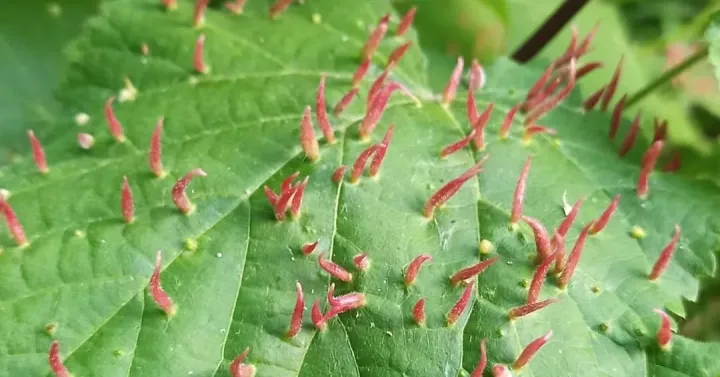
The most distinctive symptom of an infestation is the presence of hairy galls on the undersides of the leaves, typically situated along the primary or secondary leaf veins.
- Early in the season, these galls are light-colored or white.
- As the season progresses, they turn brownish, rusty, or even black.
- Leaves may become wrinkled, distorted, or curled due to the proliferation of gall tissues.
In cases of severe infestation, the entire leaf surface may be covered in these tufts, giving the tree a disheveled appearance when viewed from below.
If examined with a magnifying lens, one can clearly see the tiny mites nestled within the hairs of the galls, where they live and feed throughout the summer season.
Control measures
Managing the beech gall mite is notoriously difficult because the mites are protected inside the galls, effectively shielding them from most contact insecticides.
The most effective cultural practice for ornamental trees is to remove and destroy heavily infested leaves early in the season to reduce the population density.
Chemical control can be attempted with specific acaricides, but timing is critical; applications must coincide with the spring emergence of females from their overwintering sites.
Maintaining high tree vigor through proper fertilization, adequate watering, and avoiding soil compaction can help the trees withstand mite pressure without human intervention.
In large forest settings, intervention is usually not required as the damage rarely reaches levels that threaten the long-term survival of the beech population.
Taxonomy
- Latin name
- Aceria nervisequa
- Order
- Mites
- Family
- Eriophyidae
- EPPO code
- ACEINE
Discussion
No discussions yet — be the first.