
Lycium gall mite
Aceria kuko
Description
How to identify
The Lycium gall mite (Aceria kuko) is a microscopic pest belonging to the Eriophyidae family and the Acariformes order. Like other gall-inducing mites, it is extremely small, worm-like in shape, and requires microscopic examination for accurate identification.
What it damages
This mite primarily infests plants of the Lycium genus, most notably the goji berry (Lycium barbarum). By feeding on plant sap, the mites induce the formation of abnormal growths known as galls on the surface of leaves, stems, and flower buds.
When it appears
The activity of these mites correlates with the plant's growing season. In spring, when new buds begin to open, the mites migrate from their overwintering sites to new growth, initiating a new cycle of infestation that continues throughout the warmer months.
Signs of infestation
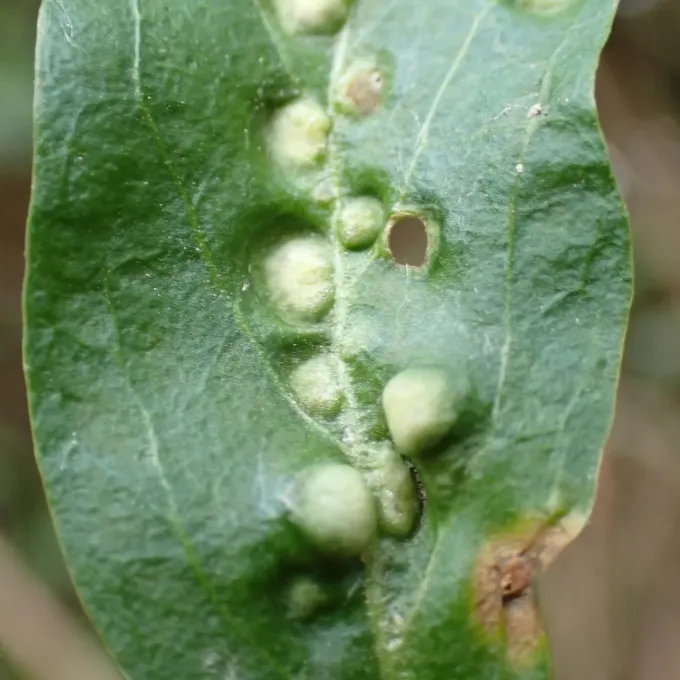
The presence of Aceria kuko is marked by the development of numerous green, red, or brown knobby galls on the foliage. Heavy infestations result in severe leaf distortion, early senescence, and a significant reduction in the plant's vigor and berry production capabilities.
Control measures
Controlling this mite is challenging because the galls act as a natural shield against contact pesticides. Recommended management strategies include:
- Pruning and removing infested branches to reduce the overall population.
- Applying systemic acaricides early in the spring when mites are migrating.
- Using sulfur-based sprays before the galls fully form.
- Improving overall plant health to help the shrub withstand infestation.
Taxonomy
- Latin name
- Aceria kuko
- Order
- Mites
- Family
- Eriophyidae
- EPPO code
- ACEIKU
Discussion
No discussions yet — be the first.