
Hibiscus gall mite
Aceria hibisci
Description
How to identify
The hibiscus gall mite (Aceria hibisci) belongs to the Eriophyidae family, commonly known as gall mites. These are microscopic arthropods measuring approximately 0.2 mm in length, making them invisible to the naked eye.
Their bodies are worm-like and translucent or pale yellow. Because they lack the typical mobility of larger insects, they rely on wind currents or the movement of plant material to spread across a landscape or greenhouse environment.
The entire life cycle of this mite occurs on the host plant. They live within the plant tissues, where they secrete substances that cause the host to form galls, providing the mites with food, shelter, and a protected environment for egg-laying.
Detection is notoriously difficult until the physical damage becomes apparent. Gardeners and agronomists usually identify the presence of this pest by looking for unusual growth patterns at the apical meristems of the hibiscus plant.
Given their tiny size, specialized laboratory equipment or a strong magnifying lens is required for positive identification. Early monitoring of young growth is the most reliable way to spot an emerging infestation before it becomes severe.
What it damages
The primary host for this mite is the Chinese hibiscus (Hibiscus rosa-sinensis). The mites preferentially colonize tender, developing plant tissues, including young leaves, petioles, and emerging floral buds.
Feeding occurs through the extraction of cellular fluids. In response, the plant develops abnormal tissues known as galls. These structures divert nutrients away from healthy growth, weakening the overall vigor of the shrub.
Severe infestations can result in the complete disfigurement of the plant. This loss of aesthetic value is significant for commercial nurseries and home gardeners who rely on the hibiscus for its beautiful, lush flowers and foliage.
Beyond the primary host, the mite can potentially affect other species within the Malvaceae family. In close-quarters environments like greenhouses, the spread from one host plant to another can happen very rapidly if unchecked.
Economic damage is high in the nursery industry, where infected plants must be culled to prevent the spread to healthy stock, leading to significant financial losses and the need for stringent pest management protocols.
Signs of infestation
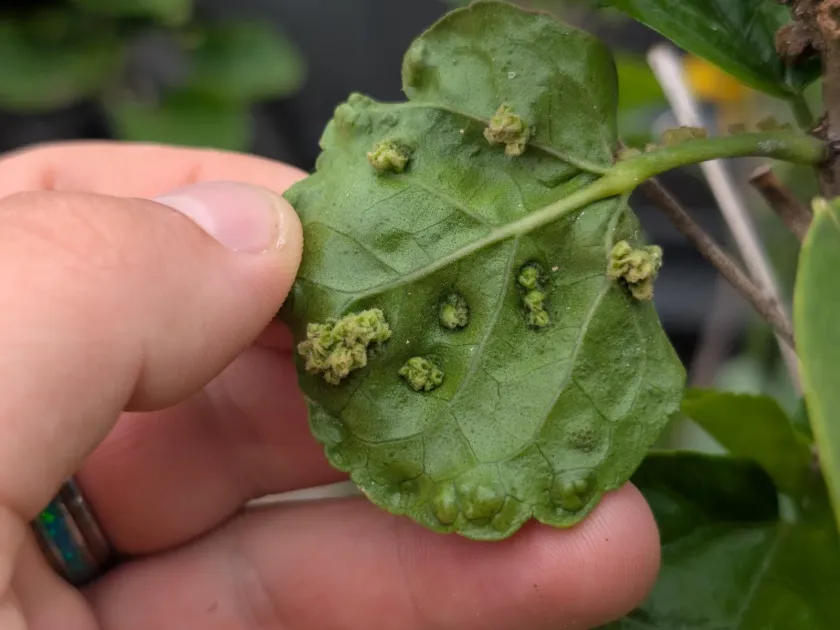
The most distinctive sign of a hibiscus gall mite infestation is the formation of galls. These are bumpy, wart-like growths that appear on the undersides of leaves, often turning reddish or brownish as they mature.
Stem damage is equally characteristic. The stems of affected plants often become severely twisted, gnarled, and thickened. Internodes shorten significantly, giving the plant a stunted, distorted appearance.
Leaves affected by the mite are often crinkled, curled, and reduced in size. Chlorotic spotting or yellowing often accompanies the distortion, which limits the plant's ability to photosynthesize effectively.
Floral buds are frequently aborted or fail to open properly. If they do open, the flowers are often misshapen, small, and lack the vibrant color expected from healthy plants, leading to a complete lack of ornamental value.
- Wart-like gall formations on the leaves.
- Distortion and curling of shoot tips.
- Stunted growth and shortened internodes.
- Failure of buds to bloom or development of malformed flowers.
Control measures
Managing Aceria hibisci requires an aggressive approach. The most critical step is to prune and destroy all visibly infested plant material. Clippings should be bagged and disposed of, not composted, to prevent reinfection.
Systemic acaricides are the most effective chemical control method. Because the mites live inside the galls, contact sprays often fail; therefore, products that are absorbed into the plant's vascular system are necessary to reach the pests.
A consistent treatment schedule is essential. Multiple applications, typically spaced 7 to 10 days apart, are required to break the mite's reproductive cycle and kill newly hatched nymphs that were protected in the egg stage.
Strict quarantine measures are vital for new plants. Any incoming hibiscus should be inspected thoroughly and kept isolated from the rest of the collection for several weeks to ensure no hidden mite populations are present.
Cultural practices, such as maintaining proper spacing to increase airflow and avoiding overhead watering, can help minimize the humidity levels that favor mite proliferation. Keeping plants healthy through balanced fertilization also helps them withstand minor infestations.
Taxonomy
- Latin name
- Aceria hibisci
- Order
- Mites
- Family
- Eriophyidae
- EPPO code
- ACEIHI
Discussion
No discussions yet — be the first.