
Coconut mite
Aceria guerreronis
Description
How to identify
The coconut mite (Aceria guerreronis) is a microscopic pest belonging to the Eriophyidae family. Measuring approximately 200–250 micrometers in length, these creatures are virtually invisible to the naked eye, appearing only as tiny white or yellowish worm-like particles under magnification.
Characterized by having only two pairs of legs situated at the anterior end, these mites move by crawling on the surface of plant tissues. Their anatomy is highly adapted to living in protected microhabitats, such as the space underneath the perianth (calyx) of young coconut fruits.
The life cycle of Aceria guerreronis is rapid, consisting of egg, larva, nymph, and adult stages. Under favorable tropical conditions, they can complete their life cycle in just over a week, leading to exponential population growth that can infest entire palm plantations quickly.
Dispersal is primarily mediated by wind, which carries these minute mites from tree to tree. Additionally, the mites can be transported over short distances by various insects that visit the palm flowers, facilitating the spread of infestations across vast agricultural landscapes.
These mites are active throughout the year in tropical climates. They do not exhibit diapause, meaning they maintain active feeding and reproduction as long as suitable host tissue, specifically the developing meristematic zones of coconut fruits, is available.
What it damages
Coconut mites exclusively attack coconut palms (Cocos nucifera). The primary site of damage is the meristematic tissue at the base of young developing coconuts, which is highly nutritious and protected by the tight fitting of the floral bracts.
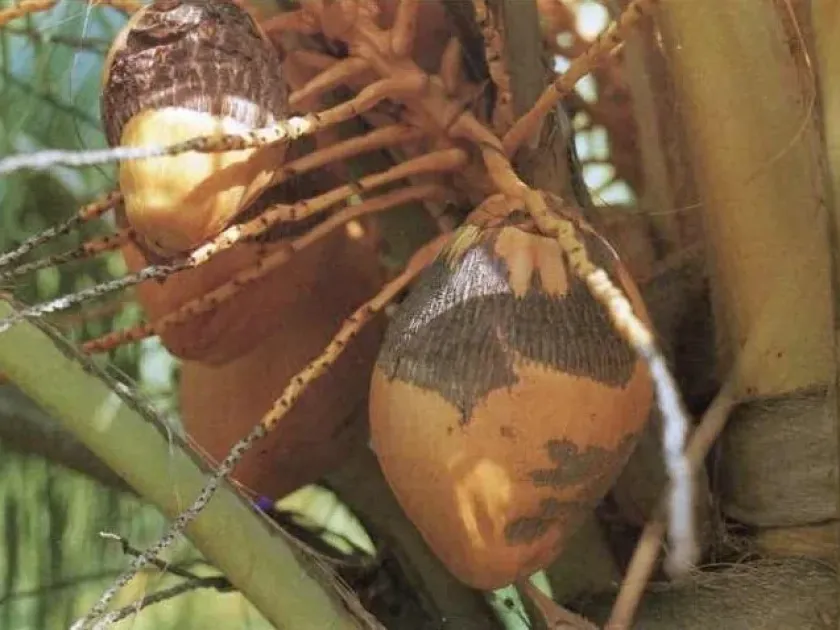
Feeding activity causes significant epidermal damage, resulting in the leakage of plant sap and the formation of necrotic areas. This process manifests as longitudinal cracks and rough, corky tissue on the surface of the coconut husk, which inhibits the normal expansion of the fruit.
The damage often leads to the deformation of the fruit. Because the damaged sections stop growing while the healthy tissues expand, the coconut becomes misshapen, resulting in a substantial reduction in the size of the nut and the overall yield of copra.
In addition to physical deformation, the mites can cause premature dropping of young nuts. This results in direct quantitative losses for farmers, significantly reducing the commercial output of oil and coconut-related products per hectare.
Severe infestations can also impact the reproductive health of the palm. By attacking the floral structures, mites can interfere with the development of inflorescences, potentially leading to lower fruit sets and long-term degradation of the tree's productivity.
Signs of infestation
The most reliable sign of a coconut mite infestation is the presence of brown, necrotic streaks appearing beneath the perianth of young coconuts. These marks often spread to form wide, corky bands that circle the fruit's base as it matures.
The skin texture of the coconut changes significantly, becoming rough, brittle, and cracked. This "rusty" or corky appearance is a classic symptom, easily distinguishable from healthy, smooth, and green immature fruits.
A reduction in fruit size is a common indicator of a chronic infestation. When observing a coconut tree, if the fruits appear stunted or have an asymmetrical growth pattern compared to the standard, an examination for mite colonization is recommended.
Upon lifting the calyx of a young fruit with a hand lens, one can typically find colonies of the mites. They appear as clusters of dust-like white or cream-colored specks, often actively clustering in the moist, sheltered zone against the fruit surface.
Mass shedding of immature nuts, particularly those smaller than three months old, often signals high mite pressure. Observing numerous small, discolored nuts on the ground is a strong indicator that the infestation level has reached a critical threshold.
Control measures
Integrated Pest Management (IPM) is essential for coconut mite control. The release of predatory mites from the Phytoseiidae family has shown potential in reducing Aceria guerreronis populations by keeping them below economic injury levels.
Chemical control is challenging due to the pest's protected habitat beneath the perianth. The application of systemic acaricides that move through the plant's vascular system is considered the most effective chemical method for large-scale infestations.
Sanitation practices play a vital role in preventing the spread. Regularly removing and destroying severely infested nuts and plant debris reduces the local mite reservoir and limits the number of individuals available to migrate to healthy fruit clusters.
The use of botanical oils, such as neem oil, or mineral oil emulsions can provide a localized barrier that inhibits the movement and respiration of the mites. These treatments are often used in organic and sustainable farming programs as they are less toxic to beneficial insects.
- Regular monitoring of fruit clusters to detect early infestation signs.
- Quarantine of new planting material to prevent cross-plantation contamination.
- Encouraging biological control agents by maintaining field biodiversity.
- Proper calibration of sprayers to ensure deep penetration under the calyx.
Taxonomy
- Latin name
- Aceria guerreronis
- Order
- Mites
- Family
- Eriophyidae
- EPPO code
- ACEIGU
Discussion
No discussions yet — be the first.