
Ash gall mite
Aceria fraxinivora
Description
How to identify
The ash gall mite, scientifically known as Aceria fraxinivora, is a microscopic member of the Eriophyidae family. Because of their tiny size, typically around 0.2 mm, they are invisible to the naked eye.
They possess an elongated, worm-like body that is pale yellowish or white. As members of the four-legged mite family, they only have two pairs of legs situated near the front of the body.
These mites spend the winter months protected inside the woody galls formed during the previous growing season or within the crevices of the tree's buds.
Once spring arrives and temperatures rise, the mites emerge from their wintering sites and migrate toward the newly developing flower buds to begin their life cycle.
Reproduction is rapid, and the mites secrete growth-regulating chemicals that force the tree to produce abnormal tissue growths, providing a permanent home for the mite colony.
What it damages
The primary host for Aceria fraxinivora is the common ash tree (Fraxinus excelsior). The mites specifically target the generative, reproductive parts of the tree.
By feeding on the developing flower buds, the mites induce the formation of irregular, cauliflower-like growths known as galls, which prevent normal flower and seed development.
While the galls rarely kill a mature tree, they significantly impact its reproductive output, preventing the production of samara seeds which are vital for natural propagation.
In ornamental urban settings, the heavy presence of these galls ruins the aesthetic appeal of the trees, making them look sickly and misshapen, especially during the dormant season.
In cases of severe infestation, the tree's overall vigor can be reduced, making it more susceptible to other stressors like drought, fungi, or secondary insect pests.
Signs of infestation
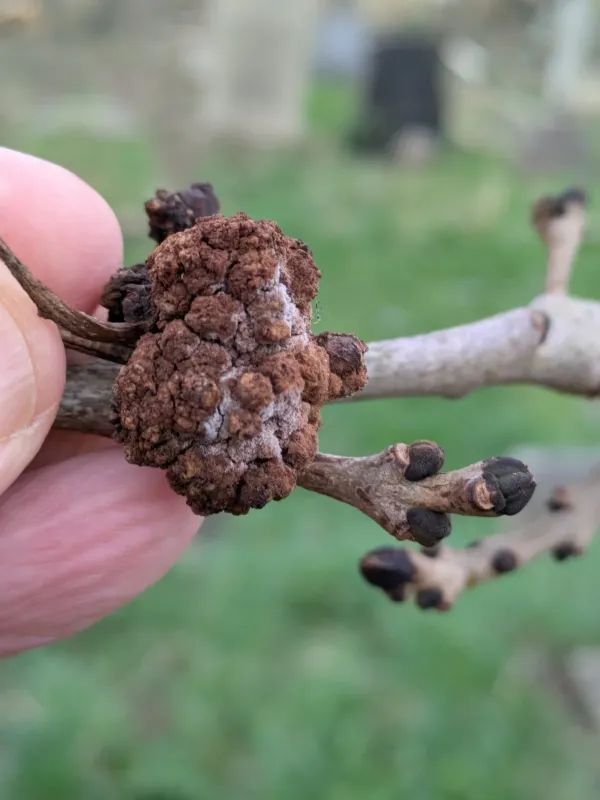
The most distinctive symptom of an ash gall mite infestation is the presence of hard, bumpy, irregular growths on the branches, which develop where the flowers should have been.
Initially, these galls are green and relatively soft, but as the season progresses, they turn woody, dark brown, or nearly black, retaining their bumpy, convoluted surface.
The galls remain attached to the tree long after the leaves have fallen in the autumn, making them very easy to spot on bare branches during the winter months.
A high density of these dark, hardened masses on an ash tree is a clear indicator that the tree has hosted a large population of mites throughout the growing season.
Gardeners often mistake these growths for fungal diseases, but their persistent, hard structure and location on previous years' fruiting sites confirm the presence of gall mites.
Control measures
Manual removal is the most reliable method of control. Pruning and destroying infected branches containing galls should be performed during the dormant season.
It is crucial that the pruned material is removed from the site or burned to ensure the mites do not migrate back to the tree or onto neighboring healthy trees.
Chemical control with acaricides is generally ineffective once the galls have formed. Treatments must be timed precisely with the mite's migration phase in early spring.
Since the mites are well-protected within their galls, broad-spectrum chemical spraying is usually not recommended and is often discouraged due to environmental concerns.
Maintaining tree health through proper watering and soil fertilization can improve the tree's tolerance to the presence of the mite, even if it cannot fully prevent the formation of new galls.
Taxonomy
- Latin name
- Aceria fraxinivora
- Order
- Mites
- Family
- Eriophyidae
- EPPO code
- ERPHFR
Discussion
No discussions yet — be the first.