
Cardaria gall mite
Aceria drabae
Description
How to identify
The Cardaria gall mite (Aceria drabae) belongs to the Eriophyidae family, known as gall mites. These are microscopic arthropods, typically worm-like in shape and measuring about 0.2 mm in length, making them invisible to the naked eye.
These mites possess a unique biological adaptation: they spend almost their entire life cycle protected inside galls, which are abnormal tissue growths induced by the mites themselves on the host plant.
Identification is highly specialized and requires the use of stereomicroscopes or compound microscopes in a laboratory setting to confirm the presence of the species through morphological features.
The mite is closely associated with Brassicaceae species. Its systematic position within the Eriophyoid group highlights its specialization in feeding on vascular plants by piercing individual cells to ingest plant sap.
The life cycle includes the egg, larva, nymph, and adult stages. They overwinter in protected sites on the host plants, such as dormant buds or stem crevices, waiting for the spring growth.
##damage##The primary host of Aceria drabae is the hoary cress (Cardaria draba). While primarily a pest of this weed, the presence of the mite can impact the vigor of surrounding agricultural cruciferous crops if populations spill over.
Feeding causes the formation of galls, which are metabolic sinks. The plant diverts vital energy and nutrients to these tissues, depriving healthy parts of the plant and leading to stunted growth.
In addition to physical deformation, the physiological stress caused by the mite reduces the host plant's overall resilience, making it more susceptible to secondary environmental stressors like heat or drought.
Severe infestations can lead to flower abortion and a significant reduction in reproductive success, as the galls often occupy areas that would otherwise produce fruits or seeds.
The damage often creates entry points for fungal and bacterial pathogens, leading to a complex disease state that can be more destructive than the mite activity alone.
When it appears
Activity begins early in the spring as soon as temperatures rise enough to initiate vegetative growth of the host plant. The mites emerge from their winter shelters to colonize fresh, tender tissues.
The population peaks during the rapid growth phase of the plant. Multiple generations are produced throughout the growing season, provided that host tissues remain suitable for feeding.
As plants mature or become drought-stressed, the mite population may fluctuate or decline, leading to migration or the search for overwintering sites.
The duration and intensity of the season are highly dependent on the local climate; warmer and more humid conditions tend to accelerate the reproductive cycles.
By late autumn, the mites transition into a state of reduced activity and search for protected crevices on the host to survive the winter temperatures.
Signs of infestation
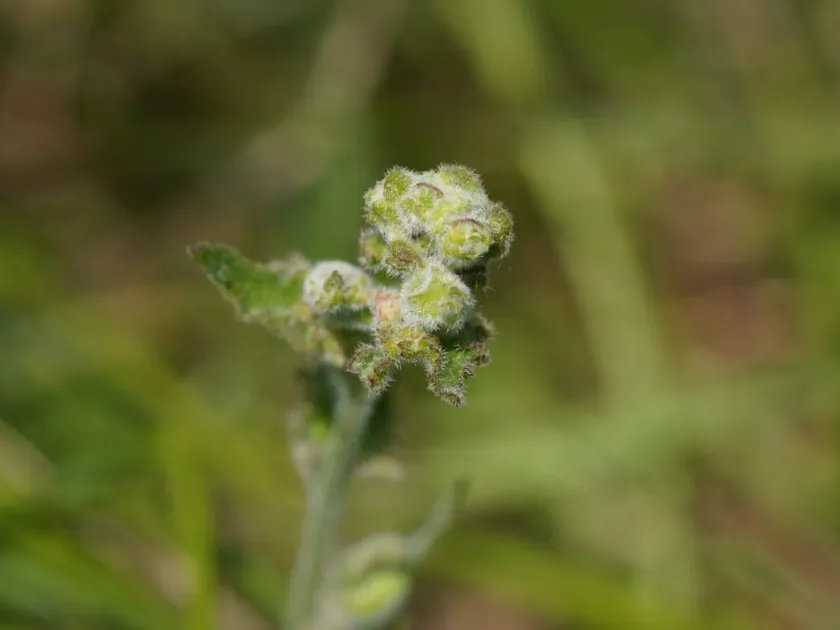
The most visible sign of infestation is the development of galls—abnormal bumps, lumps, or distortions on the leaves, stems, or floral buds of the host plant.
Leaves often exhibit curling, twisting, or thickening, which are standard symptoms of mite-induced cell hypertrophy and hyperplasia.
Floral structures may become malformed, stunted, or completely sterile, preventing the normal development of pods or seeds in the infected area.
When observing the galls, one might see a yellowish or whitish dusty appearance inside, which consists of concentrated populations of the mites at various life stages.
The lack of more obvious pests, like aphids or caterpillars, often helps differentiate gall mite damage from other common agricultural issues.
Control measures
Cultural control is the most effective management strategy, specifically the removal and destruction of host weeds like hoary cress in and around agricultural lands to reduce population reservoirs.
Crop rotation is recommended to break the life cycle of the pest. By removing the specific host plant, the mite population is naturally reduced in that specific field.
Chemical control is challenging due to the protective galls. Systemic acaricides are necessary to reach the mites residing within the plant tissues, applied during the peak emergence of the larvae.
Maintaining good crop hygiene and removing crop residues at the end of the season can significantly limit the number of mites that successfully overwinter.
- Deep plowing to bury infested plant debris.
- Monitoring field perimeters for weed infestation.
- Using sulfur-based treatments during early colonization stages.
- Implementing integrated pest management (IPM) to encourage natural predators.
Taxonomy
- Latin name
- Aceria drabae
- Order
- Mites
- Family
- Eriophyidae
- EPPO code
- ACEIDR
Discussion
No discussions yet — be the first.