
Blueberry bud mite
Acalitus vaccinii
Description
How to identify
The blueberry bud mite (Acalitus vaccinii) is a microscopic pest belonging to the family Eriophyidae. Measuring approximately 0.2 mm in length, these mites are invisible to the naked eye and possess a vermiform, elongated body that allows them to navigate within plant tissues.
Taxonomically, the mite falls under the order Acariformes. Unlike spider mites, these pests are highly specialized, confining their life cycle almost exclusively to the buds and tender tissues of blueberry and cranberry plants.
The mites overwinter as adult females under bud scales or in crevices of the bark. As temperatures rise in early spring, they move into the developing buds to feed and begin the cycle of reproduction, which continues throughout the growing season.
Due to their microscopic size and hidden behavior, identification relies heavily on recognizing damage patterns. Their populations can expand rapidly under favorable conditions, making early monitoring essential for any commercial blueberry operation.
Professional monitoring involves collecting dormant buds in late winter or early spring and examining them under a microscope. This is the only reliable method to detect an infestation before visible symptoms begin to impact the overall health of the plant.
What it damages
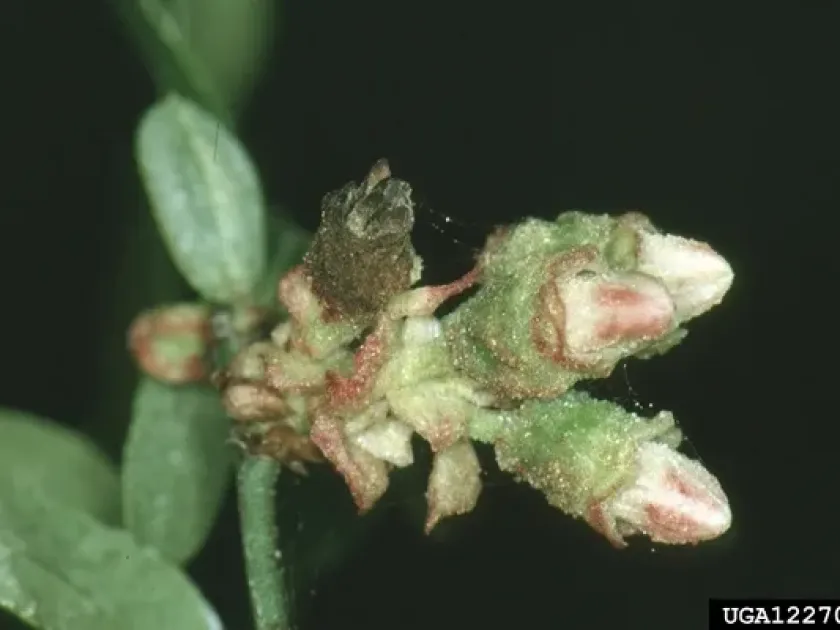
This mite specifically targets members of the genus Vaccinium. By feeding on the meristematic tissues within the buds, they cause structural damage that directly interferes with the plant’s reproductive and vegetative development.
The most severe impact is on flower buds, which may fail to open entirely or produce deformed, sterile flowers. This leads to reduced fruit set and direct yield losses, which can be devastating for growers aiming for high-quality production.
When vegetative buds are infested, the resulting shoots are often stunted, twisted, or distorted. The loss of healthy foliage and the stress imposed on the plant can lead to a significant reduction in photosynthesis, weakening the entire bush over time.
Feeding damage often manifests as necrotic lesions within the bud tissues. These lesions serve as stress points that make the bush susceptible to secondary infections, further exacerbating the impact of the mite infestation on the plant's long-term survival.
The cumulative effect of these injuries results in poor bush vigor, diminished fruit size, and increased susceptibility to winter damage. If left untreated, the infestation can compromise the productivity of an entire orchard within a few years.
Signs of infestation
The most prominent sign is the presence of brown or blackened buds in early spring that remain dormant while healthy buds begin to break. These buds often appear small, shriveled, and fail to develop into flowers or leaves.
Deformed foliage is another critical indicator. Leaves emerging from infested buds are often narrow, curled, and mottled with reddish or yellowish discoloration, which can sometimes be confused with nutrient deficiencies or viral symptoms.
In cases of severe infestation, growers may notice a witches' broom effect or excessive branching of the shoots. This irregular growth pattern occurs because the mite feeds on the apical buds, disrupting the plant's normal dominance and branching pattern.
Premature blossom drop is a common symptom in infested fields. Because the mites damage the internal floral structures during the developmental stage, the flowers are unable to pollinate or transition into fruit, leading to significant empty clusters.
Finally, general bush decline is a reliable indicator. Infested bushes may exhibit reduced annual growth, premature leaf yellowing, and a lack of overall vitality, distinguishing them from healthy plants in the same growing environment.
Control measures
Management begins with strict sanitation and the use of certified, mite-free nursery stock. Preventing the introduction of the pest is the most effective strategy, as eradicating an established population is challenging and costly.
Cultural control practices include pruning and disposing of infested branches or canes immediately upon detection. These materials should be removed from the site and burned to ensure that the mite population does not continue to thrive.
- Regular monitoring of buds in the pre-bloom stage.
- Maintaining optimal plant health through balanced fertilization and irrigation.
- Timely application of labeled acaricides during the period of mite migration.
- Keeping orchards clear of weeds that might harbor alternative mite hosts.
Chemical control is complicated because mites are hidden deep within bud scales. Applications must be timed precisely to coincide with the periods when the mites are active and moving, typically during the early stages of spring growth.
It is essential to rotate different classes of miticides to avoid the development of resistance. Always consult local agricultural guidelines regarding specific chemical products, application rates, and pre-harvest intervals to ensure safety and regulatory compliance.
Taxonomy
- Latin name
- Acalitus vaccinii
- Order
- Mites
- Family
- Eriophyidae
- EPPO code
- ERPHVA
Discussion
No discussions yet — be the first.