
Almond gall mite
Acalitus phloeocoptes
Description
How to identify
The almond gall mite (Acalitus phloeocoptes) is a microscopic pest belonging to the Eriophyidae family. Because of its extremely small, worm-like body, this mite is invisible to the naked eye and thrives within the specific structures it induces on the host tree.
The life cycle is inextricably linked to the host plant. The mites overwinter inside galls, which are pathological outgrowths formed on the twigs or at the base of buds. As temperatures rise in early spring, the mites resume their activity.
Throughout the growing season, the mites produce several generations. Adults migrate to young, succulent shoots to feed, subsequently triggering the formation of new galls and expanding the colony across the canopy.
Wind currents and insect movement are the primary vectors for local dispersal. However, the most significant risk for new orchards is the introduction of the pest through infested nursery stock, making inspection essential.
Due to their size, confirming the presence of the mite often relies on spotting the distinctive galls rather than the pests themselves. Growers should monitor trees closely for any abnormal tissue swelling.
What it damages
The almond tree is the primary host for this mite. By feeding on the sap of young tissues, the mites cause the plant to produce galls, which divert essential nutrients and energy away from fruit production and healthy growth.
Severe infestation results in the distortion and stunted growth of shoots. This physiological stress reduces the overall vigor of the almond tree, making it more susceptible to secondary environmental or biological threats.
In commercial orchards, the cumulative damage can lead to reduced harvest yields. If left untreated, heavy infestation causes branch dieback, gradually thinning the canopy and impacting the long-term productivity of the tree.
Furthermore, the galls can create micro-environments that may become secondary infection points for certain fungal diseases, as the protective bark tissue is disrupted by the feeding process.
The pest causes structural damage to the twigs, which impairs vascular function. This reduces the tree's ability to transport water and minerals effectively, directly correlating with lower nut quality and quantity.
Signs of infestation
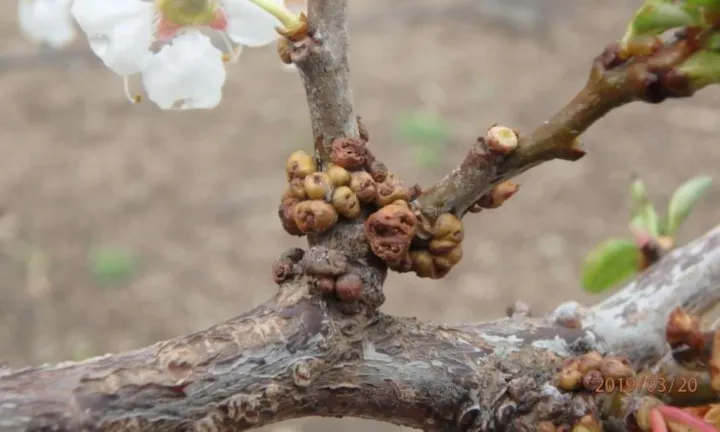
The hallmark of an infestation is the presence of galls — compact clusters of small, nodular outgrowths typically located around buds or on the internodes of one-year-old shoots.
Initially, these galls are green and soft, but as the season progresses and the mites mature, the galls harden and turn brown. They often look like roughened, irregular knots on the bark.
- Noticeable bending or twisting of young, infested twigs.
- Premature leaf drop in heavily colonized branches.
- Reduced shoot elongation and poor canopy development.
- Visible necrotic areas on the bark surface surrounding old galls.
- Dieback of terminal growth during the spring period.
Inspecting trees during the dormant season is the most reliable way to identify infestations, as the absence of foliage makes the characteristic gall formations easily visible to the trained eye.
Control measures
Sanitation is the most effective management strategy. Pruning out and destroying infested branches is crucial. This material must be removed and burned to prevent the migration of mites to healthy shoots.
Chemical control focuses on the application of specialized acaricides during the narrow window when mites emerge from their winter galls to migrate. Precise timing is key to ensuring maximum efficacy.
Integrated orchard management practices, including proper irrigation and fertilization, improve tree vigor. A healthy tree can better tolerate the presence of pests compared to a stressed one.
Biological control options, including entomopathogenic fungi, are being explored to help keep mite populations below economic damage thresholds without disrupting the natural balance of the orchard.
Regular monitoring programs are essential. By keeping track of mite activity and infestation levels, growers can make informed decisions about when and where to intervene, ensuring sustainable almond production.
Taxonomy
- Latin name
- Acalitus phloeocoptes
- Order
- Mites
- Family
- Eriophyidae
- EPPO code
- ACLIPC
Discussion
No discussions yet — be the first.