
Alder gall mite
Acalitus brevitarsus
Description
How to identify
The alder gall mite (Acalitus brevitarsus) is a microscopic pest belonging to the Eriophyidae family, order Trombidiformes. These mites are characterized by an extremely elongated, worm-like body and have only two pairs of legs, which distinguishes them from other mite species.
Due to their tiny size, they are impossible to identify with the naked eye. Identification is usually performed by observing the specific symptoms they cause on the host plant rather than the organism itself.
Adult mites overwinter in the crevices of the bark, under bud scales, or in the catkins of the alder tree. As soon as temperatures rise and buds begin to swell in spring, the mites emerge from their wintering sites.
Once active, the mites move onto the newly emerging leaves to feed and reproduce. They undergo several generations throughout the growing season, which allows them to colonize large parts of the tree canopy rapidly.
The biology of Acalitus brevitarsus is strictly linked to Alnus species, making it a specialized monophagous pest that thrives only on these specific trees.
What it damages
This mite primarily infests common alder (Alnus glutinosa) and grey alder (Alnus incana). It does not pose a threat to non-alder species, as its feeding mechanism is highly adapted to the physiological characteristics of alder foliage.
The mites feed by piercing the leaf tissue and secreting chemicals that act as growth regulators. These substances force the plant to grow abnormal tissue around the mite, creating a gall.
The formation of these galls creates a localized physiological drain on the tree. While a single gall is harmless, massive infestations can result in hundreds of galls covering the leaf surface, which severely limits the tree's photosynthetic capacity.
In cases of heavy infestation, leaves may become deformed, curled, or stunted. This significantly reduces the ornamental value of the tree, which is a major concern for urban forestry and landscape management.
Although the damage rarely causes tree death, the cumulative stress caused by mite activity can make the tree more susceptible to secondary pathogens and environmental stressors.
Signs of infestation
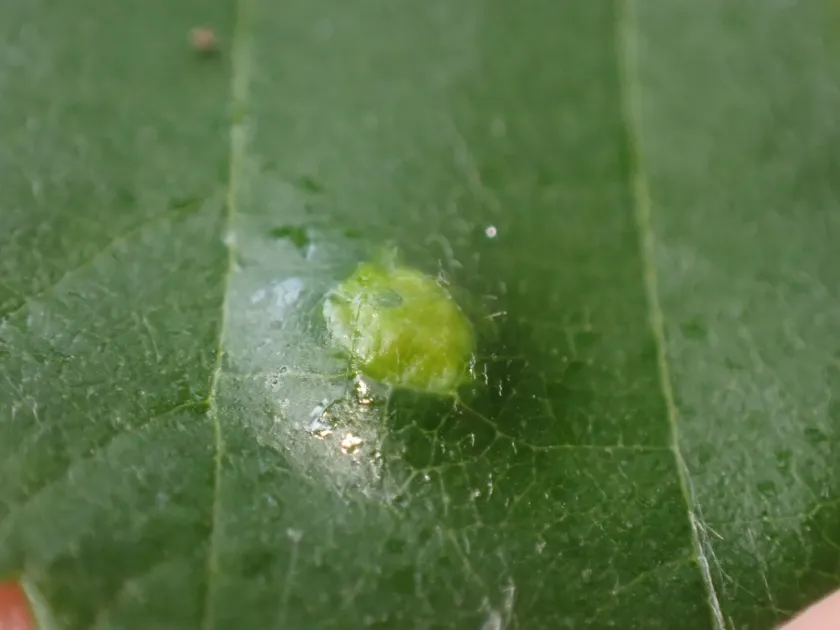
The most prominent sign of infestation is the appearance of distinct, small, rounded, or elongated bumps on the leaves, known as galls. These are often clustered near the leaf veins on the underside of the foliage.
When the galls first form, they are typically the same color as the leaf, but they eventually turn brown, red, or even black as the season progresses, making them stand out against the healthy green tissue.
Deformed leaves are another common sign. In severe cases, the entire leaf surface may become puckered, twisted, or distorted, giving the tree a ragged appearance throughout the summer months.
Early monitoring in the spring, during the bud-break stage, is crucial. If you notice early signs of mite movement or small gall formation, the infestation is in its initial stage, and immediate action can be more effective.
The lack of webbing distinguishes these gall mites from spider mites, which create fine silk threads. If you see bumps but no silk, it is almost certainly a gall mite infestation.
Control measures
Control is difficult because the mites are protected inside the galls, where contact insecticides cannot easily reach them. Timing is the most critical factor for successful management.
Sanitation is a highly recommended practice. Pruning and destroying heavily infested twigs and branches during the dormant season or early in the infestation helps reduce the total mite population on the tree.
Chemical control should be applied in early spring when mites are migrating from their overwintering sites to the new leaves. During this window, they are exposed and vulnerable to treatment.
Sulfur-based acaricides are generally considered effective against eriophyid mites. These products act by interfering with the mite's metabolic processes and suppressing the expansion of the colony.
- Regular sanitation pruning of infested plant parts.
- Spring application of acaricides during the bud-burst period.
- Promoting tree health through proper fertilization and watering.
- Careful monitoring for early symptoms of gall formation.
- Removing fallen leaves to minimize local overwintering populations.
Taxonomy
- Latin name
- Acalitus brevitarsus
- Order
- Mites
- Family
- Eriophyidae
- EPPO code
- ACLIBR
Discussion
No discussions yet — be the first.