
Witches' broom disease
Crinipellis perniciosa
Witches' broom disease is caused by the fungus Crinipellis perniciosa, a member of the Marasmiaceae family within the Basidiomycota division.
What the section contains
Witches' broom disease
This fungus is a highly specialized biotroph that attacks the living tissues of the cacao tree (Theobroma cacao) and related plant species.
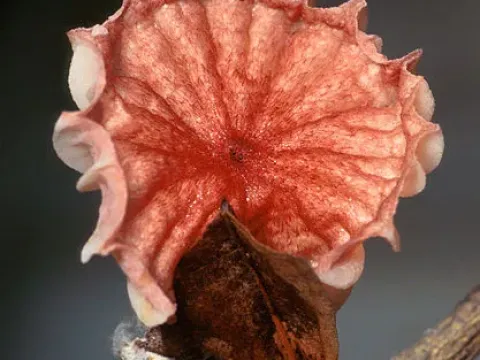
The life cycle involves the production of basidiocarps, which are small, mushroom-like structures that emerge from dead, infected plant parts to release spores.
The pathogen is classified as a significant quarantine pest in many countries due to its devastating impact on agricultural production and high dispersal rate.
Understanding its taxonomy is crucial for researchers, as its ability to manipulate host gene expression leads to the characteristic symptoms of the disease.
The primary economic damage occurs in cacao plantations, where the fungus targets young, actively growing plant tissues, causing severe physiological disruption.
Infection results in the formation of abnormal, proliferation-prone shoots known as "witches' brooms," which lack the ability to produce fruit or store nutrients.
When the pathogen infects developing cacao pods, it invades the seeds and pulp, causing them to rot and become entirely unusable for processing.
Floral cushion infection prevents normal pod set, leading to a massive decline in yield and the potential death of the tree after repeated infections.
The total economic impact of this disease on the chocolate industry is immense, often forcing farmers to abandon infected plantations entirely.
The development and spread of Crinipellis perniciosa are strictly regulated by environmental moisture levels, with spores requiring free water for germination.
Epidemics typically coincide with high-rainfall periods when the canopy provides a humid microclimate perfect for spore maturation and dispersal via rain splashes.
Infection cycles occur throughout the year in tropical climates, with the fungus remaining persistent inside the host tissue during less active periods.
Wind and rain play essential roles in transporting spores to susceptible host tissues, such as growing vegetative buds or opening flower cushions.
Following a successful infection, the fungus colonizes the internal tissues, and symptoms emerge shortly after, often linked to seasonal growth flushes of the tree.
The most iconic symptom is the 'witches' broom' itself: a massive cluster of slender, abnormal twigs that branch excessively and fail to lignify properly.
Leaves on these brooms are often small, chlorotic, and distorted, ultimately drying out and turning brown as the infected tissues die off.
Infected cacao pods exhibit darkened or black necrotic lesions that spread rapidly, causing the entire pod to deform and shrink prematurely.
Inside the infected pods, a dense, white mycelial mat is often visible, which replaces the healthy seed tissues as the fungus feeds on the host.
The necrotic parts of the tree serve as the primary site for the development of fungal fruiting bodies, creating a visible sign of an active infection.
Regular sanitation, which involves the pruning and destruction of infected twigs and pods, is the most recommended manual control strategy.
By removing the source of spores frequently, farmers can significantly reduce the infection pressure within the plantation environment.
Breeding and planting genetically resistant cacao cultivars remain the most sustainable and effective long-term method for managing the disease.
Chemical control using copper-based fungicides can be effective if applied during periods of high humidity, though it requires frequent and accurate spraying.
Integrated pest management strategies must include strict quarantine enforcement to prevent the movement of contaminated materials into disease-free regions.